A new report, “Five Agendas to Drive the Transformation of the Philanthropic Sector in Latin America and the Caribbean”, supported by the Rockefeller Foundation and produced by The Resource Foundation and Dalberg Advisors, examines the current role of philanthropy in the region and proposes an innovative, locally grounded approach to strengthen outcomes for Latin American and Caribbean communities and populations. The study concludes that philanthropic giving is far lower than in other parts of the world, even as needs continue to grow.
However, according to the authors, philanthropy in Latin America and the Caribbean has the potential to mobilize more than US$ 5 billion per year if just 1% of the region’s private wealth were activated—an amount comparable to the total international aid currently received.
The study also identifies key structural challenges facing the philanthropic sector, including a lack of strategic investment and public distrust, and calls on philanthropic leaders to rethink how resources are managed.
“Latin America and the Caribbean have enormous philanthropic potential that has yet to be activated. We need philanthropy that goes beyond temporary solutions and works toward structural, sustainable change,” said Lyana Latorre, Vice President for Latin America and the Caribbean at the Rockefeller Foundation.
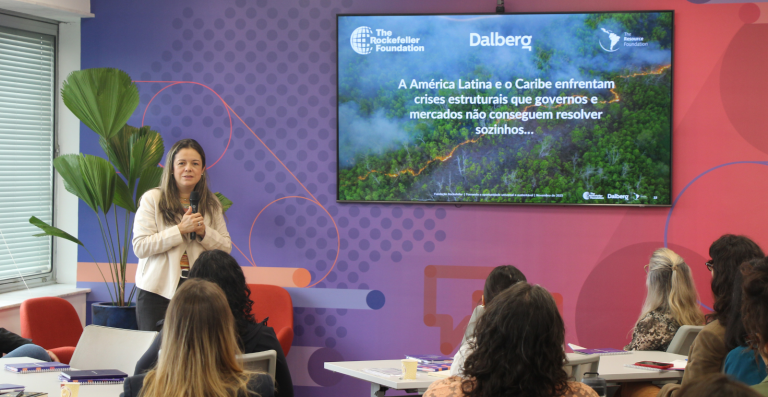
The study was presented during the first edition of “IDIS Coffee: Philanthropy in Debate”, a space designed for leaders of Brazilian organizations to engage in exchanges and reflections on how to make social investment more strategic, increasing resources and the capacity to engage across their value chain.
The first edition brought together around 35 leaders over the course of the morning, featuring presentations of studies and research, as well as debates.
Turning generosity into sustainable impact
The study shows that philanthropic culture in the region is less formalized than in other parts of the world. According to the World Giving Index, private donations represent only 0.2% to 0.3% of GDP- well below developed economies such as the United States (1.5%) or Canada (1%) and up to 50% lower than comparable economies such as Indonesia or South Africa (both around 0.4%).
According to the IDB, in its 2024 publication “The Complexities of Inequality in Latin America and the Caribbean,” the contrast is even greater when considering that the richest 10% earn 12 times more than the poorest 10%. The United Nations Economic Commission for Latin America and the Caribbean (ECLAC) notes that nearly 200 million people live in poverty and 70 million in extreme poverty, totaling about 270 million people. This structural inequality is worsened by the effects of climate change, as shown by the Climate Finance Vulnerability Index (CliF), which places eight countries in the region among the most vulnerable in the world, combining exposure to extreme events with low financial capacity.
A call to strengthen trust and unlock local resources
In this context, international aid has also been reduced drastically, as many countries are cutting their cooperation budgets. This poses a major challenge for Latin America and the Caribbean. In response, the new report highlights the urgent need to strengthen local and regional philanthropy, ensuring continuity for transformative initiatives that benefit communities.
Another major challenge is the lack of trust: according to Latinobarómetro, only 27% of Latin Americans trust NGOs, which limits people’s willingness to donate through formal channels. In addition, there is a strong presence of so-called “silent philanthropy” or invisible generosity, in which many people make direct donations to communities or local causes without these resources being recorded or strategically coordinated.
In contrast to this lack of trust, the region’s population demands concrete actions and tangible results. According to a recent Rockefeller Foundation survey, 78% of Latin Americans support international cooperation if it demonstrates effective results—a rate higher than the global average of 75%.
“Across the world, philanthropy plays a critical role in bringing allies together, mobilizing resources, and scaling solutions that improve people’s lives and well-being,” said Elizabeth Yee, Executive Vice President of Programs at the Rockefeller Foundation. “Building on our track record in the region, we are proud to stand alongside philanthropic organizations and other partners in Latin America and the Caribbean as they work to build a healthier, safer, and more prosperous future.”
Five agendas to transform philanthropy
Based on this diagnosis, the study proposes five strategic agendas to transform philanthropy in Latin America and the Caribbean. These agendas emerged from a broad listening process, designed with full awareness of the diversity and complexity of the region’s philanthropic ecosystem. More than 70 regional leaders—including philanthropic organizations, companies, civil society groups, and local actors—shared their perspectives through interviews and focus groups. The process was also informed by an analysis of more than 40 reports and studies, ensuring a solid and diverse evidence base.
1 – Radical collaboration: Promote a cultural shift in how organizations work together. Co-investment without co-creation is merely coordination, not genuine collaboration. The study proposes moving from isolated projects to sustained alliances, with shared governance structures, common goals, and joint evaluation mechanisms.
2 – Mobilizing local resources: Encourage a new generation of donors who see philanthropy as a tool for social transformation, not merely assistance. The challenge is to broaden funding sources, integrate new actors (families, entrepreneurs, and emerging companies), and create incentives—both governmental and market-based—that enable sustained participation. The current reality is not a lack of wealth, but an inability to activate it.
3 – Purpose-driven investment: Prioritize the quality of resources over volume. The study highlights the need to design more strategic investments that measure returns in terms of social impact, sustainability, and institutional strengthening—not only immediate outputs. When resources are treated as charity, reach is limited; when applied as social investment, they can drive systemic change.
4 – Local leadership: Treating communities solely as beneficiaries creates dependency. It is necessary to recognize communities’ knowledge and capacity to manage their own development, ensuring they are partners in the process. Philanthropic agendas must adapt to territorial realities, respect local knowledge, and build solutions aligned with the cultural, economic, and environmental contexts of each place.
5 – Professionalization of the sector: strengthening the philanthropic system should not be seen as an administrative expense. It is necessary to invest in modern infrastructure, with better information systems, specialized talent, and transparency and accountability mechanisms that increase the sector’s legitimacy and effectiveness.
“Philanthropy in Latin America and the Caribbean has enormous latent energy. The capital exists, and so does the talent. What we need now is to activate them with purpose, build trust, and show that investing in the region is not charity, but a development strategy,” said Beatriz Guillén, Executive Director of The Resource Foundation.