Philanthropy in developed countries is facing a paradox: total giving is near record levels, driven by Ultra-High-Net-Worth Individuals and big foundations, even as the number of individual donors is shrinking. In the United States, recent fundraising data show that while total donations are rising, donor participation and retention are declining, especially among smaller donors. A similar trend is evident in Europe, where the World Giving Report found a 3% decrease in the share of people donating to charities over a one-year period, from 41% in 2024 to 38% in 2025.
As giving concentrates, the pressure to “prove impact” rises and donors gravitate toward what’s easiest to defend: tidy theories of change, clean metrics, a “what works” list and the promise of a single program that can be scaled fast.
For the last decade, Effective Altruism offered one influential answer to that pressure: identify the intervention with the highest expected return and fund it aggressively. That logic treats philanthropy like optimization — and in some domains, it works, especially in controlled problems where cause and effect are relatively direct.
But social change rarely behaves like an engineering problem. A program can work and still go nowhere if politics, implementation, and public trust don’t move with it. Systems shift when evidence, public narrative, political feasibility, and implementation capacity align — and when someone funds the work of alignment. So what if effective philanthropy is not about finding the best intervention, but funding the conditions for adoption?
That is where mid-sized donors (families and individuals giving under $10 million a year) have a hidden advantage. They cannot outspend the government or build entire ecosystems around them the way billionaires can. But they can move faster, share risk through co-investment, and combine money with assets that don’t appear on a balance sheet: credibility, access, convening power, and patience.
In our work advising donors in Brazil through IDIS – Institute for the Development of Social Investment and Movimento Bem Maior, we see the same pattern: effectiveness comes less from picking a single winner and more from building a portfolio of moves around one problem — delivery, proof, advocacy, and the partnerships that make adoption possible.
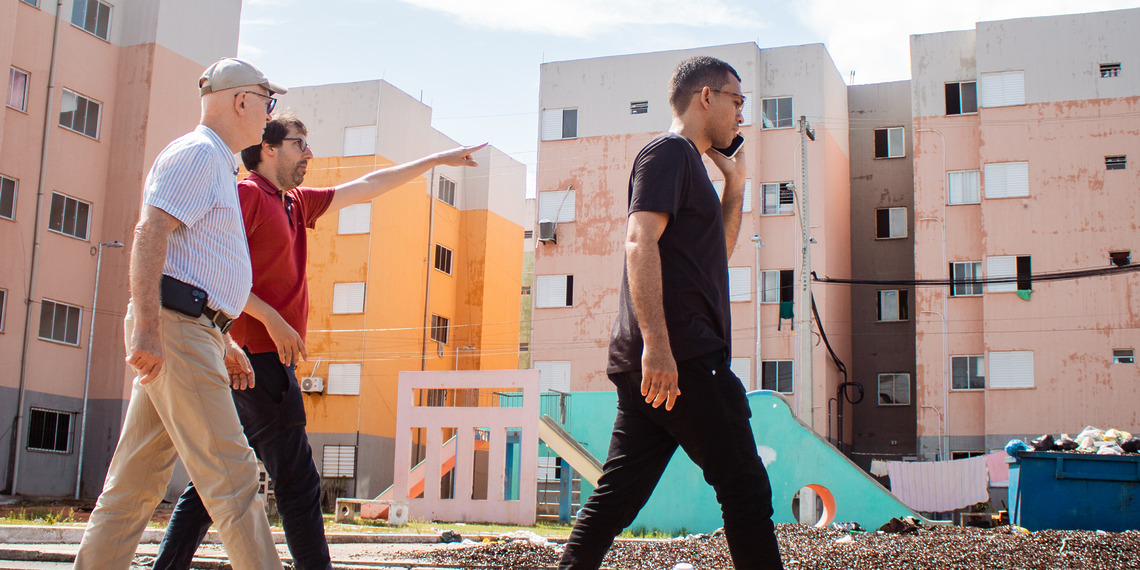
A momento from the IDIS – Transforming Territories Program
To show what this looks like in practice, we start in places where money is scarce, politics are messy, and failure is not an option. Brazil and Colombia offer a clear window into a more integrated kind of giving, one where donors do not bet on a single horse, but fund the different elements that turn a promising idea into something a system can actually adopt. We then bring the lens back to the United States, where the same portfolio logic has helped turn a neglected issue into budget lines, standards, and lasting public accountability.
Together, the three cases show how a portfolio approach helps non-billionaire philanthropists generate structural impact that single-strategy giving rarely delivers.
Brazil: reducing criminal recidivism by changing the system
The Instituto Ação Pela Paz in Brazil, created and maintained by philanthropist Jayme Garfinkel, had an annual budget of nearly $1 million in 2024. The Institute focuses on reducing criminal recidivism by supporting and scaling structured reentry and rehabilitation programs. Since its founding, Ação Pela Paz has supported more than 775 initiatives and reached nearly 36,000 individuals, including both incarcerated and formerly incarcerated people, across multiple states.
According to publicly reported evaluations, 82% of participants supported by Ação Pela Paz did not reoffend, compared with national recidivism estimates of 57-64%. This is not a marginal improvement, but a structural break from the prevailing system performance.
Crucially, these results were treated as leverage, not an endpoint. The Institute invested deliberately in grants and pilot funding, data collection, evaluation, policy advocacy, and technical assistance, working directly with state justice secretariats, prison administrations, and judicial bodies.
As a result, practices initially supported with philanthropic resources were progressively absorbed into publicly funded programs in several states. Diversified philanthropy moved the needle twice: improving individual outcomes and reshaping how public institutions design and fund criminal justice policy in a system historically dominated by ideology rather than evidence.
Colombia: when celebrity becomes strategic capital
Founded by Colombian artist Shakira in 1997, Fundación Pies Descalzos works to expand access to quality education in highly vulnerable contexts, combining school construction, integrated service delivery, and strategic alliances, rather than relying solely on grants.
The Foundation has built and supported multiple public schools in underserved regions of Colombia, delivering education alongside nutrition and psychosocial support and reaching thousands of children. To scale beyond direct service delivery, the Foundation has partnered with large institutional actors, most notably Education Above All, to expand access to quality primary education for 34,000 children and reduce dropout risks for an additional 20,000 students.
As Shakira’s global visibility expanded, including during the heightened international exposure of the 2010 FIFA World Cup, the Foundation leveraged that reach to build additional institutional partnerships in South Africa and Haiti, including with the Inter-American Development Bank.
More recently, the Foundation has deepened its collaboration with public authorities in Colombia by partnering directly with the Ministry of National Education to construct and renovate public schools, including a joint investment of nearly $800 thousand. It has also supported national enrollment campaigns, such as Todos al Cole, to strengthen access and retention in the public education system.
By combining social capital with a diversified strategy, Shakira enabled the Foundation to punch far above its financial weight, despite an annual budget of less than $400 thousand in 2024.