After COP30 in Brazil, Philanthropy must maintain its environmental commitment ahead of COP31

By Luisa Lima, Communications and Knowledge Manager at IDIS, and Marcelo Modesto, ESG Manager at IDIS

Belém was both the setting and the message. Hosting the COP in the Amazon made the urgency of protecting forests, rivers, and territories tangible, while promoting the transition of the energy matrix and advancing the bioeconomy with social justice. There were countless lessons, examples, connections, demands that made themselves heard, and data that guide action.

Each Climate Conference is certainly a milestone, producing directions and resolutions. However, change only happens through concrete actions carried out between each cycle. In a year that begins with oil at the center of geopolitical movements, it is necessary to reaffirm the commitment to the climate, to the environment, and to our very condition for existence. And it is essential to act. Philanthropists and Social Investors: those of you who were in Belém and wrote long LinkedIn posts—have you included actions addressing our climate challenges in your plans? Have you considered how you will respond to emergencies, support communities so they become more resilient, and invest in adaptation?

IDIS works to strengthen strategic philanthropy and the culture of giving in Brazil. Although environment and climate are not our primary thematic focus, they are increasingly cross-cutting issues, especially in responses to emergencies, many of them resulting from extreme climate events.

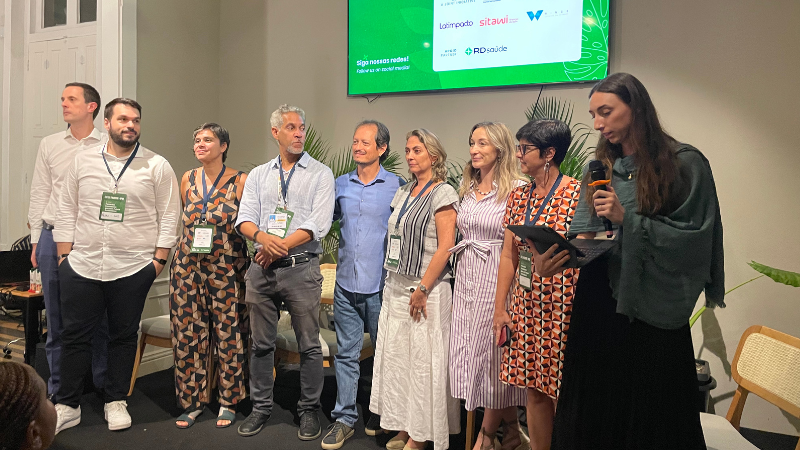
During COP30, we formed a plural and supranational coalition — IDIS, Charities Aid Foundation (CAF), GIFE, Latimpacto, RD Saúde, SITAWI Finanças do Bem, and WINGS (Worldwide Initiatives for Grantmaking Support), with the collaboration of Catalyst 2030, Comunitas, and Rede Comuá — and promoted Philanthropy Day, bringing together the voices of communities, practical examples of ongoing initiatives, and reflections on how we can accelerate transformations.

Four lessons for Philanthropists and Social Investors

First, philanthropy has a catalytic role. Climate solutions require resources in the trillions, with governments and the private sector playing leading roles. Philanthropy, even though it contributes a smaller share of funding, is decisive because it can test models, take risks, respond quickly, and demonstrate pathways that can later be scaled by other actors. The sense of urgency must move us forward, and boldness is required.

In addition, philanthropy can reinforce the centrality of territories and climate justice. Solutions developed with communities—not only “for” them—were a consensus during the COP. This implies distributing power, treating “beneficiaries” as partners and co-creators, supporting local leaders, community foundations, and institutes, and strengthening capacities for disaster prevention and response.

Moving forward, Brazilian philanthropy has a long track record of collaborative and network-based action. This collective approach multiplies reach and influence. Platforms and alliances among social investors, civil society organizations, academia, and the private sector can accelerate learning, coordinate investments, and enable the systemic changes the world needs.

Finally, philanthropy can play a decisive role in advocacy. Organizations and social investors can use their influence to strengthen public debate, highlight evidence, and advance policies that unlock solutions in areas such as energy, adaptation, and bioeconomy. This includes monitoring agendas, proposing regulatory frameworks, and giving visibility to successful experiences.

If COP30 has placed a spotlight on the Amazon, it is up to philanthropy to keep the light on between one conference and the next. Our role is to create the conditions for solutions to emerge, mature, and scale—with boldness, partnership, and public commitment. This is how we can respond to the major climate challenges of our time.
Belém: A Historic Milestone for COP30 and Climate Action

This article was originally published in Alliance Magazine on January 9, 2025

By Luisa Lima, Head of Knowledge at IDIS; and Marijana Sevic, Head of CAF International

For those who doubted, Belém proved not only ready but the ideal place to host COP30 in Brazil. Nature is everywhere—living proof that the environment and climate matter. This event marked a historic milestone by bringing the global climate agenda to the heart of the Amazon, a region vital for climate solutions and biodiversity.

It was remarkable to witness the diversity of voices gathered from across the globe: government leaders, private sector executives, civil society representatives, social movements, youth groups, climate experts and non-experts, alongside the citizens of Belém, eager to follow the discussions.

Brazil’s leadership was pivotal—not only as host but as a nation on the frontlines of climate impacts, offering innovative models for adaptation, resilience, and inclusive development.


A Shared Commitment: Philanthropy and Climate Solutions

We came from different parts of the world—the UK and Brazil—with distinct COP experiences and perspectives. Yet, for one day, we joined forces to raise awareness of the role of philanthropy and the power of partnerships in climate financing and solutions.

CAF – Charities Aid Foundation and IDIS – Institute for the Development of Social Investment, together with Latimpacto, GIFE, Sitawi, and WINGS, supported by RD Saúde, convened Philanthropy Day – Innovative Partnerships for a Sustainable Future. This was a call to unite around our shared commitment to advancing global philanthropy and accelerating climate solutions that benefit all.

Why Philanthropy Matters in the Climate Agenda

The climate crisis is no longer a distant threat, it is a present reality, impacting communities globally and locally. In Brazil alone, the past year brought ten extreme climate events, including unprecedented floods, droughts, and fires. Progress cannot rely solely on international agreements or public policy. It demands coordinated action across all sectors, strategic resource mobilization, and ongoing collaboration.

Philanthropy and socio-environmental investors play a central role in this ecosystem. They bring agility, innovation, and a willingness to take risks where others may be constrained. Philanthropy seeds new solutions, empowers local leadership, and catalyses broader change. It directs capital to generate positive impact, fosters networks, and amplifies voices historically marginalised. Innovative blended finance models, though challenging, are yielding valuable insights and meaningful results.


Highlights from Philanthropy Day

The event reflected these priorities, inviting the public to engage, learn, and collaborate. It offered an immersion into new philanthropic dynamics accelerating climate solutions, presenting practical and inspiring experiences from diverse actors tackling environmental challenges. Strategies ranged from community adaptation and post-disaster reconstruction to structural actions addressing climate justice, socio-environmental development, technological innovation, energy transition, and equitable public policies.

Philanthropy is far from monolithic. It encompasses individual giving, family foundations, corporate social investment, community philanthropy, and impact capital—each bringing unique strengths, flexibility, and innovation. It builds networks and alliances that amplify impact and drive systemic change. Collaboration across local, national, and international stages unlocks catalytic funding, champions innovation, and builds resilient communities through inclusive, flexible, and sustainable models. As Brazilian philanthropist Ilana Minev said: “Everyone wins when we combine expertise and efforts.”


Voices from the Event

Introducing each panel, community leaders shared powerful statements. Rose Apurinã, Executive Vice-President of the Brazilian Indigenous Fund Podaali, reminded us: “It’s not just about financial resources. It’s about shifting power, building alliances, and amplifying local voices. Because the answer to the climate crisis is not one actor or one sector—it is all of us, together.”

In the closing session, Erika Miller, Head of Climate at WINGS, summarised: “Collaboration needs humility, long-term vision, transparency, and clear communication. It doesn’t happen by accident – it takes commitment and a real willingness to share space. Philanthropy is diverse, but at its core, it is a connector. And that connective tissue is exactly what our sector needs to leverage if we want to meet the scale of the climate crisis.”


Looking Ahead

The future of climate action depends on this collective effort. COP30 is a moment to reflect, connect, and commit—to harness the full potential of philanthropy in building a just, resilient, and sustainable future for all. Let us embrace the collective construction of new pathways, valuing courage, active listening, and diverse alliances.

Philanthropy has enormous potential to drive climate solutions, but only if we act together.