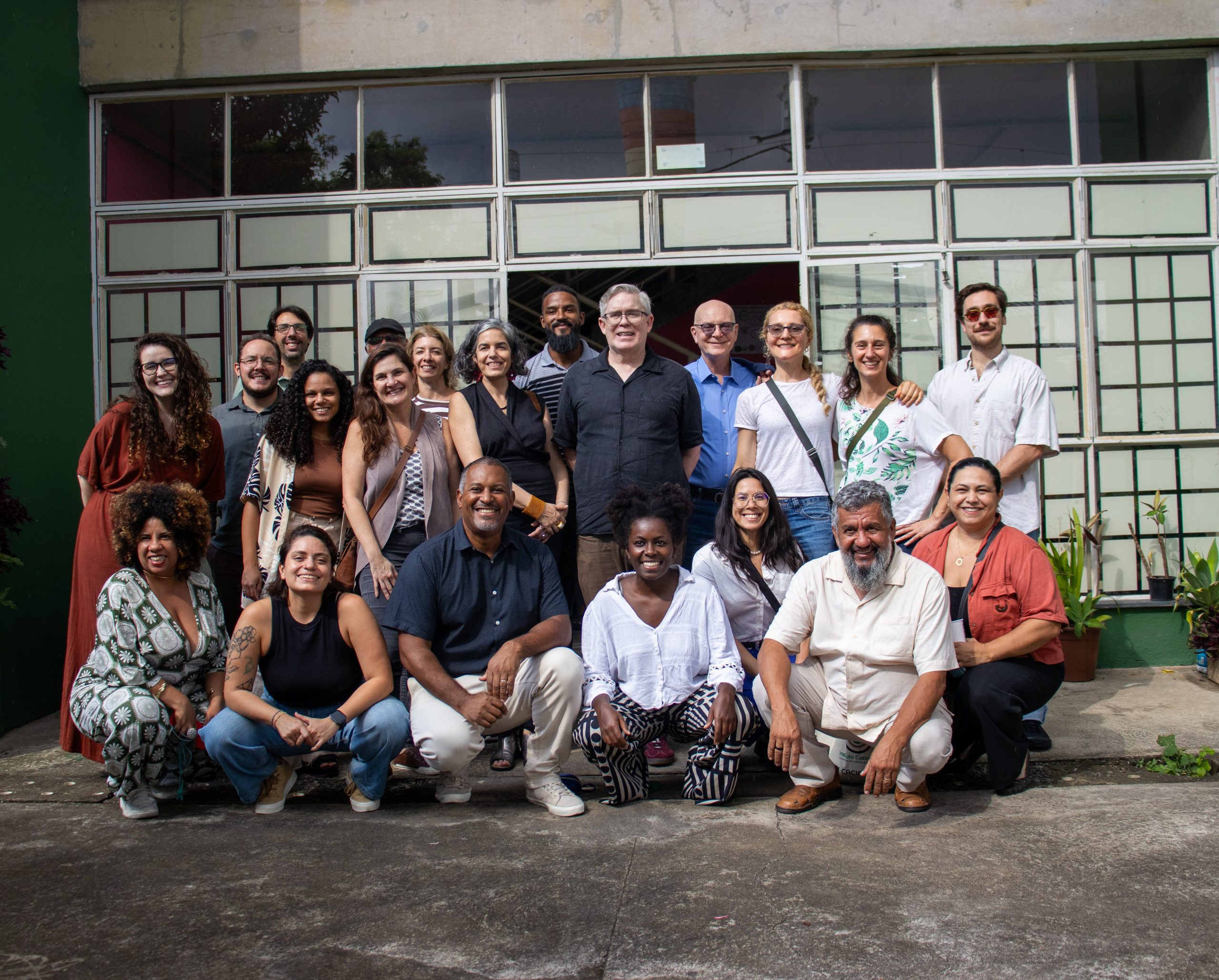
From March 24 to April 1, representatives of the Charles Stewart Mott Foundation, one of the leading philanthropic foundations in the United States, visited Brazil to learn from and reconnect with community foundations in the cities of Porto Alegre, Maceió, Valinhos, Campinas, and São Paulo. The delegation included Neal Hegarty (Vice President – Programs), Nick Deychakiwsky (Senior Program Officer), Gabriella Abrego (Program Officer), Jenifer Veloso (Communications Officer), and Daniela Gomes (Program Officer), all from Mott Foundation.
The Transforming Territories Program, supported by the Mott Foundation and Movimento Bem Maior, works to foster and establish Community Foundations (CFs) and currently includes 14 participants. This model operates within defined geographic areas, mobilizing local resources and strengthening civil society organizations that develop solutions to social, environmental, and economic challenges within their own communities.
The agenda brought together eight community institutes and foundations, with activities held across five cities. These figures reflect the initiative’s significance, made even more meaningful by the direct impact of its actions in territories where each effort contributes substantially to local development.
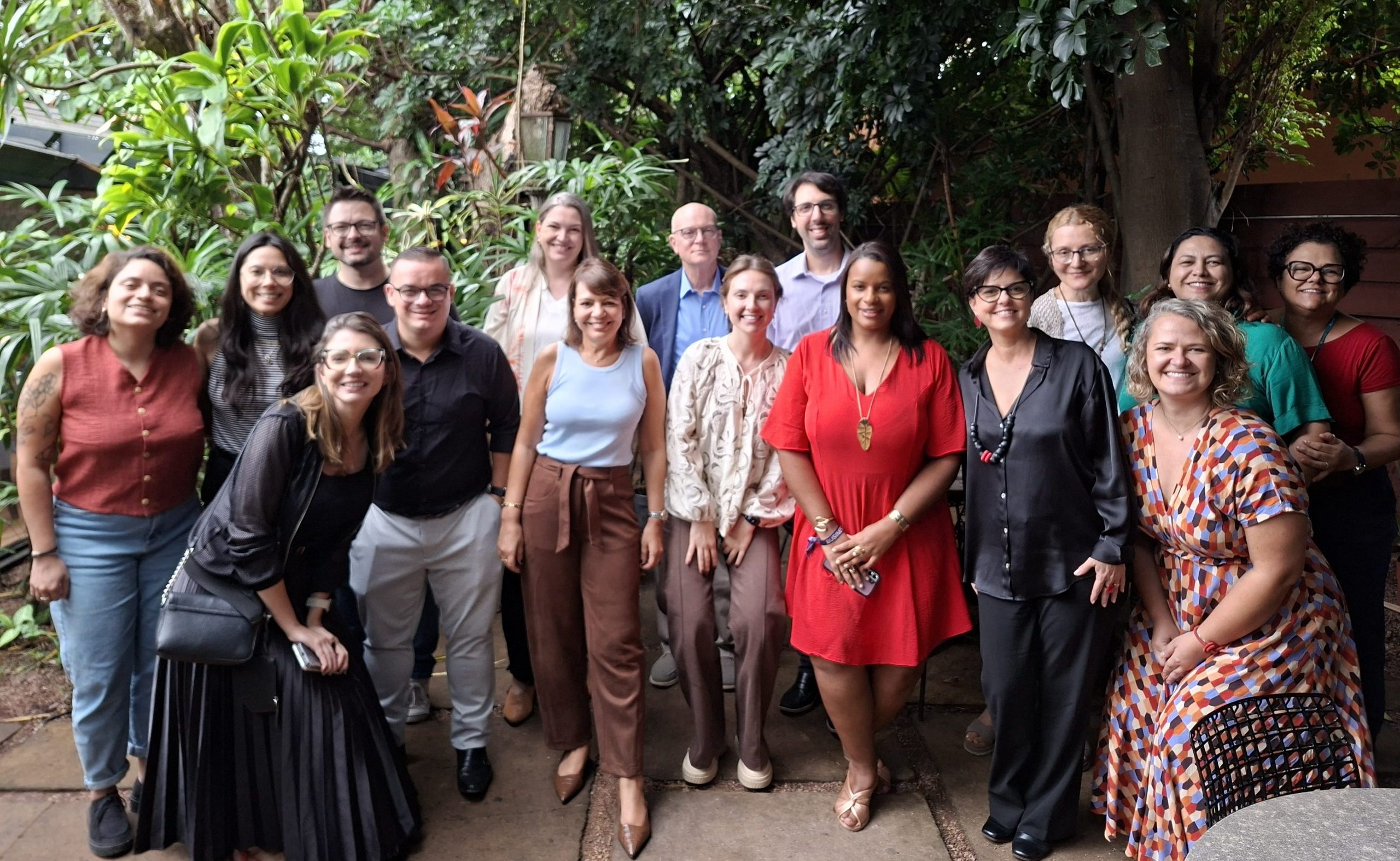
Representatives from the Charles Stewart Mott Foundation, IDIS and Fundações Gerações in Porto Alegre
Fundação Gerações: the importance of local coordination
The visit began in Porto Alegre, where the delegation met with leaders from Fundação Gerações to learn about the organization’s strategy and initiatives, including the creation of the Fundo Porto de Todos – the first community fund in the state, established during the 2024 floods, which left 496 cities impacted, 150,000 people displaced, and even the state airport underwater for several days. The visit also included participation from ICOM, another program participant operating in Greater Florianópolis, in the neighboring state of Santa Catarina.
The group also witnessed firsthand the impact of projects supported by the foundation through the fund, such as the Cooperativa de Produtos Orgânicos Pão da Terra (loosely translated as Pão da Terra Organic Products Cooperative), which brings together associated families engaged in agroecological production of vegetables, baked goods, grains, and mushrooms. In the municipality of Canoas, they visited the NGO Chimarrão da Amizade, which promotes social inclusion for people with intellectual disabilities and their families, alongside meetings with philanthropists and local social ecosystem representatives.
The agenda also included meetings with companies and local philanthropists to explore opportunities for collaboration and community engagement with the foundation.
“Fundação Gerações is an excellent example of how a community foundation can mobilize local actors to strengthen civil society in a given territory. After the floods, it coordinated efforts with public authorities, companies, and civil society to respond to the emergency. This highlights the importance such organizations can have locally”, said Rosana Ferraiuolo, Program Manager of Transforming Territories at IDIS.
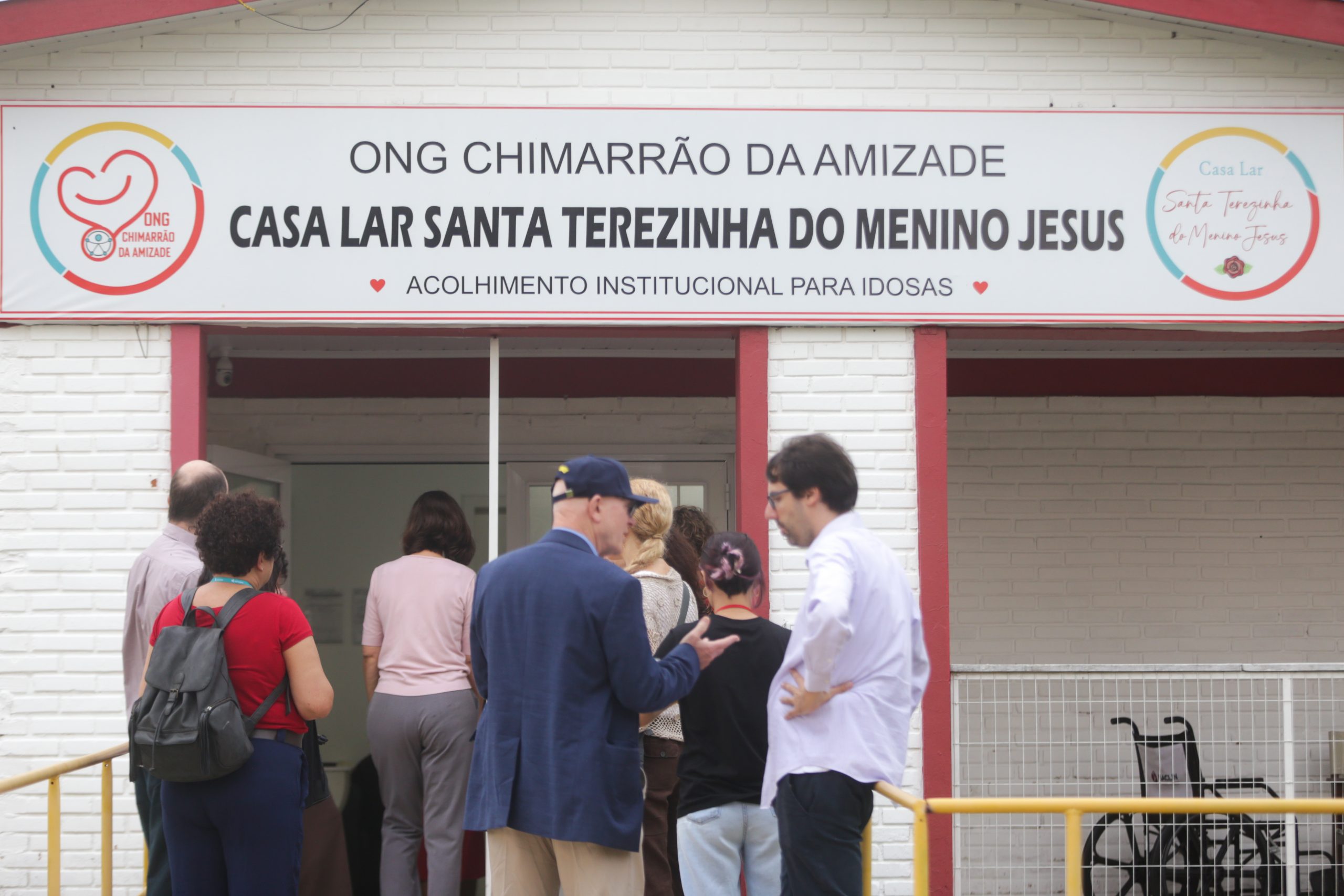
Delegation visiting the NGO Chimarrão da Amizade in the municipality of Canoas
“It was an honor to deepen our dialogue with the Mott Foundation team and demonstrate, in practice, how community philanthropy is strengthening initiatives across our region”, said Karine Ruy, Executive Director of Fundação Gerações.
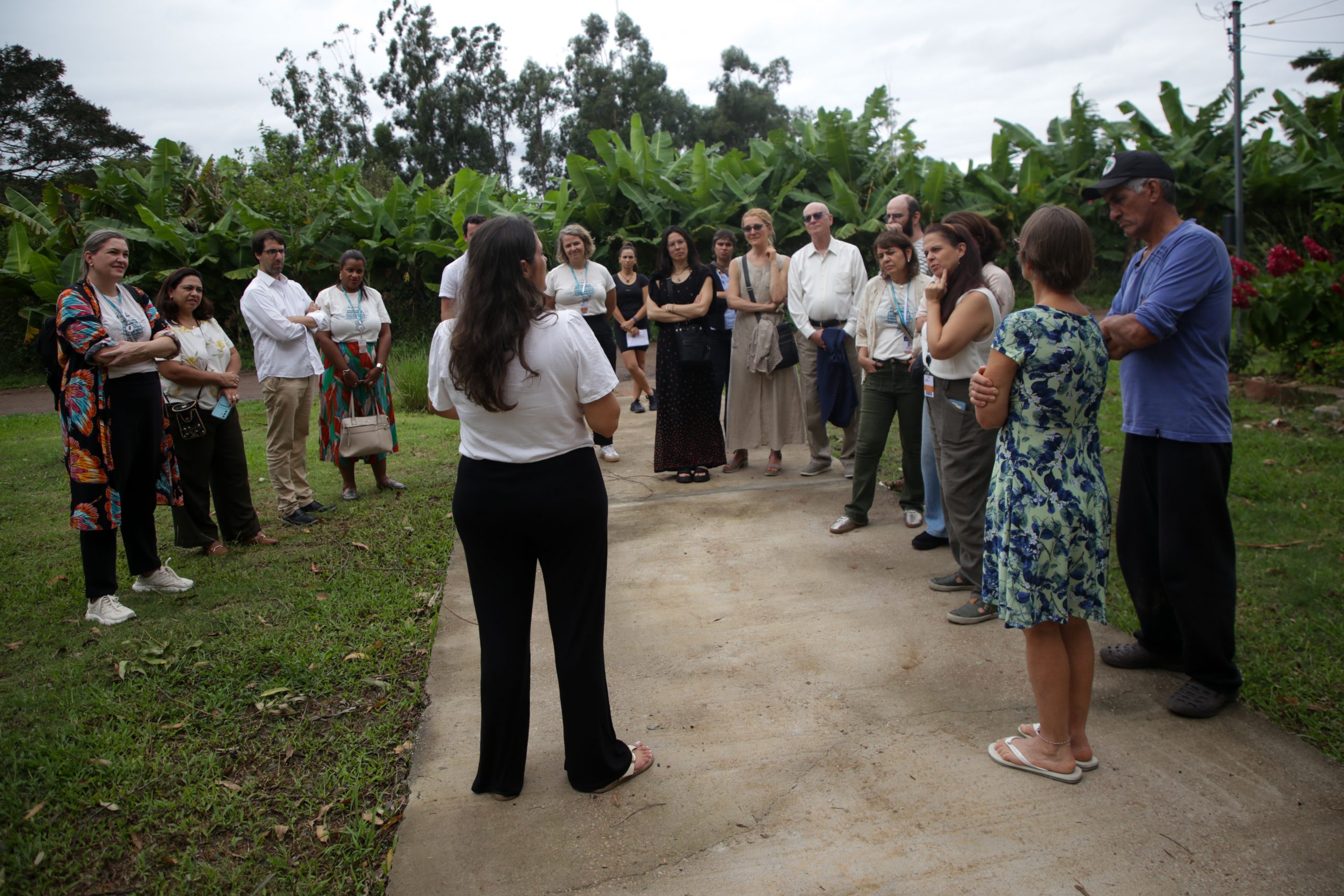
Organic Products Cooperative in Eldorado do Sul (Porto Alegre)
Mundaú Mundo: community leadership and local articulation
The next stop was the city of Maceió, in the state of Alagoas. Mundaú Mundo, a community foundation focused on capacity building, empowerment, and strengthening organizations, promotes climate justice, local culture, and economic development. Representatives from the Instituto Comunitário de Sergipe (ICOSE), another program participant, also joined the visit.
The delegation participated in activities with supported projects, including the Cooperativa de Marisqueiras (loosely translated as Shellfish Gatherers’ Cooperative), which supports around 40 women shellfish gatherers in processing and marketing sururu from Lagoa Mundaú, improving income and working conditions. The agenda included meetings with current and potential corporate partners, as well as community leaders from various municipalities, highlighting the multi-stakeholder collaboration that defines CFs.
In the Vergel neighborhood—an area with high social vulnerability—the group visited an innovation lab currently under development within the community. In its initial phase, it will provide access to technology, including laptops and computer training courses, aiming to expand opportunities, strengthen digital skills, and support local development through technological inclusion.
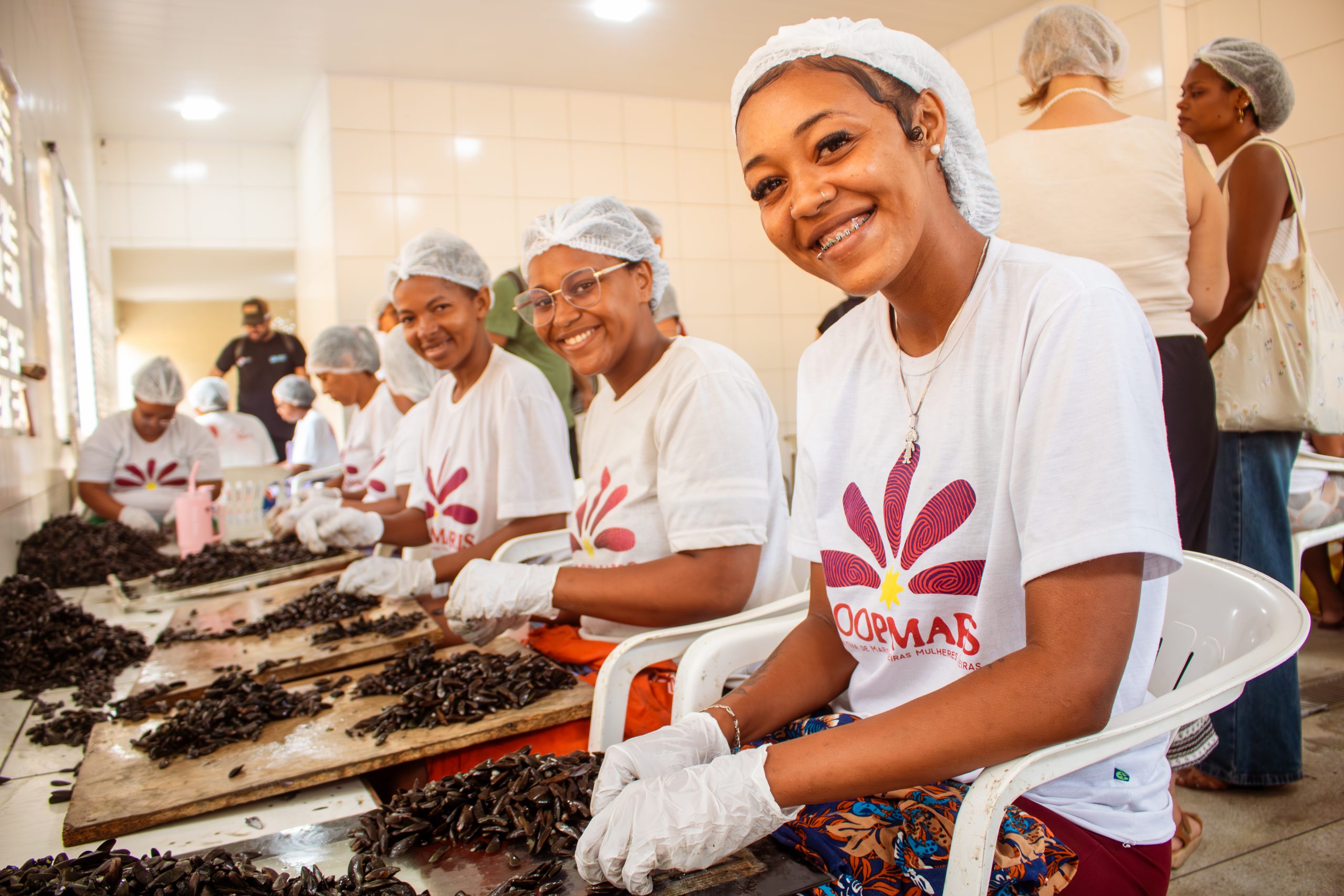
Women from the shellfish gatherers’ cooperative in Maceió
“Our goal was to showcase the impact we generate in the territory through the organizations we directly support. It was a strategic agenda designed to present the breadth of our work and the reach of our initiatives, including field visits that demonstrate both the role of the Mott Foundation and the validation of this impact locally”, said Carlos Jorge da Silva Santos, President of Mundaú Mundo.
FEAV and Instituto Cacimba: education, culture, and entrepreneurship in urban and regional contexts
From the Northeast, the delegation traveled to the Southeast, arriving in the state of São Paulo. In Campinas, they met with leaders from Fundação FEAC, a former program participant that now serves as a supporter.
A key highlight in the region was the Casarão FEAV, a property donated by Fundação FEAC that enabled the organization to expand its activities in the neighboring city. The space hosts courses, training programs, and social initiatives, including SOS AVC Valinhos, now an independent organization. The history of the JovemTEC program was also presented, which prepares public school students for admission to technical schools and is now managed by the Círculo de Amigos do Patrulheiro (loosely translated as Patrol Members’ Circle of Friends).
In the capital, the visit included a meeting at IDIS, where, in addition to Mott, representatives from the Transforming Territories program supporter, Movimento Bem Maior, were present. The final destination was the east side of São Paulo. The visit to the Instituto Cacimba, in the São Miguel Paulista region, also included representatives from the Fundo Comunitário Perifasul M’Boi Mirim, another participant in the program, and program partners such as Comunitas, Instituto ACP, and the Fundação Tide Setubal.
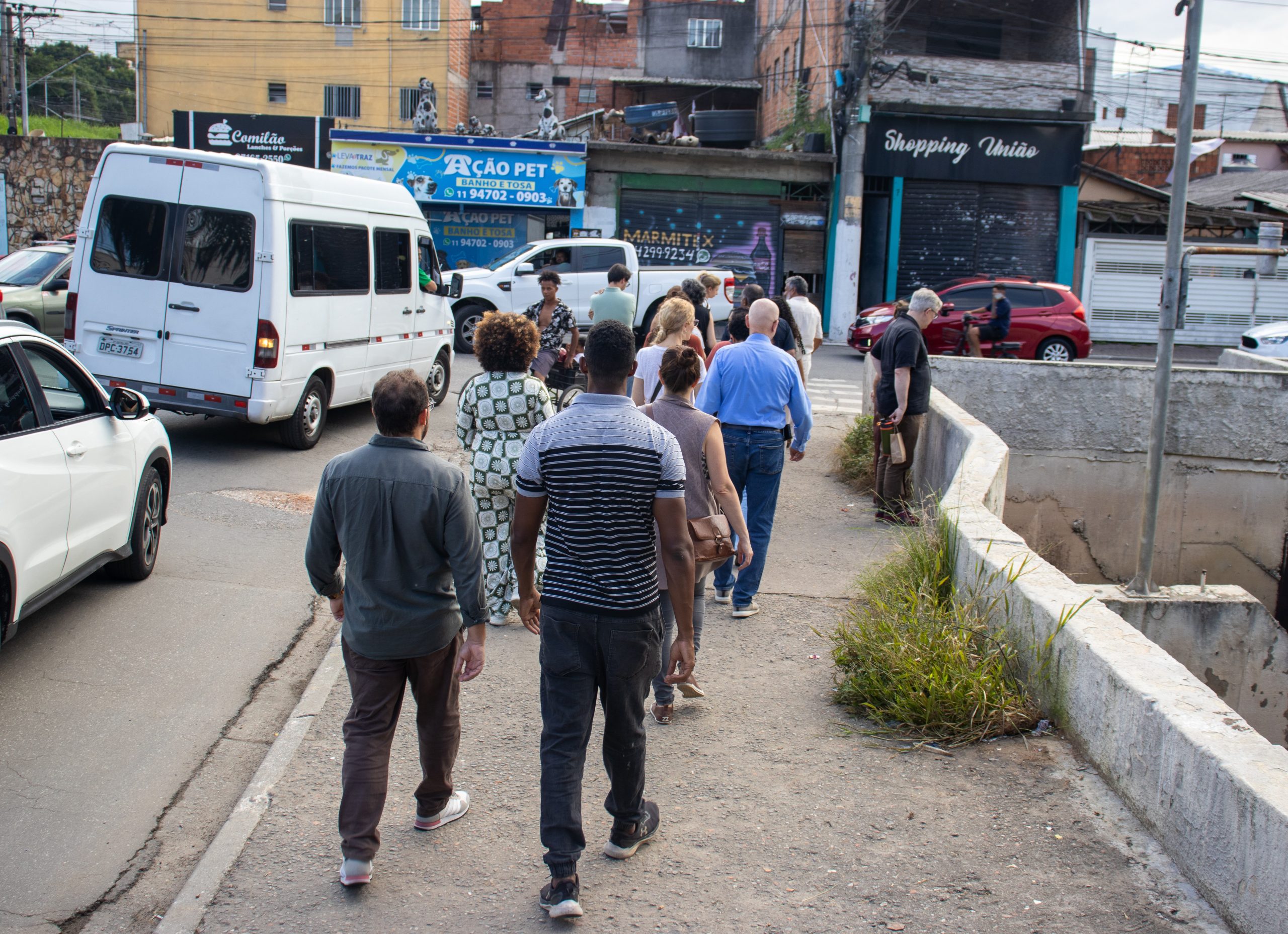
Walking tour through the União de Vila Nova neighborhood (SP) during a visit to Instituto Cacimba
During a walking tour, the group visited Uni-Diversidade da Quebrada, a space where Instituto Cacimba, together with Instituto NUA, develops projects focused on strengthening the União de Vila Nova neighborhood through education and culture. Initiatives include painting workshops, marketing and sewing courses, and “Desnegócio,” a program that fosters local entrepreneurship. The team presented the organization’s trajectory, detailed its projects, and guided the group through the spaces where activities take place.
They also explored expansion areas such as Parque Jacuí, where future plans and ongoing challenges were discussed.
“Our work is rooted in the community’s own demands. The initiatives presented show how local strengthening, combined with strategic partnerships, can generate concrete opportunities for education, income, and territorial development,” said Hermes de Sousa, President of Instituto Cacimba.
“In Brazil, ICOM was the first community foundation, established in 2005. Today there are 14, many of them well-structured, with strong local knowledge and the ability to mobilize resources. Their development requires a gradual and careful process—more about support than external direction. I like to compare it to blowing on embers: too hard and the fire goes out; too softly and it won’t ignite,” said Nick Deychakiwsky, Senior Program Officer at the Mott Foundation.
The visit reaffirms the relevance of the Transforming Territories Program as a strategy for strengthening community philanthropy in Brazil. Throughout the meetings, the central role of local foundations and institutes became evident in mobilizing local resources, engaging leadership, and building solutions aligned with the realities of each territory. Moving forward, Transforming Territories continues to advance this work.