For more than two decades, we have chosen to believe — and act — so that philanthropy can be an active force in building a fairer and more supportive Brazil.
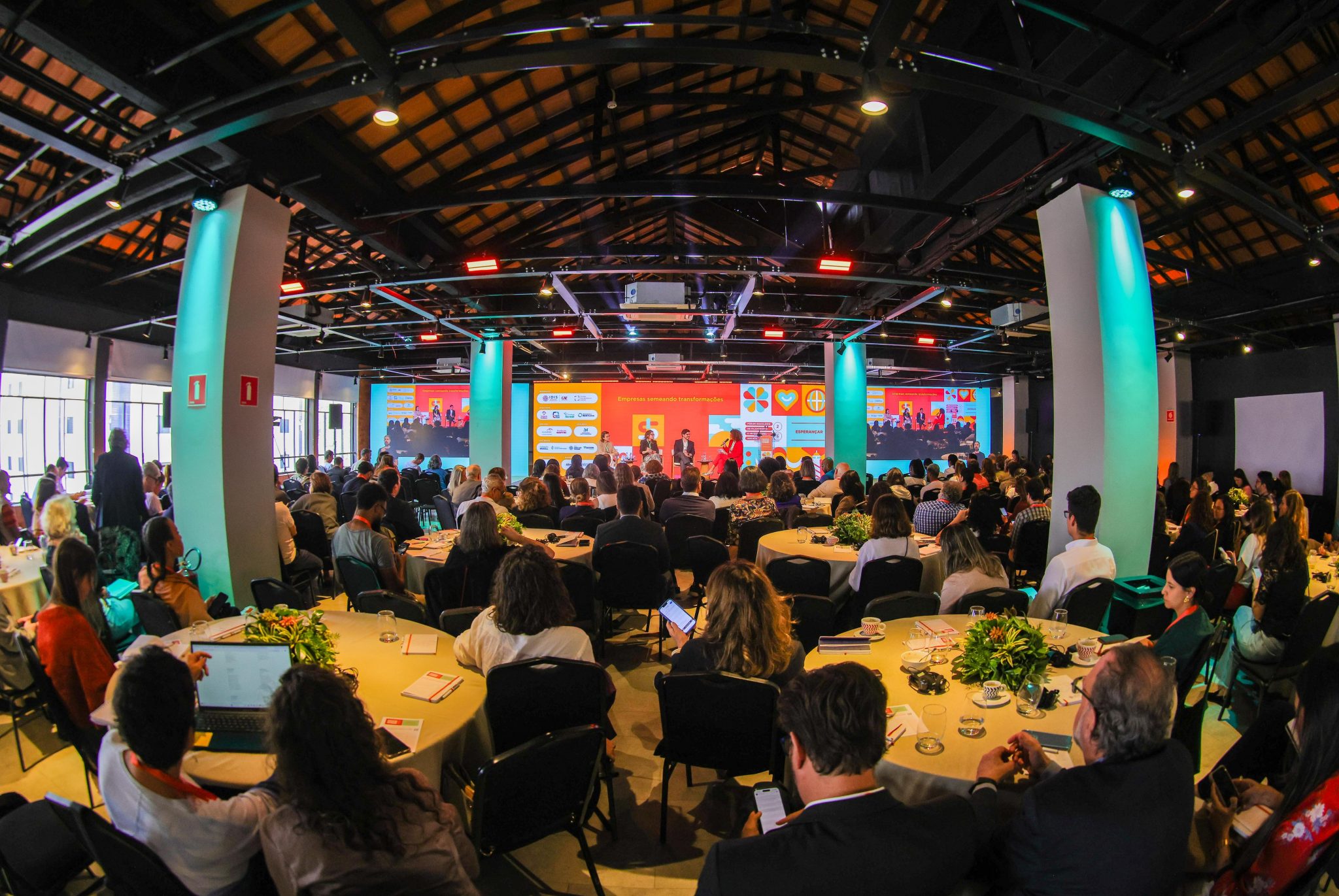
In 2025, this commitment remained strong. ‘Hope in action’ was the theme of the Brazilian Philanthropy Forum and also the guiding thread behind our work. Faced with the complexity of the global polycrisis, it is easy to feel paralyzed, with the future obscured by uncertainty. But we cannot wait. It is time to act, collaborate, mobilize efforts, and believe that a more equitable world is possible. Philanthropy serves as a beacon, pointing toward new alternatives and possibilities, transforming hope into movement.
Whether through internal initiatives or collaborations with other organizations in the sector, collective action fueled our work based on the three pillars of knowledge generation, consulting, and impact projects. Along this path, we continued fulfilling our mission of inspiring, supporting, and expanding private social investment and its impact. These stories were brought together in our Activity Report, available only in brazilian portuguese.
However, here’s some of our key achievements throughout the year.
IDIS in Numbers
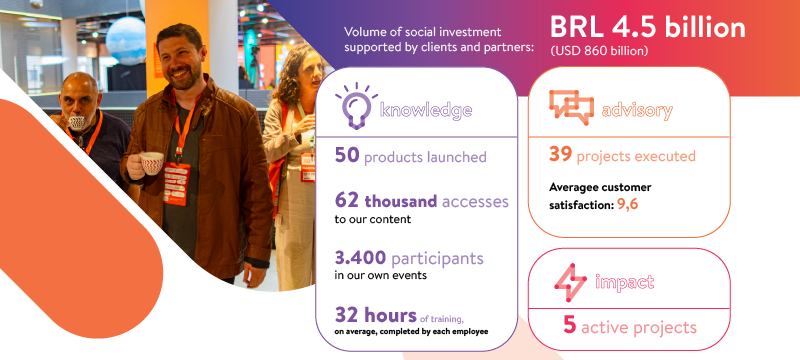
Our consulting team led 39 projects covering areas such as strategic planning, ESG agendas, endowment structuring and management, donation management, and impact assessment.
In the knowledge area, we continued our vocation of reflecting on trends, analyzing scenarios, and systematizing concepts and methodologies. We launched 50 new products, including publications, articles, technical notes, and events. We published the fifth edition of Perspectives for Brazilian Philanthropy, held another edition of the Brazilian Philanthropy Forum — once again in a hybrid format — and produced the Brazil Giving Research 2024 and the study Paths Toward a Broader and More Strategic Action in Family Philanthropy in Brazil. We also supported the development, adaptation, and translation of studies from international partner organizations, such as CAF’s World Giving Report 2025. Altogether, our content received 62 thousand visits.
The impact projects implemented and led by IDIS continued to advance. Within the Transforming Territories program, the year in which the program celebrated its fifth anniversary was marked by progress in strengthening community foundations both individually and collectively, sharing knowledge, and expanding the model across Brazil. Currently, 15 participating organizations are active in ten Brazilian states. To give greater visibility to the concept of territorial community philanthropy and strengthen the institutional communication of community foundations, the Transforming Territories Web Series was produced, presenting 14 real stories of impact, belonging, and community leadership.
Throughout the year, The Brazilian Endowment Coalition, led by IDIS, continued its advocacy work, which included several strategic meetings and the submission of technical documents, ensuring the issue remained prioritized within the legislative agenda. Culture is one of the causes with a strong tradition of funding through endowments, and in 2025 the Ministry of Culture published Normative Instruction No. 26, regulating fundraising through the Cultural Incentive Law for the establishment or expansion of cultural endowments under Law No. 13,800/2019. In this area, we also launched another edition of the Endowment Performance Yearbook and continued updating the Endowment Monitor, tracking the development of the field in Brazil.
In 2025, the Together for Health, an initiative of the Brazilian Development Bank (BNDES) managed by IDIS, completed its portfolio, with two projects finalized and 12 simultaneously under implementation. Beyond structuring partnerships and selecting initiatives, the program focused efforts on sustaining execution and monitoring activities. By 2026, approximately BRL 113 million will be allocated through a matchfunding model (50% from partners and 50% from BNDES) to 14 projects aimed at supporting healthcare initiatives, especially primary care services, diagnostics, prevention, and screening.
The 1% Commitment, a partnership between IDIS and Instituto MOL, brings together companies of different sizes and sectors committed to voluntarily donating at least 1% of their annual net profit to causes of public interest. In just one and a half years, the initiative brought together 22 signatory companies committed to donating at least 1% of their net profits through financial resources, products, or pro bono expertise.
We also launched AI.3 – Artificial Intelligence for the Third Sector. Google.org, Google’s philanthropic arm, announced an investment dedicated to artificial intelligence training for the nonprofit sector. IDIS took the lead in implementing the program, reinforcing our commitment to accessible innovation aligned with the public interest. With technical partnership of Canal SabIAr, we designed a comprehensive AI training program for NGOs across Brazil, including mentorships for effective implementation of solutions and follow-up activities to identify the program’s impact.
Global Presence and Partnerships
We believe that diversity of opinions, backgrounds, life stories, and experiences enriches our work and increases our potential for impact. Therefore, in 2025, we continued celebrating diversity and investing in the power of partnerships.
We also participated in thematic networks, reflecting, co-creating, endorsing, and implementing initiatives. We contributed to advancing important agendas aimed at strengthening the democratic environment, private social investment, and the culture of giving in Brazil.
The People Behind IDIS
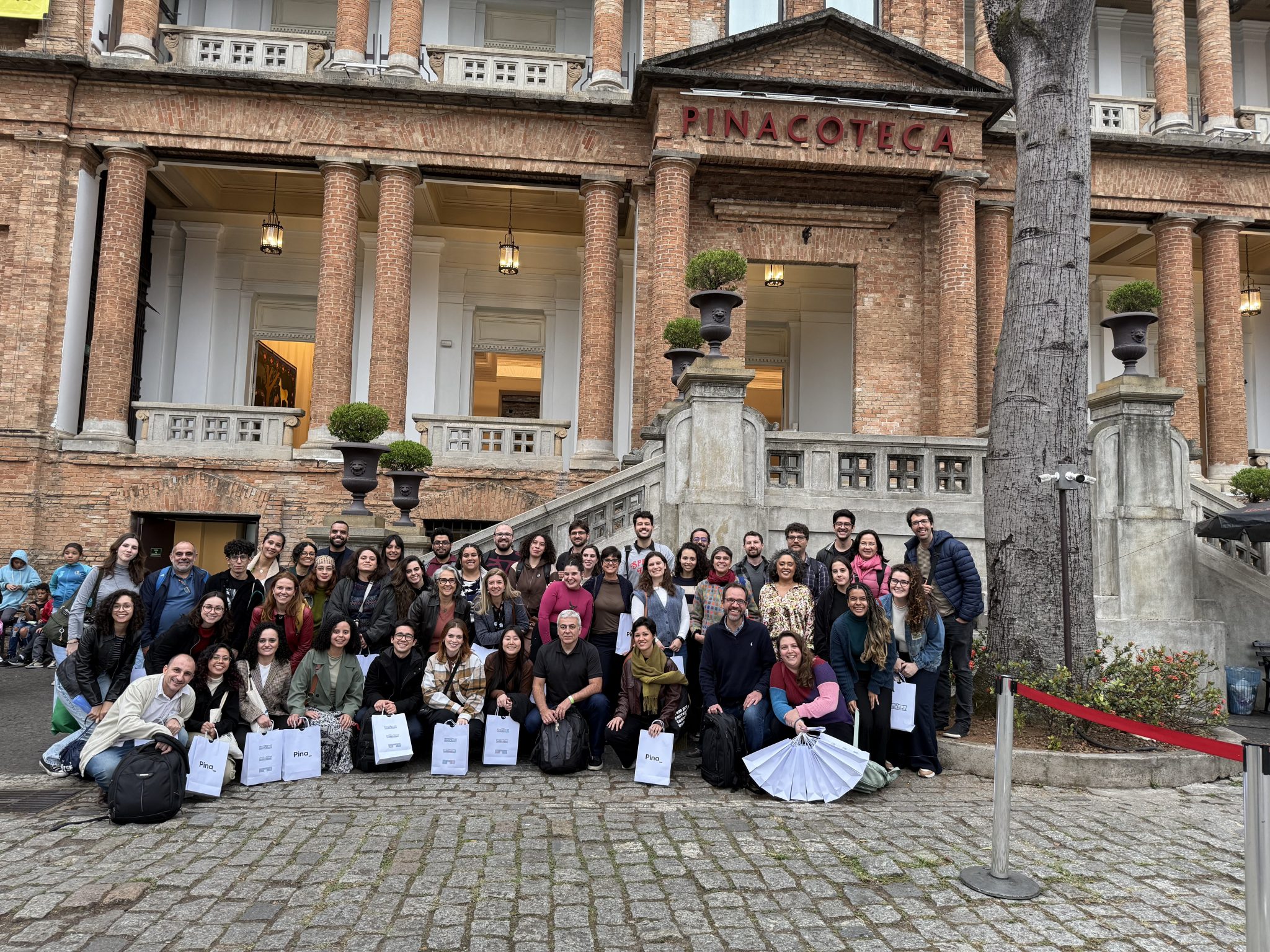
Those who make up IDIS are the ones who build our history every day. IDIS has grown not only in terms of projects, impact indicators, events, and partnerships, but also in people. We ended the year with 56 team members, which led to the creation of new people-management processes and policies.
With a hybrid work model, throughout the year we promoted a series of integration, training, and knowledge-sharing initiatives. Part of these actions was led by the Diversity Committee, composed of IDIS team members, which also coordinated the fifth edition of the IDIS Census.