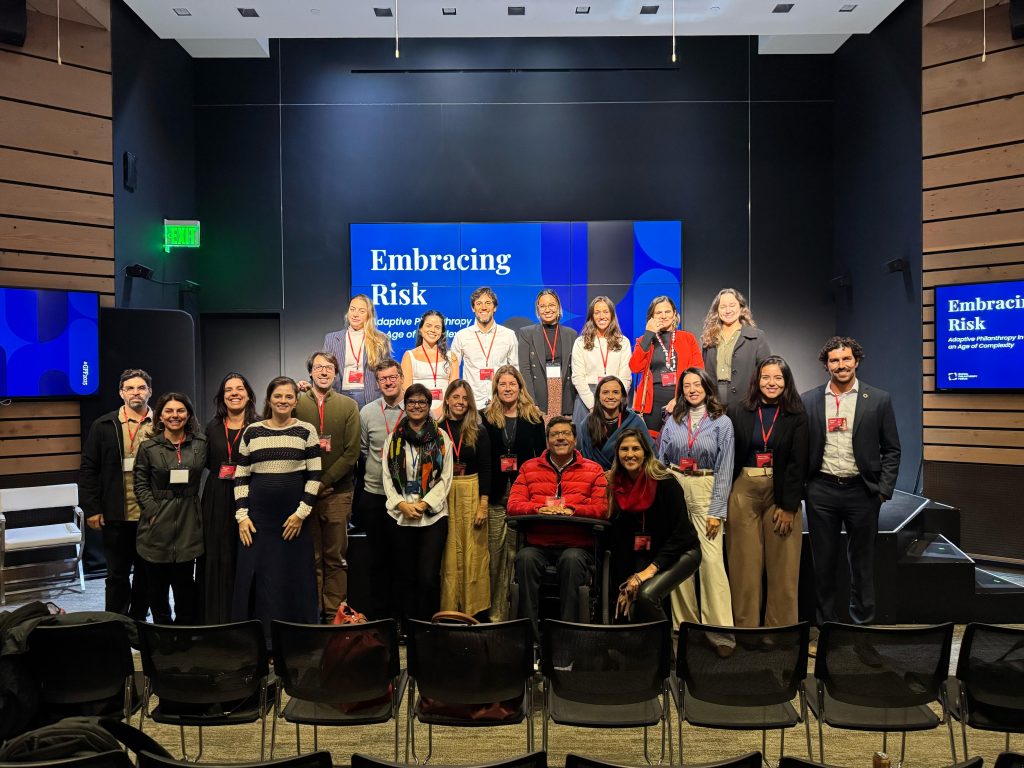
by Paula Fabiani, CEO of IDIS, to Folha de S. Paulo
The World Economic Forum, held annually in Davos, is one of the main barometers of the priorities guiding global political, economic, and business leaders. The meeting reveals, both through what is widely discussed and what is not, which agendas are shaping decisions that affect development, international stability, and the planet’s future.
In a context of simultaneous crises – climatic, social, economic, and geopolitical -, Davos offered an opportunity to observe how these dimensions are articulated within global discourse. Anxiety about the geopolitical future’s uncertainty was evident in conversations in cafés and during breaks between sessions.
Under the theme “A Spirit of Dialogue”, the Swiss town hosted a program that included heads of state and government, as well as numerous parallel events promoted by countries, companies, banks, consultancies, multilateral organizations, and civil society groups, spaces where narratives, solutions, and priorities are actively contested.
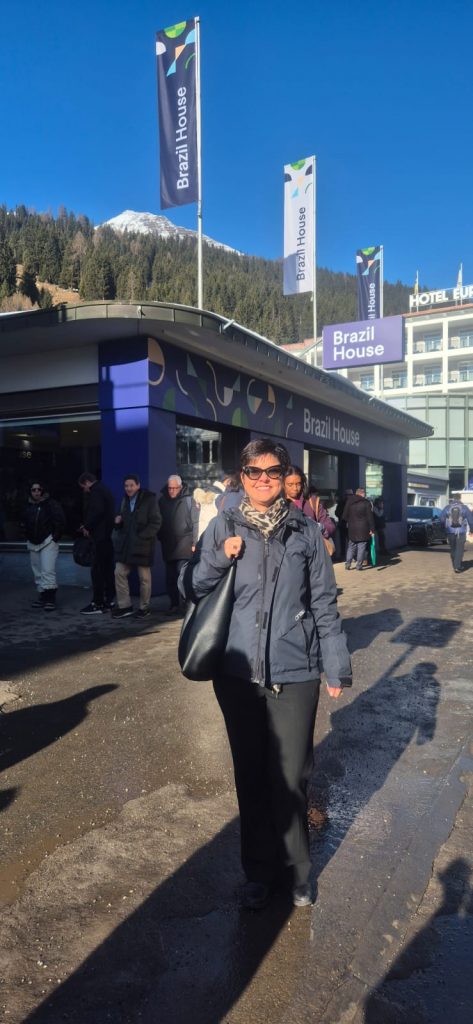 It was in this environment that I participated in a series of debates and meetings, including gatherings such as Brazil House, where I met the renowned climatologist Carlos Nobre, who remains consistently clear about the prospects for the global climate agenda.
While artificial intelligence was treated as a structuring axis of the future economy – with debates about productivity, competitiveness, regulation, and ethics – it was frustrating to see the climate crisis appearing, when mentioned at all, disconnected from these same discussions. As if it were possible to think about innovation, growth, and prosperity without considering the environmental limits that shape any long-term development project.
At the same time, Davos also hosted important discussions on philanthropy, responsible investment, impact economy, and new financial arrangements. A question that ran through many of these conversations was how to attract more capital to initiatives that generate positive social and environmental impact.
Examples such as Patagonia’s governance model were cited as references in institutional innovation, capable of aligning mission, business, and impact consistently. There was also frequent discussion of the use of “blended” structures that combine philanthropic capital with resources aimed at financial return. A positive signal came from the United Kingdom, with the creation of the Impact Economy Office, a government department dedicated to structuring and strengthening the impact economy.
Another point of convergence in the discussions was the need for collaboration. Partnerships among governments, the private sector, and civil society organizations were presented not merely as desirable, but as mandatory, given the complexity of today’s challenges.
During my participation as a speaker at the parallel event “The Art of Creating Value,” I shared the case of Juntos pela Saúde, an initiative of BNDES (Brazil’s National Bank for Economic and Social Development) managed by IDIS (Institute for the Development of Social Investment). In partnership with private donors, the initiative allocates resources to strengthen Brazil’s public health system (SUS) in the country’s North and Northeast regions. I also presented evidence of the transformative power of philanthropic giving through the example of MacKenzie Scott, who has directed US$26 billion to 2,700 organizations around the world, 28 of them in Brazil.
The overall impression that remains is one of dissonance between the agendas dominating global discourse and the magnitude of the crises we face today. Davos points to trends, but it also exposes silences. The challenge lies in transforming technological innovation, financial instruments, and multilateral agreements into integrated responses capable of addressing simultaneously the climate crisis, social inequalities, and geopolitical instability.
For Brazil, this reflection takes on even greater significance. In the post-COP30 cycle, the country still has the opportunity to position itself at the center of global debates on climate, social justice, democracy, and biodiversity.
Davos shows that there are people, institutions, and leaders genuinely committed to the future of the planet, but it also makes clear that many challenges remain. Hope alone is not enough. It must translate into political, economic, and institutional choices that are consistent with the urgency of the crises we face.