Alliance Magazine highlights Brazilian Philanthropy Forum 2026

As a Media Partner of IDIS, Alliance Magazine has published a special collection of articles covering the 2026 Brazilian Philanthropy Forum. The collection brings together different perspectives on the event, exploring its central theme, “Between Essence and Reinvention,” and the discussions held throughout the day. The coverage includes a report on the Forum, an interview with writer Conceição Evaristo, a session report on Latin American philanthropy, and reflections from participants. Together, the articles highlight discussions on territories, social justice, family philanthropy, equity, civil society, and the future of philanthropy in Brazil and Latin America. The collection also brings perspectives from professionals who participated in the Forum, expanding the conversation beyond the event itself.

Brazilian Philanthropy Forum 2026: Philanthropy between roots and new paths – Andrea Martini Pineda, Alliance regional representative

What needs to remain when everything changes? A conversation with Conceição Evaristo – Andrea Martini Pineda, Alliance regional representative, with Conceição Evaristo, writer and founder of Casa Escrevivência Conceição Evaristo

Latin American philanthropy seeks its own ways to expand its impact and strengthen civil society – Andrea Martini Pineda, Alliance regional representative

Reinventing the path, not the purpose – Andressa Vasconcelos, Sicredi Foundation

What should Latin American philanthropy preserve as it reinvents itself? – Carolina Suárez, Latimpacto

Essence, reinvention and the listening in between – Guilherme Mattoso, Movimento Bem Maior

The conditions to evolve in a changing philanthropy landscape – Nicholas Tedesco, National Center for Family Philanthropy

Between essence and reinvention: What philanthropy needs to preserve to truly transform – Thiana Carvalho, UNICEF Brazil

Reinvention begins in the territory – Valcléia Lima, Foundation for Amazon Sustainability

Reinvention must be collective, co-created and geared toward reducing inequalities – Ana Maria Cardoso, Fundação Itaú 

The value of continuity and the future of strategic philanthropy Reinvention must be collective, co-created and geared toward reducing inequalities – Denise Aguiar, Fundação Bradesco


Watch the full recording of the event:
Davos Focuses on AI and Leaves the Climate Crisis Aside

by Paula Fabiani, CEO of IDIS, to Folha de S. Paulo


The World Economic Forum, held annually in Davos, is one of the main barometers of the priorities guiding global political, economic, and business leaders. The meeting reveals, both through what is widely discussed and what is not, which agendas are shaping decisions that affect development, international stability, and the planet’s future.

In a context of simultaneous crises – climatic, social, economic, and geopolitical -, Davos offered an opportunity to observe how these dimensions are articulated within global discourse. Anxiety about the geopolitical future’s uncertainty was evident in conversations in cafés and during breaks between sessions.

Under the theme “A Spirit of Dialogue”, the Swiss town hosted a program that included heads of state and government, as well as numerous parallel events promoted by countries, companies, banks, consultancies, multilateral organizations, and civil society groups, spaces where narratives, solutions, and priorities are actively contested.

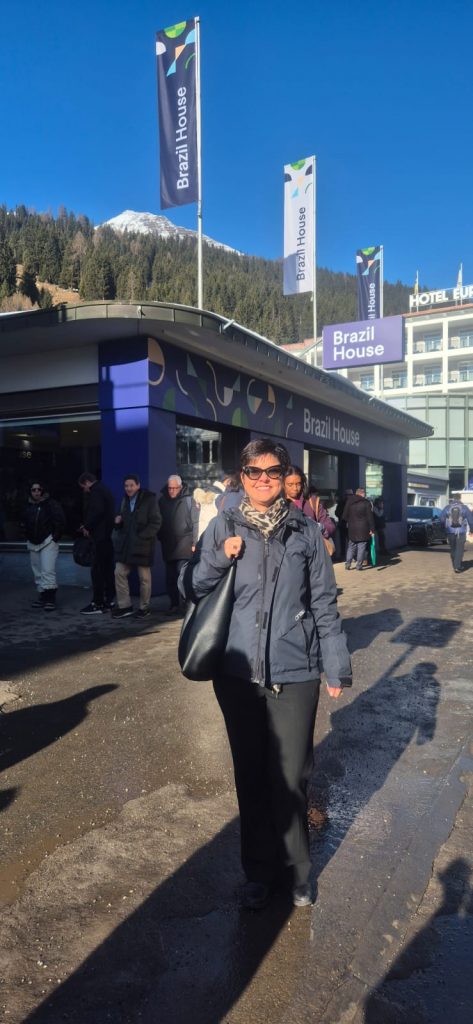
It was in this environment that I participated in a series of debates and meetings, including gatherings such as Brazil House, where I met the renowned climatologist Carlos Nobre, who remains consistently clear about the prospects for the global climate agenda.
While artificial intelligence was treated as a structuring axis of the future economy – with debates about productivity, competitiveness, regulation, and ethics – it was frustrating to see the climate crisis appearing, when mentioned at all, disconnected from these same discussions. As if it were possible to think about innovation, growth, and prosperity without considering the environmental limits that shape any long-term development project.

At the same time, Davos also hosted important discussions on philanthropy, responsible investment, impact economy, and new financial arrangements. A question that ran through many of these conversations was how to attract more capital to initiatives that generate positive social and environmental impact.

Examples such as Patagonia’s governance model were cited as references in institutional innovation, capable of aligning mission, business, and impact consistently. There was also frequent discussion of the use of “blended” structures that combine philanthropic capital with resources aimed at financial return. A positive signal came from the United Kingdom, with the creation of the Impact Economy Office, a government department dedicated to structuring and strengthening the impact economy.

Another point of convergence in the discussions was the need for collaboration. Partnerships among governments, the private sector, and civil society organizations were presented not merely as desirable, but as mandatory, given the complexity of today’s challenges.

During my participation as a speaker at the parallel event “The Art of Creating Value,” I shared the case of Juntos pela Saúde, an initiative of BNDES (Brazil’s National Bank for Economic and Social Development) managed by IDIS (Institute for the Development of Social Investment). In partnership with private donors, the initiative allocates resources to strengthen Brazil’s public health system (SUS) in the country’s North and Northeast regions. I also presented evidence of the transformative power of philanthropic giving through the example of MacKenzie Scott, who has directed US$26 billion to 2,700 organizations around the world, 28 of them in Brazil.

The overall impression that remains is one of dissonance between the agendas dominating global discourse and the magnitude of the crises we face today. Davos points to trends, but it also exposes silences. The challenge lies in transforming technological innovation, financial instruments, and multilateral agreements into integrated responses capable of addressing simultaneously the climate crisis, social inequalities, and geopolitical instability.

For Brazil, this reflection takes on even greater significance. In the post-COP30 cycle, the country still has the opportunity to position itself at the center of global debates on climate, social justice, democracy, and biodiversity.

Davos shows that there are people, institutions, and leaders genuinely committed to the future of the planet, but it also makes clear that many challenges remain. Hope alone is not enough. It must translate into political, economic, and institutional choices that are consistent with the urgency of the crises we face.

Brazilian delegation on the Global Philanthropy Forum 2026

Global Philanthropy Forum 2026 will take place from March 18-20 in San Francisco, California, and will once again include the longstanding Brazilian delegation organized and led by IDIS, strengthening connections among participants and deepening engagement with the global philanthropic community. Delegation participants also benefit from discounted event registration.

Each year, the Forum convenes more than 250 leaders, decision-makers, and changemakers from global philanthropy and related sectors, representing, according to the organizers, over US$480 billion in philanthropic assets. In 2026, attendees will gather for a programming under the theme “Architecting the Future: Operating Systems for a New Era of Philanthropy.”

In 2025, the Brazilian delegation played a prominent role in the Forum, with four speakers and 32 participants contributing actively and sharing diverse perspectives on Brazil’s philanthropic landscape. In the same spirit, many participants from the Global South, including India, Pakistan, Latin America, and African countries, shared optimistic reflections on building multi-stakeholder partnerships in contexts where uncertainty and adaptation have been part of daily life for decades.

Interested in joining the 2026 delegation?
Please get in touch with us at guilhermes@idis.org.br.

Global Philanthropy Leaders Summit 2025: Embracing Risk in an Era of Uncertainty

By Paula Jancso Fabiani, CEO of IDIS, and Felipe Insunza Groba, project manager at IDIS

The 2025 Global Philanthropy Leaders Summit, themed “Embracing Risk: Adaptive Philanthropy in the Age of Complexity,” has just taken place at San Francisco, California, from March 12 to 14, 2025. The gathering has brought together over 200 senior leaders, decision-makers from the philanthropic sector, and key stakeholders from various initiaves, to explore innovative approaches to philanthropy in an increasingly unpredictable world.

At a time of profound global challenges – ranging from rapid technological transformations to mounting threats against democracy and freedom — the summit highlights the critical need for bold, strategic risk-taking. The opening sessions encouraged attendees to reflect on philanthropy’s evolving role and the necessity for reinvention. More than ever, the sector is being called upon to step up and rethink approaches.

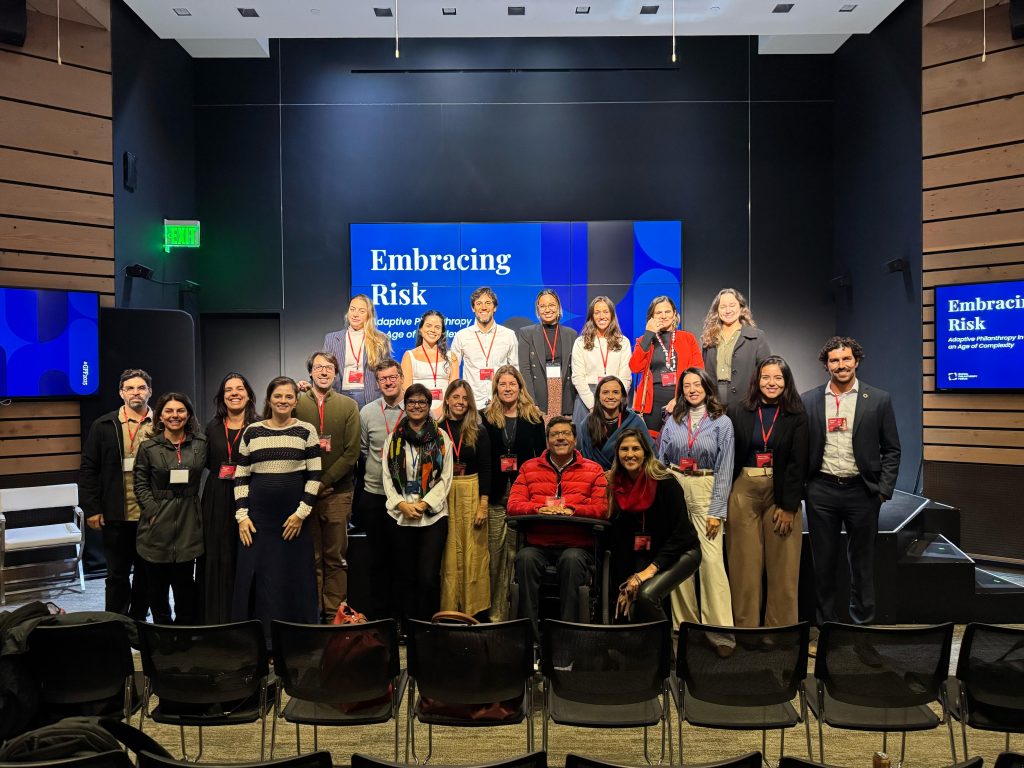
Brazilian delegation at GPF

The Brazilian delegation is notable at this year’s summit, with four panelists and 32 participants actively contributing diverse perspectives from their country’s philanthropic landscape. In that sense, many Global South participants – from India, Pakistan, Latin American and African countries – brought messages of optimism about the development of multistakeholder partnerships in their countries, in which uncertainty and adaptation have been present in daily life from decades.

A recurring theme across many discussions has been the urgent need to rebuild trust – a fundamental pillar for effective philanthropy. Participants also explored ways to improve the existing aid system and the orchestration role philanthropy could assume in bridging gaps between sectors. The significance of remittances was another focal point, reinforcing the importance of giving and collaborative action in addressing modern challenges.

Throughout the sessions, participants have been challenged to rethink their approaches to today’s pressing problems. Strategic empathy, reciprocity, and mutuality emerged as principles for fostering stronger, more resilient societies. How can these values be incorporated into philanthropy and governance?

While humanity has an innate ability to adapt, the effectiveness of different philanthropic models and strategies remains uncertain in an era of unprecedented challenges. Despite some hopeful narratives and success stories, there is a palpable sense of caution among attendees – a collective feeling of “holding our breath” as we navigate an unpredictable future. However, even amid deep uncertainty worldwide, investors and social leaders pointed to the need for action and social mobilization, by using tools like storytelling and a deeper connection to communities.

The Global Philanthropy Leaders Summit 2025 continues to push the boundaries of traditional giving, urging leaders to embrace risks, foster collaboration, and rethink their roles in shaping a more equitable world. As the techtonic plates of climate change, AI and global governance move towards unknown directions, the philanthropic sector was called to bring the stabilizer tectonic plates of hope and bold action to this shaky World.