IDIS – Institute for the Development of Social Investment has been selected as a finalist for the 2026 WINGS Ecosystem Builder Awards (WEBAs), in the Capability category, which recognizes organizations that strengthen philanthropic practice through knowledge, tools, and skills.
Launched in 2026 by WINGS, the WINGS Ecosystem Builder Awards are the first global recognition dedicated to organizations and funders working behind the scenes to strengthen philanthropy’s support ecosystems. The initiative celebrates those who contribute to making philanthropy more connected, equitable, effective, and sustainable.
The awards recognize contributions across five categories: Capacity, Connections, Capability, Credibility, and Ecosystem Funder Leadership. The selection process is peer-led, bringing together perspectives from across the global philanthropic network.
IDIS was selected as a finalist in the Capability category, which highlights organizations that advance philanthropy by developing and sharing knowledge, tools, and expertise to strengthen practices across the sector.
The nomination recognizes IDIS’s contribution to advancing strategic philanthropy and social investment in Brazil through research, advisory services, field-building initiatives, and collaboration within the philanthropic ecosystem.
Being named among the finalists reinforces IDIS’s commitment to strengthening the philanthropic sector and promoting more strategic and impactful social investment in Brazil.
By Carla Irrazabal, Project Analyst at IDIS, and Mariana de Assis, Project Coordinator at ICOM – Instituto Comunitário Grande Florianópolis
When heavy rainfall flooded parts of eastern São Paulo, the brazilian city, in early 2025, the response came quickly. Local organizations mobilized resources, coordinated partners, and assisted affected communities.
The same happened in other regions of the country: in Florianópolis, following extreme rainfall events; in the metropolitan region of Belo Horizonte, after the Brumadinho dam collapse; and in Rio Grande do Sul, during the 2024 floods. In all these cases, one element was repeated: the capacity to respond emerged from within the communities themselves.
The experience accumulated through these initiatives reveals, however, that it is not enough to simply recognize that local communities respond better to emergencies. It is also necessary to create the conditions for them to be prepared before the next crisis occurs.
Extreme events are already part of Brazil’s reality, yet we continue to organize much of our efforts and investments only after the damage has occurred.
This approach contrasts with international examples. In Bucharest, Romania, a city considered one of the European capitals at greatest seismic risk, a permanent fund for future emergencies, shared protocols among different institutions, and an ongoing culture of preparedness have been maintained for years, even though the city has not experienced a major earthquake in decades.
If a territory anticipating an uncertain disaster continuously invests in prevention, why does Brazil still concentrate its resources almost exclusively on response?
This reflection gained momentum within the Transforming Territories Program, an initiative that strengthens Community Foundations (CFs) in different regions of the country. Throughout the meetings, organizations operating in different contexts shared the same assessment: regardless of their location, they were already experiencing the growing impacts of the climate emergency.
It was through this process that the pilot initiative of the Preventive Emergency Funds (FEPs) emerged, supported by the Mott Foundation, Movimento Bem Maior, and Fundação FEAC. The proposal is based on a simple but profound shift: financing what comes “before.”
This means mapping risks, identifying vulnerabilities, developing protocols, establishing criteria for action, bringing together public authorities, civil society organizations, companies, and community leaders around shared governance, and structuring financial mechanisms that can be activated quickly when necessary.
ICOM – Instituto Comunitário Grande Florianópolis, which has more than two decades of experience in creating and managing community and emergency funds, served as a technical partner in this pilot initiative, sharing its established methodology and providing technical assistance to six Community Foundations and Institutes located in Porto Alegre (RS), Belo Horizonte (MG), Paraty (RJ), Maceió (AL), and two territories in the city of São Paulo.
Territorial assessments were conducted, cross-sector committees were established, preventive plans were developed, and local cooperation networks were strengthened.
Community Foundations and Institutes occupy a strategic position in this process. As organizations deeply rooted in their territories, they understand local dynamics, maintain relationships of trust with communities, and are able to bring different sectors together around shared objectives.
Historically, philanthropy has been called upon after tragedy has already struck. Preventive Emergency Funds propose reversing this logic by directing investments toward reducing vulnerabilities and strengthening communities’ response capacity. This is perhaps the initiative’s most significant innovation.
It is still too early to measure all the results of this initiative. Some of them can only be assessed when the next extreme events occur. Even so, perhaps the most important indicator is another: that, in the future, preparing communities for crises will cease to be an innovation and become a permanent practice in Brazilian philanthropy.
By Guilherme Sylos, Director of Prospecting and Partnerships at IDIS
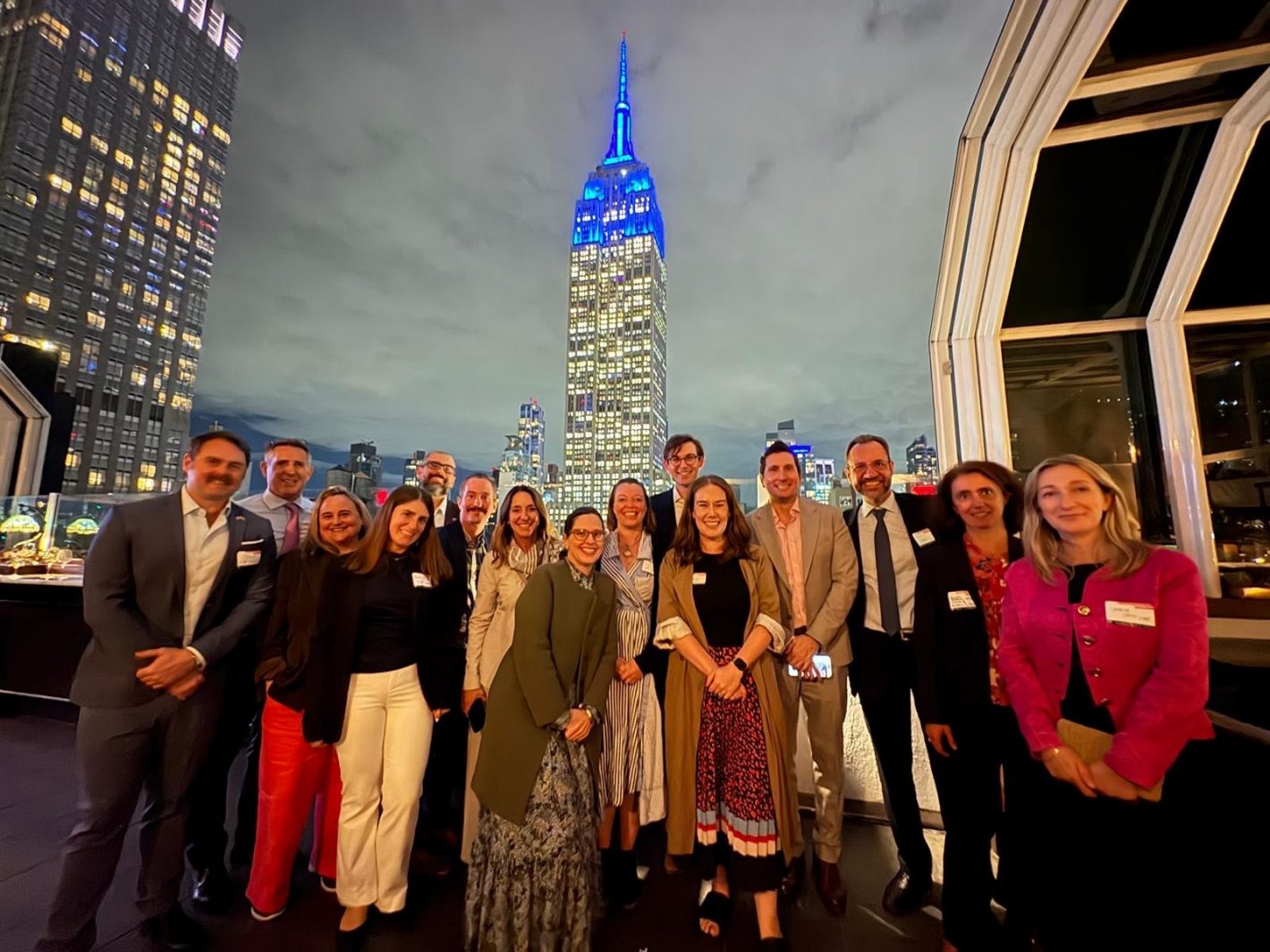
For a few days in September, New York becomes a major meeting point for leaders from different parts of the world. Held alongside the United Nations General Assembly, Climate Week NYC brings together civil society organizations, companies, investors, foundations, and government representatives for an extensive agenda of discussions and meetings.
Representing IDIS, I participated in several activities throughout the week, with an agenda that included discussions on the realities faced by civil society organizations, philanthropy in Latin America, and the challenges of building more effective partnerships and networks.
My participation began with CAF – Charities Aid Foundation, a network of which IDIS is a member, at an event marking the launch of the World Giving Report: Charity Insights 2026. The global publication brings together the perspectives of more than 5,000 leaders of social purpose organizations across 33 countries and seeks to understand the challenges facing the sector, its priorities, and the conditions needed to strengthen its resilience.
Among the global findings, 67% of responding organizations reported an increase in demand for their services over the past year. At the same time, fewer than four in ten consider themselves well-positioned for future success, and 92% identify at least one way in which funders could support them beyond providing financial resources.
In Brazil, 195 organizations participated in the survey, and the results reveal strong connections with the international landscape. Here, 66% also reported an increase in demand for their services, while 78% expect demand to continue growing. IDIS published a specific analysis of the Brazilian findings, exploring issues such as the quality and flexibility of funding, impact measurement, and institutional development.
The meetings organized by CAF provided an opportunity to discuss what these figures mean in different contexts. In one of the sessions, I was able to contribute a perspective on the Brazilian landscape in comparison with the global findings and exchange views with representatives from other countries. What stands out is how many of these challenges transcend borders. Pressure for more resources, growing demand, and the need to strengthen organizations themselves are recurring issues across different contexts, even though each country has its own particularities.
Another discussion that stood out to me during the week focused on Latin America and our ability to build a more integrated agenda.
From the perspective of other regions of the world, Latin America is often perceived as a single entity. Within the region, however, we still tend to operate largely within national borders. Brazil, Mexico, Argentina, Colombia, and other countries in the region share many social, economic, and environmental challenges, as well as similar characteristics in their philanthropic and social investment landscapes. Yet we do not always develop joint responses or create shared spaces for learning.
During the conversation, the question was even raised as to whether the Portuguese language might be a barrier to greater integration between Brazil and its neighbors. The language difference exists, but it does not explain everything. We face very similar challenges, and there is considerable room to expand exchanges, learning, and joint efforts among countries.
More than simply recognizing ourselves as part of Latin America, we need to think about what we can accomplish as a region.
Partnerships and Artificial Intelligence
This reflection was also connected to a session organized by Latimpacto at the Mattos Filho office, dedicated to building partnerships and networks. Participants from different countries shared experiences and challenges related to putting collaboration into practice. Several themes resurfaced throughout the conversation: trust, transparency, accountability, and the difficulty of balancing institutional interests with the leadership and agency of the organizations involved.
These are familiar issues for those who work with alliances. However, the fact that they continue to emerge in different spaces and countries shows that there is still work to be done.
The week also included several opportunities to build relationships, including a gathering organized by the Skoll Foundation with partners from different parts of the world.
One final reflection came from a topic that was virtually absent from the sessions I attended: artificial intelligence. After following so many recent discussions about the impacts of AI on organizations, work, and society, I expected it to feature more prominently in these conversations as well.
I came away with two hypotheses. One is that many organizations have not yet effectively integrated these tools, which is why the topic has not gained significant traction in certain discussions. The other is almost the opposite: perhaps artificial intelligence is becoming so embedded in everyday routines that we are beginning to stop treating it as a separate agenda item.
My main takeaway from the week was the importance of the connections built in these spaces. The challenges we face rarely respect national borders. This applies to the climate crisis, the sustainability of civil society organizations, and the development of philanthropy. For Brazil and Latin America, there is an opportunity to turn shared challenges into greater collaboration, shared knowledge, and a stronger capacity for collective action.
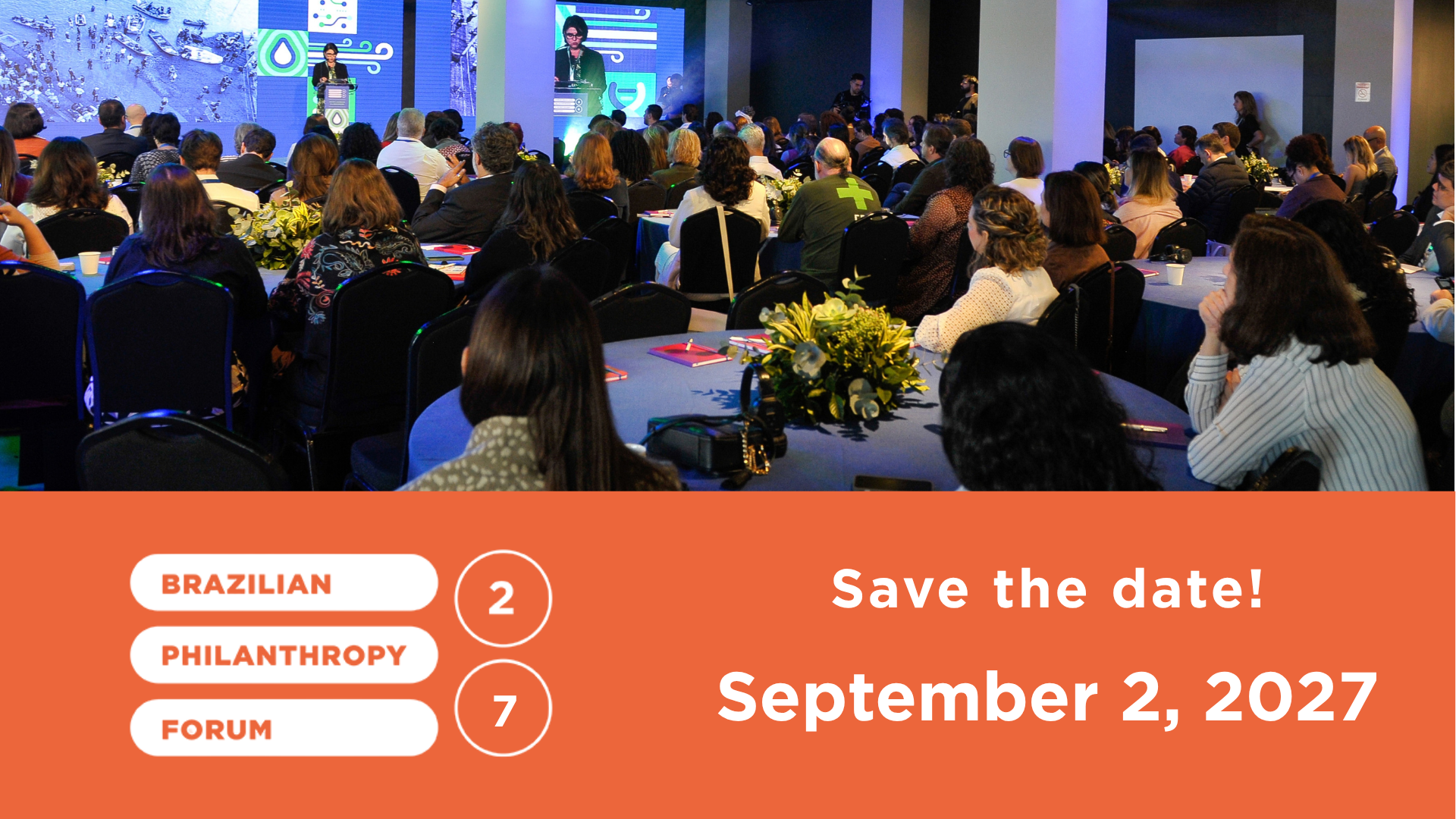
The 2027 Brazilian Philanthropy Forum already has a date: September 2, 2027. Organized by IDIS – Institute for the Development of Social Investment, the event will bring together leaders in private social investment to discuss pathways and perspectives for the sector.
Held annually by IDIS since 2012, the Forum is a space for dialogue, exchange of experiences, and building connections among strategic actors in the field.
The 2027 edition already has Fundação Sicredi as a Silver Supporter, contributing to the event and helping strengthen this space for reflection and collaboration within Brazil’s philanthropic ecosystem.
Would you like to learn more about how to support the event? Contact us at: comunicacao@idis.org.br
As a Media Partner of IDIS, Alliance Magazine has published a special collection of articles covering the 2026 Brazilian Philanthropy Forum. The collection brings together different perspectives on the event, exploring its central theme, “Between Essence and Reinvention,” and the discussions held throughout the day. The coverage includes a report on the Forum, an interview with writer Conceição Evaristo, a session report on Latin American philanthropy, and reflections from participants. Together, the articles highlight discussions on territories, social justice, family philanthropy, equity, civil society, and the future of philanthropy in Brazil and Latin America. The collection also brings perspectives from professionals who participated in the Forum, expanding the conversation beyond the event itself.
The 15th editionoftheBrazilianPhilanthropyForumtookplaceon August 27 in São Paulo. Organizedby IDIS, theeventbringstogetherleadersand experts tostrengthenphilanthropy in Brazil, foster connections, andencouragethedevelopmentofsolutionsto social challenges.
Brazilian Philanthropy Forum 2026: Between essence and reinvention
With the theme Between essence and reinvention, the Forum’s sessions addressed issues such as the power of territories, new architectures for cultural, territorial, and socio-environmental financing, equity and persistent inequalities, impact and shared value creation, as well as different perspectives on Latin American and family philanthropy. Throughout the day, 314 guests attended the event, while the livestream reached nearly 5,000 views.
The program featured 13 sessions across 10 hours of programming, with 56 speakers. Among those taking part were Conceição Evaristo (Casa Escrevivência Conceição Evaristo), Belisa Maggi (Fundação AMAGGI and Instituto Signativo), Claudia Calais (Fundação Bunge), Eliana Sousa Silva (Redes da Maré), Michael França (Insper), Nick Tedesco (National Center for Family Philanthropy), Somachi Chris-Asoluka (Tony Elumelu Foundation), Valcléia dos Santos (Fundação Amazônia Sustentável), and Vitor Hugo Neia (Fundação Grupo Volkswagen).
The program opened with a performance by the Orquestra Maré do Amanhã, bringing the strength and potential of local territories to the stage. Next, Conceição Evaristo, writer and founder of Casa Escrevivência Conceição Evaristo, led the Forum’s first reflection in the session “What needs to remain when everything changes?”. In a speech marked by sensitivity and depth, the writer invited the audience to reflect on what should be preserved amid transformation and on the values that underpin the construction of fairer and more inclusive futures.
Panel ‘What needs to remain when everything changes?’
The first plenary, “Reinvention now. Relevance always!”, explored ways for philanthropy to adapt to a changing world without losing sight of its purpose. The discussion highlighted the importance of rethinking practices, strategies, and approaches so that philanthropic organizations and initiatives can maintain their relevance and expand their ability to generate social impact.
Next, the plenary “The power of territories: When essence guides reinvention” placed at the center of the debate the importance of recognizing the specific characteristics, knowledge, and potential present in each territory. The discussion reinforced how listening and local leadership can guide new approaches and strengthen initiatives capable of promoting transformations that are more closely connected to the realities and needs of communities.
The session “1% Commitment: The journey to joining the movement” highlighted the experiences of companies that have committed to allocating at least 1% of their net profits to social and environmental initiatives. The discussion demonstrated how joining the movement, which now has 30 signatories, can strengthen corporate social investment, bringing business practices closer to positive-impact strategies and contributing to a private sector that is increasingly engaged with society’s challenges.
In parallel sessions, participants explored different perspectives on the challenges and possibilities of reinvention in philanthropy. “Capital in reinvention: New architectures for cultural, territorial, and socio-environmental financing”discussed new ways of mobilizing and directing resources, while “Reinventing equity: New responses to persistent inequalities” explored strategies for addressing historical inequalities and developing more effective and inclusive responses.
Closing the morning program, the thematic lunch provided opportunities for exchange and deeper discussion. At each table, a host facilitated a conversation around one of the 20 proposed themes, broadening reflections on different issues related to philanthropy and social investment.
The program continued with a Dynamic Session, bringing new perspectives on the landscape of Artificial Intelligence in the social sector and on funding opportunities—both key elements in philanthropy’s ongoing reinvention. The session featured reflections by Célia Cruz, Visiting Fellow at the Skoll Centre, and Pedro Barros, co-founder of Sul – Intelligence for Impact, both members of the AI for Impact Coalition.
In the traditional “In conversation with…”interview, Paula Fabiani, CEO of IDIS, spoke with Denise Aguiar, Managing Director of Bradesco Foundation, who shared her personal story and her perspective on the paths of philanthropy, the challenges of the present, and the importance of strengthening an approach committed to lasting social transformation.
Panel ‘In conversation with…’
In the panel “Impact that creates value: When data strengthens business and society”, participants discussed how the strategic use of data can help understand results, guide decision-making, and enhance the impact of initiatives. The conversation highlighted the importance of turning information into knowledge to generate value for both businesses and society.
In parallel sessions, participants further explored the role of different actors in philanthropy. “Latin American Philanthropy: Pathways to a shared future”reflected on the challenges and opportunities for strengthening philanthropic action across the region, while “Family Philanthropy: Local roots, lasting transformations” explored the role of families in building initiatives connected to local territories and capable of generating long-term impact.
The program also featured the 2025 winners of the Social Entrepreneur Award, who presented their initiatives, journeys, and the purpose behind their work.
Finally, the closing plenary, “The future is a choice, not a destiny”, reflected on the role of our choices in shaping the future we want. The discussion reinforced that the path toward a fairer and more sustainable society is not predetermined, but built through the decisions, commitments, and actions we take today.
“Reinvention does not mean breaking away from everything that came before. Sometimes, reinventing means finding new ways to honor what has always driven us: a commitment to the common good, reducing inequalities, strengthening civil society, and building a fairer and more sustainable world.”
— Paula Fabiani, in her closing remarks”
Watchthe full recordingoftheevent:
Organization and Support
The Brazilian Philanthropy Forum is an initiative of IDIS – Institue for the Development of Social Investment, Charities Aid Foundation (CAF), and Global Philanthropy Forum (GPF). The Forum counts on Strategic Partne’s from Movimento Bem Maior and Fundação Bradesco; Gold Partner from RD Saúde; Silver Partner from Fundação Sicredi; Bronze Partner´s from Fundação ArcelorMittal, Fundação Grupo Volkswagen, Levisky Legado, and Instituto Sicoob; Institutional Partne’s from Fundo de Fomento à Filantropia and UNICEF. Media Partners are Alliance Magazine and Stanford Social Innovation Review Brasil.
Building the future is an act of choice, and making choices requires naming what we want to change, having the courage to make public commitments, and being willing to engage in difficult conversations. These were the issues at the heart of the discussion between Nicholas Tedesco, President and CEO of National Center for Family Philanthropy (NCFP); Rodrigo Pipponzi, Member of the Social Impact Committee at RD Saúde and co-founder of Commitment 1%; and Michael França, Coordinator of the Racial Studies Center at Insper, during the closing panel of the 2026 Brazilian Philanthropy Forum, moderated by Paula Fabiani, CEO of IDIS.
Nicholas Tedesco, President and CEO of National Center for Family Philanthropy (NCFP)
For Nicholas, representing family philanthropy, courage begins by questioning the motivation behind a philanthropic legacy. Drawing on his experience in contexts where a culture of giving is already well established, Nicholas notes that families give, but do not always ask why, for what purpose, or what they want to endure.
Reimagining family philanthropy means creating space to question what should be preserved and what needs to change. Nicholas argues that we are in a period of transformation in which purpose must go hand in hand with current needs while anticipating those of the future. This means building governance structures that can sustain choices over time and creating conditions for different generations to come together around a common agenda.
In the United States, Nicholas shared that many families have increasingly directed their support toward democracy and efforts to address the climate crisis, but he emphasized that this process requires conversations about power and privilege that the field still tends to avoid.
In Brazil, the challenge comes earlier, as the involvement of wealthy families in philanthropy is still incipient and poorly documented, as highlighted in the report Paths to a Broader and More Strategic Action in Family Philanthropy in Brazil, produced by IDIS. According to data from the GIFE Census, in 2024, family foundations and institutes invested R$395 million, equivalent to approximately 7% of the total mapped by the census.
Turning to the social role of businesses, Rodrigo Pipponzi focused his remarks on the courage to make public commitments and uphold them over time. RD Saúde chose not to create a separate institute, meaning that the company’s business mission and social commitment are treated as one and the same. This is reflected, for example, in allocating a percentage of net profit to social investment, as a signatory to Commitment 1%, a collaborative initiative between IDIS and Instituto MOL that seeks to encourage companies to donate to civil society organizations.
Other ways the company has sought to align its business with its role in society include linking executive bonuses to ESG targets and involving senior leadership in the Social Impact Committee. Finally, Rodrigo emphasized that corporate philanthropy plays a catalytic role, with mobilization now being one of RD Saúde’s strengths. One example is the ‘round-up for charity’ initiative, which raises between R$4 million and R$5 million every year for civil society organizations in Brazil.
Paula Fabiani, CEO at IDIS
Prompted by Paula Fabiani to discuss how inequality affects Brazilian society and the role of philanthropy in this context, Michael França, representing academia, brought questions to the table that the field rarely addresses in depth. Referring to his recently published book Os Custos das Desigualdades: uma carta às elites econômicas [The Costs of Inequalities: a letter to the economic elites], co-authored with Daniel Duque and published by Editora Jandaíra, Michael argued that in a society that is among the most unequal in the world, the externalities produced by inequality are not always sufficiently addressed, making it harder to break cycles of inequality and narrowing the range of possible futures.
Reinventing philanthropy, in this sense, also means recognizing what it still fails to see. Michael spoke about his decision not to keep this knowledge confined to academic circles, instead bringing data and evidence into public debate and dialogue with governments. For philanthropy, he emphasizes that education alone cannot solve everything, and that transforming Brazilian society must extend beyond the walls of schools.
The conversation that followed with the audience deepened critical aspects of the current debate, revealing that the questions raised by the three speakers resonated beyond the stage. The first question, about the role of philanthropy in the face of denialism, elicited complementary responses from Michael França and Nicholas Tedesco. Michael pointed to a structural asymmetry in philanthropy as a driver of knowledge production: international funding tends to place greater trust in researchers and provide long-term institutional support, while in Brazil, funding tends to be more restricted, geared toward confirming hypotheses and answering narrowly defined questions. Nicholas added, based on his experience in the United States, that universities are seen as reference centers for disseminating philanthropic best practices and developing leaders — a role that is still being consolidated in Brazil.
The second question opened a discussion about collaboration among foundations, organizations, and smaller businesses. Nicholas said there is no magic formula, but that in the United States there is a growing recognition of the need to collaborate, even though some reluctance remains. For him, addressing the root causes of problems is only possible through systemic change, and systemic change requires collaboration. Pipponzi reinforced this argument from a business perspective, emphasizing that companies need to be willing to relinquish power and certain deeply held convictions in order to work together with communities and other actors, creating incentives for collaboration.
Rodrigo Pipponzi, Member of the Social Impact Committee at RD Saúde
In their closing remarks, each speaker offered a synthesis that echoed the theme of the panel. Pipponzi emphasized that building the future we want requires the courage to make choices and sustain them over time. Michael proposed thinking about legacy as a way of reducing social distances, maintaining integrity between philanthropic and business roles. Nicholas concluded with an invitation to keep spaces like the Forum alive, so that conversations like this can remain open.
Latin American identity seems to be increasingly visible. And this is not only because of the success of Latin music on Spotify and around the world. There is something that connects us and defines us, something that cannot be ignored. Perhaps the uncertainty of a world marked by conflict and the need to affirm identities have helped bring these shared characteristics to the center of the conversation.
Panel ‘Latin American Philanthropy: Pathways Toward a Common Future’
We have much in common, both in characteristics that could become trends and strengths to be valued, and in the things we feel need to change. At the same time that we are one of the most unequal regions in the world, we see generosity expressed in many everyday actions that shape our communities.
Our historical heritage, marked by colonization, Indigenous peoples, and the influence of the African diaspora forcibly brought to the region through slavery during the colonial period, shapes many of these characteristics. From Tierra del Fuego to Monterrey, we share histories, challenges, forms of solidarity, and a diversity that cannot be overlooked when we talk about Latin America.
Bringing this perspective to philanthropy, the panel “Latin American Philanthropy: Pathways to a Shared Future”, held during the Brazilian Philanthropy Forum 2026, invited us to reflect on what unites us, what Latin American countries have in common, and which characteristics of our region can contribute to building a stronger, more autonomous, and more connected philanthropic field.
The moderator, Guillermo Correa, Executive Director of Red Argentina para la Cooperación Internacional, opened the conversation by challenging participants to think about how to strengthen Latin American philanthropy without simply importing external models. The question ran throughout the entire panel: how can we expand collaboration among countries, strengthen our own capacities, and at the same time preserve the diversity and essence that characterize our ways of generating social and environmental impact?
Cassio França, Secretary general of GIFE, brought the Brazilian experience as a starting point for thinking about broader characteristics of the region. He spoke about the weight of corporate philanthropy: among GIFE members, 60% are companies and 20% are families.
This dynamic is reversed in the U.S. philanthropic landscape, where family philanthropy predominates. He raised a question about the role of family philanthropy in Latin America. In his view, it can bring something different to the field and create space for issues and causes that may not be as prominent in corporate philanthropy. The idea is not to choose between one form and another, but to recognize the contribution of different actors to building a more diverse ecosystem.
His remarks also highlighted an important point about the environment needed for this field to grow stronger: the need for a more favorable legal framework for giving. In a region marked by concentrated resources and deep inequalities, strengthening a culture of giving also means discussing the instruments and policies that encourage or hinder the allocation of private resources to the public good.
João Paulo Vergueiro (JP), Director of GivingTuesday’s Latin America and Caribbean Hub, brought a reflection on the different meanings of philanthropy to the conversation. Not only its literal meaning of “love of humanity”, associated with generosity, but also philanthropy understood as giving and as a field within civil society. Drawing on his experience at GivingTuesday, JP emphasized that generosity is already present in the everyday lives of Latin American countries. Solidarity and the willingness to help others are not necessarily something we need to create. The challenge is to recognize, structure, and strengthen these practices so that they can contribute more consistently to the philanthropic field.
But to do so, we still know too little about the field itself. A seemingly simple question — “How many civil society organizations are there in the country?” — already reveals the lack of data and research in many parts of the region. For JP, gaining a better understanding of the field is essential to making more strategic decisions and strengthening civil society.
The lack of data is also connected to an issue raised by Carolina Suárez, CEO of Latimpacto: the need to build greater trust in the Latin American social sector. She emphasized the importance of evidence, while also highlighting the need for balance. Many organizations do not have the same capacity to produce reports, indicators, and accountability materials in the formats required by funders. Without taking this reality into account, excessive requirements may divert resources away from precisely those organizations that are closest to the communities they serve.
Carolina Suárez, CEO of Latimpacto
For Carolina, developing a model of our own for Latin America is essential. Examples and solutions do not necessarily lie in models imported from the United States or other contexts. Many of them already exist here, in local practices, civil society networks, forms of community solidarity, and the ability of territories to organize and collaborate.
Carolina also highlighted the importance of building a Latin American identity. She noted that when people from African countries attend international conferences, they often say “I am African” rather than identifying primarily by their country of origin. We need to draw on this example and proudly affirm that we are Latin Americans.
In a second round of questions, which were more direct and focused on practice, Guillermo asked participants specifically about how to move forward and what examples could serve as references.
Cassio returned to the issue of the legal framework and emphasized the importance of instruments capable of encouraging a culture of giving and strengthening domestic resource mobilization. One of the references mentioned was India, where corporate social responsibility legislation requires companies that meet certain financial criteria to allocate at least 2% of their average net profit from the previous three years to corporate social responsibility initiatives.
JP summarized part of the conversation in three words: narrative, data, and structure. The narrative is needed to tell the story of what the third sector already does and has been doing across Latin America. Data provides the inputs needed to understand the field strategically. And structure means strengthening the networks that already exist in Brazil and Mexico and are beginning to take shape in Colombia, through groups such as GIFE.
Carolina concluded by emphasizing what may be one of Latin America’s greatest strengths: human capital. The ability to build relationships, mobilize people, work collaboratively, and develop solutions rooted in local territories is part of the region’s strength. For this potential to achieve greater scale, we will need to expand integration, trust, and pride in our shared identity.
This conversation showed us that Latin American philanthropy does not need to “reinvent the wheel” or seek answers in ready-made models from the Global North. Our strength lies precisely in what already exists here and is deeply Latin American: generosity, solidarity, cultural diversity, and the strength and leadership of our communities.
João Paulo Vergueiro | Director for Latin America and the Caribbean at GivingTuesday
The diversity of the continent, with its different histories, cultures, forms of organization, and ways of responding to local challenges, should not be a barrier to building a common agenda. On the contrary, it is an asset for developing solutions that are more closely connected to our realities.
In a context of polycrisis, in which social, political, economic, and climate-related challenges overlap, strengthening our bonds as Latin American hermanos becomes even more important. Models and experiences have already been developed here. The path forward may lie precisely in learning more about what our neighbors are doing, sharing lessons, and strengthening this regional network, which still has enormous room to grow.
This website uses cookies so that we can provide you with the best user experience possible. Cookie information is stored in your browser and performs functions such as recognising you when you return to our website and helping our team to understand which sections of the website you find most interesting and useful.
Strictly Necessary Cookies
Strictly Necessary Cookie should be enabled at all times so that we can save your preferences for cookie settings.
If you disable this cookie, we will not be able to save your preferences. This means that every time you visit this website you will need to enable or disable cookies again.


 This reflection was also connected to a session organized by Latimpacto at the Mattos Filho office, dedicated to building partnerships and networks. Participants from different countries shared experiences and challenges related to putting collaboration into practice. Several themes resurfaced throughout the conversation: trust, transparency, accountability, and the difficulty of balancing institutional interests with the leadership and agency of the organizations involved.