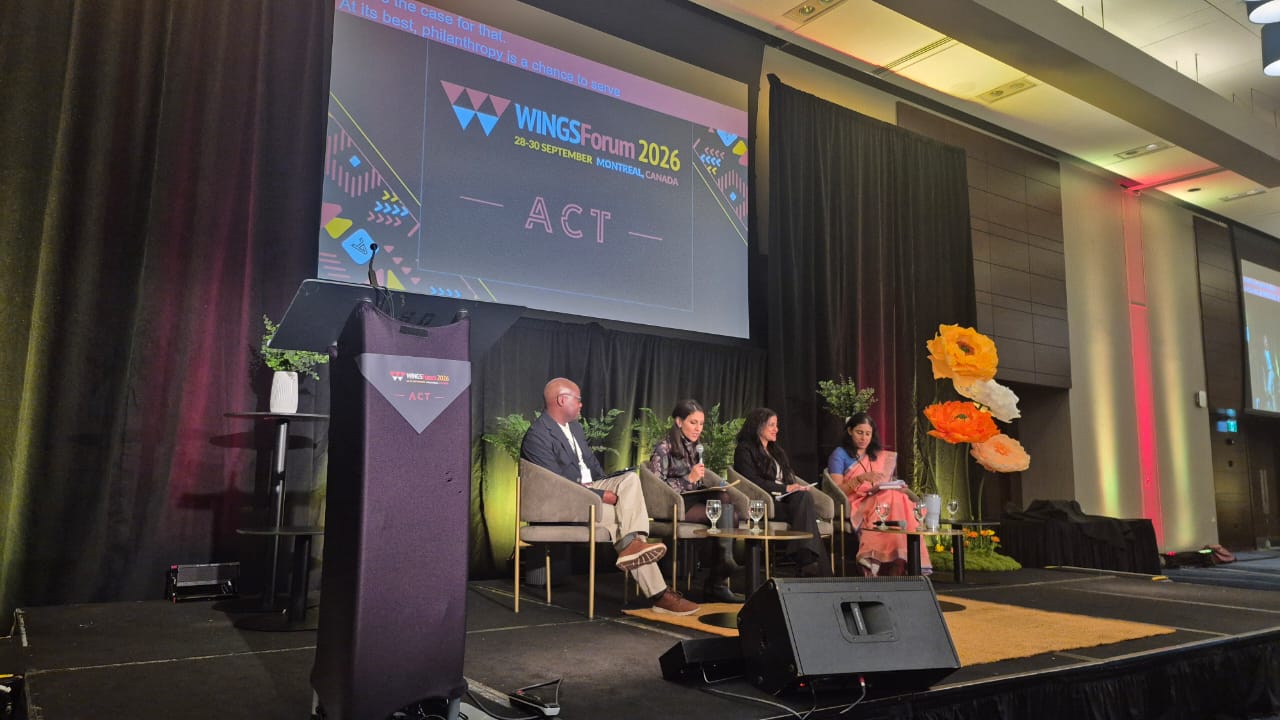
At the WINGS Forum 2026 in Montreal, putting communities at the center, expanding flexible and multi-year funding, and helping strengthen civil society and democracy were some of the highlights.
By Luisa Lima, Communications and Knowledge Manager at IDIS
 Every three years, WINGS offers us the opportunity to step away from our daily work and enter the engine room of philanthropy, taking a closer look at the mechanisms that drive it and dedicating time and reflection to making them more effective and better aligned with contemporary challenges. The broader landscape includes global issues such as the crisis of democracy and multilateralism, climate change, and the digital revolution. This year’s gathering was an invitation to ACT, exploring the dimensions of activation, collaboration — particularly with governments — and transcendence.
Across plenary sessions, parallel discussions, and workshops, there was a clear consensus on the importance of placing local communities and the territories affected by our work at the heart of every decision. Socio-environmental impact must be the ultimate focus of philanthropy, and funders’ indicators should be adapted to reflect that impact — not the other way around. Funders must also take greater responsibility for risk, which is inevitable but currently falls disproportionately on communities. Binaifer Nowrojee, President of the Open Society Foundations, emphasized that our system is pushing grassroots organizations away, forcing them to devote increasing amounts of time and resources to meeting funders’ requirements and speaking their language.
Flexible, multi-year funding was another prominent topic. Noorain Khan, Chief Investment Officer at the Ford Foundation, went as far as to call for an end to one-year grants. She advocated for three-year commitments, although many participants believed that even this timeframe is insufficient to achieve systemic change.
Governance and accountability mechanisms play an important role in building relationships based on trust. The need to develop a shared language, allowing us to create complementary and mutually reinforcing narratives about philanthropy, was also a recurring theme throughout the event.
Strengthening cultures of giving and recognizing philanthropy’s role in supporting democracy and safeguarding human rights were also central to discussions. This was the network’s first gathering since the USAID funding cuts and the many others that followed. Countless organizations are now under threat, facing direct attacks in addition to the severe funding constraints.
Filipino journalist Maria Ressa, winner of the 2021 Nobel Peace Prize and Co-Chair of the UN Scientific Panel on Artificial Intelligence, warned that unchecked AI threatens human autonomy, democracy, and public safety.
Philanthropy in Latin America and the Caribbean
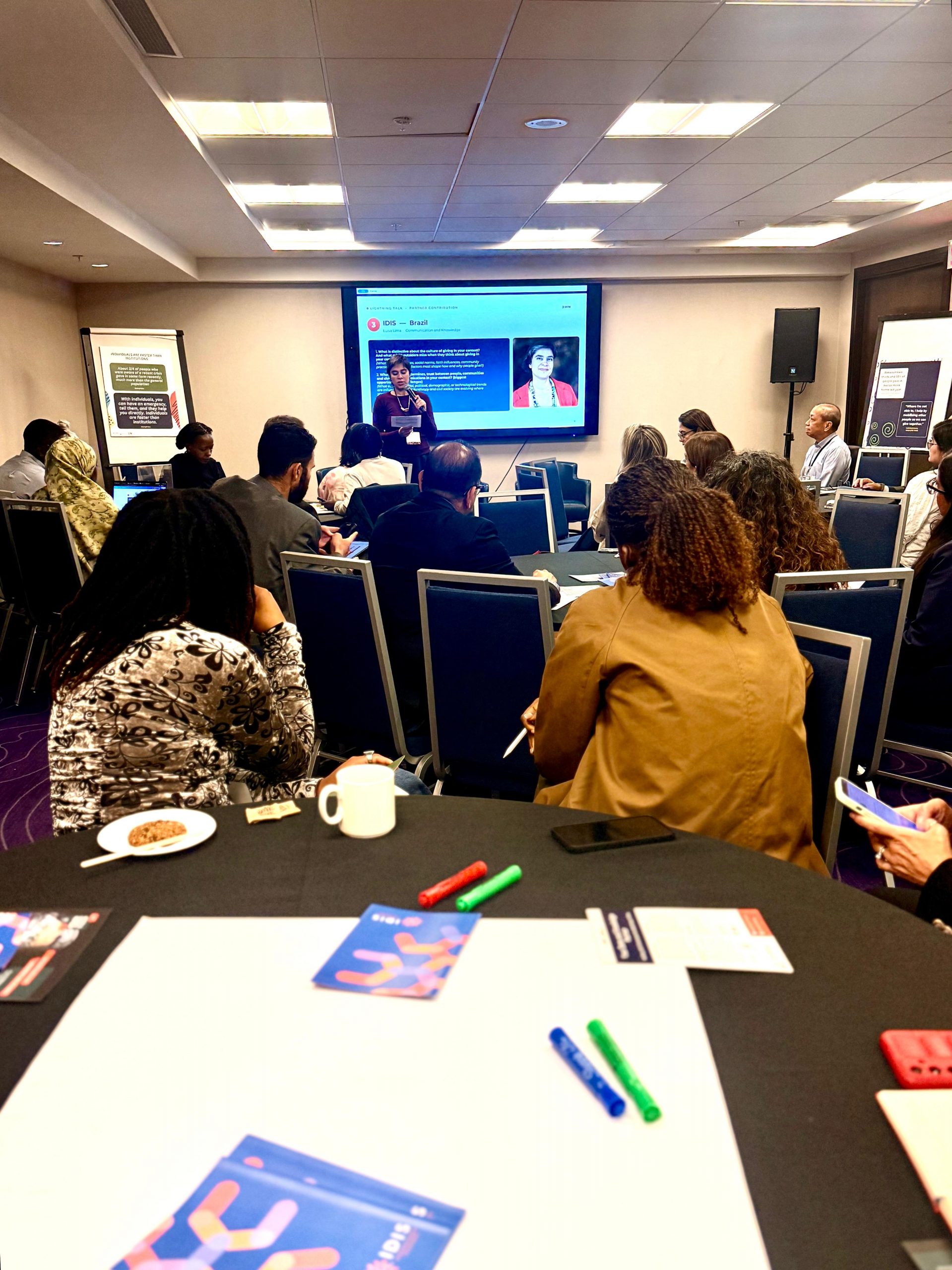
Despite the Forum’s global scope, there were numerous opportunities to explore issues related to specific causes, as well as local and regional contexts, identifying common ground, differences, and opportunities for collaboration. During the two days preceding the conference, I participated in a gathering of leaders from Latin America and the Caribbean focused on developing joint plans for the region.
We are 33 countries that share not only geography and a rich diversity of peoples, but also a colonial past that has left deep marks on the formation of our societies and lies at the root of many of the inequalities we face today.
Each country certainly has its own particularities, and identifying what truly unites us — and how we can effectively act together — is far from straightforward. As an initial step toward alignment, a trend-mapping exercise was conducted to identify the region’s most pressing issues. The findings will be consolidated in the second edition of a report published by the group.
The challenge of building trust became particularly evident, as civil society organizations across all countries face attacks, albeit with varying degrees of intensity. The region also has relatively limited data on philanthropy, funding flows, and impact, creating additional challenges for developing more compelling narratives and a shared taxonomy. Collaboration to achieve better outcomes emerged as a key priority, but one of the main barriers is financial: collaboration requires resources, and few funding sources are available to support this type of work. Nevertheless, we worked on a prototype that could serve as a starting point for regional action.
In addition to this group, two others focus on philanthropy in Africa and the Asia-Pacific region. Time was also dedicated to exchanges among the three groups, identifying areas of convergence as well as regional specificities.
An ecosystem constantly seeking balance
The analogy between philanthropy and an ecosystem is frequently used. Within this ecosystem, we must create the conditions for everyone to reach their full potential and ultimately contribute to a better, more equitable world for all.
Beyond donors and grant recipients — who themselves represent a wide range of actors — the ecosystem includes intermediaries, support organizations such as IDIS, think tanks, government agencies, multilateral institutions, and development banks. There is no shortage of remarkable initiatives carried out by each of these actors. No one is standing still, as Benjamin Bellegy, Executive Director of WINGS, pointed out. Yet, as in any ecosystem, coordinated action is essential, with each actor fulfilling a clear role and supporting one another. This requires a delicate balance that we must constantly strive to maintain.
The days were intense, filled with thought-provoking discussions that challenged participants to genuinely assess whether their organizations are moving in the right direction and at the right pace.
While the scale of the challenges can feel overwhelming, Andrew Chunilall, CEO of Community Foundations of Canada (CFC), offered a reassuring perspective: “Generosity is at the heart of our origins. Foundations were created to organize generosity. Somewhere along the way, we lost our direction, reducing generosity to financial resources. From now on, our focus must be on unlocking generosity in its many forms. The good news is that generosity already exists.”
Gatherings like these are essential for bringing emerging issues to the forefront, building common ground, understanding global developments, strengthening shared messages, fostering connections, and reenergizing participants. They enable each of us to return to our organizations better equipped to do more and do better, save lives, and drive the transformations we wish to see.