The gift of now: what Brazil teaches the world about philanthropy

This article was originally published in Alliance Magazine on November 5, 2025

By Alejandro Álvarez von Gustedt, VP of Rockefeller Philanthropy Advisors Europe

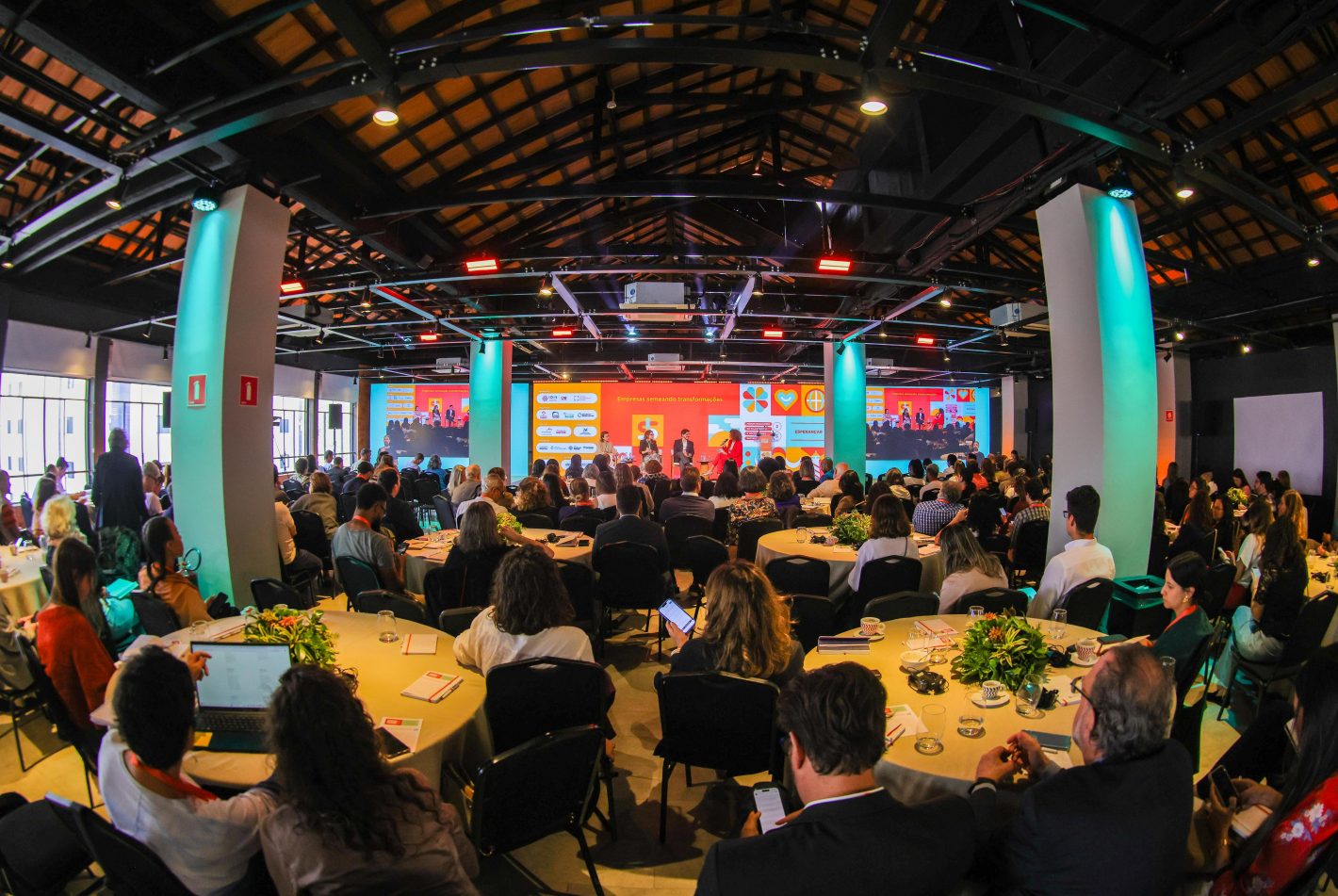
I was delighted to return to Sao Paulo to attend the Brazilian Philanthropy Forum that took place on October 1st. Organized by IDIS – Institute for the Development of Social Investment and the Global Philanthropy Forum, it offers an unique space for the philanthropic community to gather, exchange experiences and learn with their peers.

This year’s theme, ‘Hope in Action,’ could not have been more timely. It explored how philanthropy can respond to the immense social and environmental challenges confronting both Brazil and the world—challenges so complex that they can easily lead to inaction.
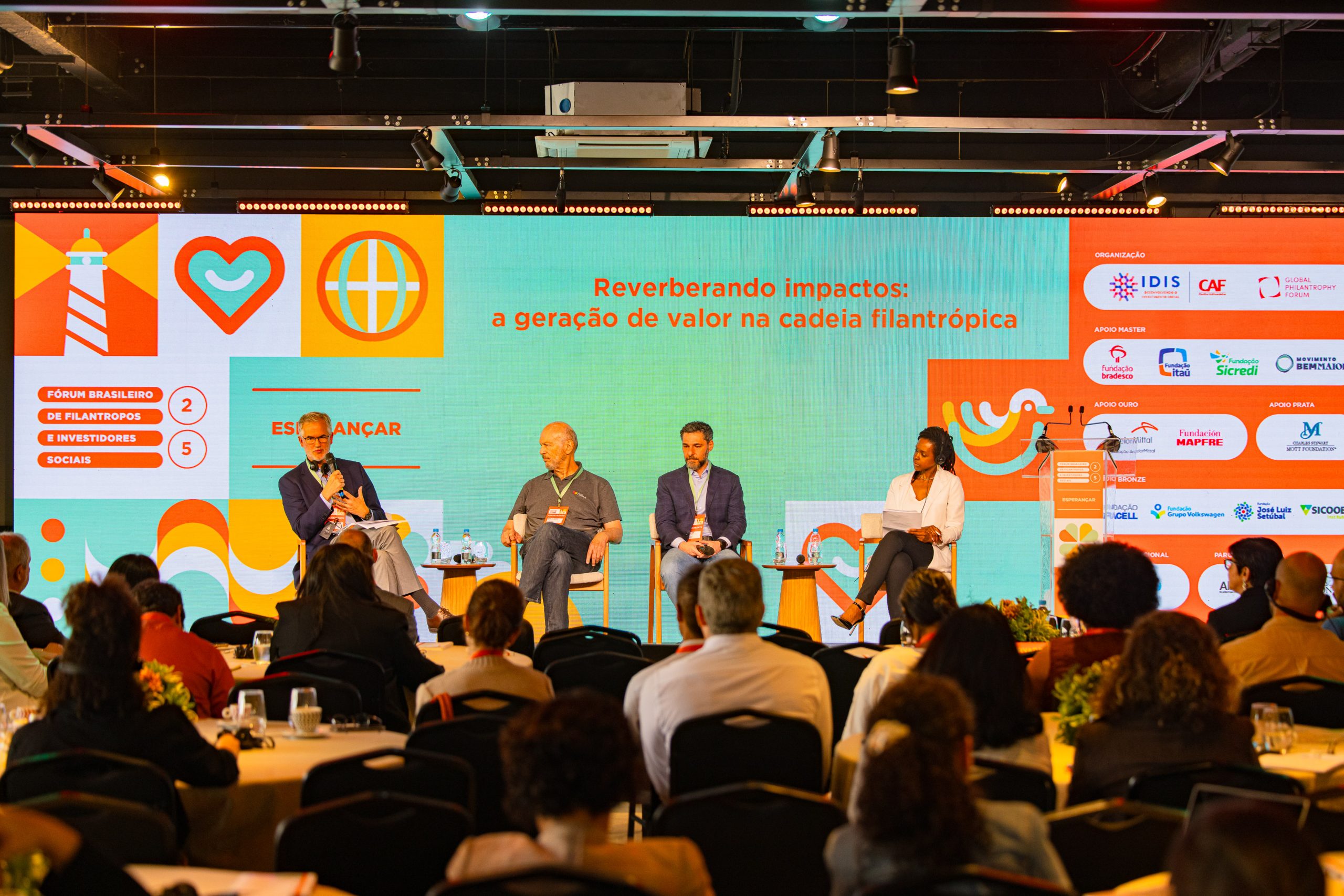
Alejandro speaking in the Brazilian Philathropy Forum. Photo: Caio Garça

It was an outstanding event – not only because it was extremely well-curated at a particularly beautiful venue, the Casa Melhoramentos, which unlike most conference venues features big open windows to the outside world, plenty of natural light and a much more conducive environment for connecting and letting serendipity work its magic.

The depth and breadth of the discussions was outstanding. Sessions covered a wide range of topics, and angles of how philanthropy can catalyze hope and real action at a time when the overwhelming scale of societal challenges can lead to paralysis. Each conversation and angles were so wide and rich that they cannot all be listed here but included such meaningful ones as the role of corporates, pathways for increasingly impactful family philanthropy, social entrepreneurship and the the role of new technologies.

I was honored to share the stage with such distinguished leaders such as Aron Zylberman, Executive Director of Cyrela Institute, and David Saad, President and Executive Director of Natura Institute, with the masterful moderation by Thais Nascimento, Program Coordinator at GIFE, a Brazilian association of institute, foundations and companies. Together, we explored how corporate philanthropy can be truly effective in catalyzing real, positive impact for a range of companies’ stakeholders, including the communities they operate within, and the companies and people involved in their value chains, and for society more broadly. Cyrela and Natura are in fact great examples of this.

Further, we also discussed how corporate philanthropy and social investment should be in the interest of any company as they ultimately not only generate social returns but also, as a result, tangible and intangible benefits for the companies themselves. A key takeaway from our conversation was the shared conviction is that true, sustainable impact begins with communities themselves. It requires recognizing their agency and engaging them with genuine deep listening and authentic collaboration.

On a purely personal level one of the most memorable moments for me was listening to and learning from Daniel Munduruku, from the Uka Institute –  House of Ancestral Knowledge, who so beautifully and almost poetically represented the indigenous people’s non-linear concept of time. His reflection about their focus is on the ‘now’, their living the present as precisely that: a present, as in a gift.

As always when I visit Brazil, I walked away with a big positive energy boost caused by the contagious optimism, dynamism, can-do mindset, creativity and resourcefulness of the philanthropy and social impact community there. I know Brazilians tend to be very self-critical and to look to ‘the North’ for inspiration but I honestly believe that those of us in the North have a few things to learn from Brazil’s social innovators, especially in reminding us what it takes to put ‘Hope in Action.

Hope is collective: strengthening local infrastructure for resilient philanthropy

This article was originally published in Alliance Magazine on November 5, 2025

By Felipe Bogotá, executive director of TerritoriA

Hope is not a solitary feeling. It is something we build together. Across Latin America, philanthropy is discovering that resilience and transformation emerge not from isolated acts of generosity, but from collective infrastructures of trust. This spirit was palpable at the Brazilian Philanthropy Forum 2025, organized by IDIS, which brought together a vibrant network of leaders, organizations, and communities under one shared call: put hope into action.

During the Forum, I shared my views on how to enhance interdependence and resilience in philanthropy. My perspective draws inspiration from the growing Latin American movement of 56 Community Foundations, which by the end of 2024 had mobilized more than U$D 75 million to strengthen work in the field, catalyzing the local initiatives that have been caring, working, helping and dreaming their own territories.

Felipe Bogotá, executive director of TerritoriA, during the Brazilian Philanthropy Forum. Photo: Caio Garça

One of the moments that truly brought me hope was the Transforming Territories manifesto video, presented by the collective of Community Foundations participating in the homonymous project led by IDIS, with support from the Mott Foundation and Movimento Bem Maior. The web series features fourteen Community Foundations across Brazil that are strengthening local infrastructure in unique and inspiring ways—each one showing that hope becomes tangible when communities take the lead in shaping their own futures.

This movement reminds us that systemic transformation doesn’t start with scale; it starts with relationships, trust, and rootedness. Building on both the Forum’s discussions and the lessons emerging from these community foundations, I offer four concrete actions for the philanthropic ecosystem:

  1. Fund local intermediaries as trust hubs
    Frontline organizations and community-based groups need an anchor—a place where donations, knowledge, and coordination converge. Territorial Foundations are built for this. Multi-year, core support to these hubs creates continuity beyond project cycles.
  2. Adopt participatory governance by default
    Structures like community panels, citizen juries, or giving circles can determine where resources go—guided by clear criteria and community consent. When decisions are taken with people rather than for them, philanthropy evolves from charity into collaboration. Donors become partners, and beneficiaries become co-owners.
  3. Shift to flexible and catalytic funding
    Trust and resilience grow when we finance learning, adaptation, and risk. General operating support, matching pools, first-loss guarantees, and recoverable grants signal, “We’re with you as you figure it out,” not “Prove it before you start.”
  4. Institutionalize learning loops
    Share not only what succeeded but also what failed, what changed, and what’s next. When organizations narrate their uncertainty with rigor, they model honesty, and honesty is the soil of trust.


The invisible infrastructure that makes resilience possible

As a member of the Community Foundations movement in Colombia, an organization dedicated to philanthropic infrastructure at the local level, I am convinced that mechanisms, channels, and scenarios with incentives and enablers are essential for the future of philanthropy and well-being in local communities.

The region (I think the world too) will continue to face shocks—economic, climatic, political. Resilience is not only about having more money; it is about having trusted local institutions able to act quickly, include many, and stay accountable. When trust infrastructure is strong, a funding cut or a storm doesn’t paralyze the system; it re-routes energy through existing, legitimate channels.

Finally, I believe that philanthropy could contribute to big problems in the world; for example, the lack of trust that has been impacting our democratic systems. If we develop a strong philanthropic ecosystem we will inspire different actors to mobilize actions to enhance transparency, relationships and share vision. I am convinced that those things can help to build not only a more effective philanthropy, but also a more cohesive and hopeful society, committed to the common good.

When technology meets care: innovation, data, and social investment are redefining public health for a more equitable future

This article was originally published in Alliance Magazine on November 5, 2025

By João Abreu, co-founder and director of ImpulsoGov

In many parts of the world, technology has transformed the way societies deliver services, but not always the way they deliver care. In Brazil, where more than 170 million people depend on the public health system (SUS), representing about 80% of the population, the challenge goes beyond modernizing healthcare. It is about ensuring that innovation drives inclusion, transparency, and prevention.

Across the philanthropic landscape, a growing movement is exploring how data, artificial intelligence, and digital infrastructure can help bridge persistent inequalities in access to health. The focus is shifting from technology as an end in itself to technology as a tool for collective wellbeing. I had the opportunity to discuss this topic at the 2025 Brazilian Philanthropy Forum, during the panel ‘Innovation and Technology: From Dystopia to Utopia,’ moderated by Pedro Rossi, Vice President of The Global Fund for a New Economy, alongside Camila Valverde, Executive Director of the ArcelorMittal Foundation, and Eduardo Saron, President of the Itaú Foundation.

P

Plenary ‘Monitoring as a Bridge-Building Tool’, during the Brazilian Philanthropy Forum. Photo: Caio Garça


From treatment to prevention

Brazil’s universal health system is one of the world’s most ambitious public health systems, providing free, universal healthcare to a population larger than the UK and Germany combined. It has long been a symbol of public commitment to equality. Yet, the system still faces the challenge of reaching millions of citizens with timely, preventive care. Diseases that are potentially preventable continue to affect vulnerable populations who often lack consistent follow-up or early screening.

This is where philanthropy has begun to play a decisive role, financing innovation that helps the public sector act before crises emerge. By investing in digital tools, open data platforms, and local capacity building, philanthropic organizations are helping transform health management from reactive to preventive. Prevention, however, depends not only on medical capacity, but on information ecosystems that enable health teams to identify risks early and respond efficiently.

The use of digital tools in Brazil’s public health system is demonstrating that innovation, when designed for equity, can reach scale without sacrificing purpose. A notable example is Impulso Previne, a free, digital platform we developed at ImpulsoGov to support preventive health strategies within the SUS. It compiles and analyzes public data on essential indicators — from cancer screening to maternal health — and presents them in a simple, actionable format for local health professionals. By identifying which patients have overdue exams or unmonitored conditions, and linking them directly to responsible teams, the system helps municipalities act faster and more effectively. Also, the platform’s range of functionalities includes automating patient outreach with mobile reminders for check-ups and chronic disease follow-ups.

It has demonstrated measurable positive impacts on public health outcomes. According to an internal evaluation, within one year, thanks to the initiative, 1,540 women completed more than six prenatal consultations, 1,468 women received dental prenatal care, and 69,120 people received ongoing hypertension monitoring.

Impulso Previne is financed by the Together for Health program, part of the Brazilian Development Bank (BNDES) efforts and managed by the IDIS (Institute for the Development of Social Investment)The projects are financed through a matchfunding model with BNDES. Impulso Previne, in particular, is co-financed by Umane and it was previously by Dynamo Institute.


The broader role of philanthropy

For Brazil’s philanthropic sector, innovation in health is not merely a matter of efficiency; it is an ethical choice. Supporting preventive health technologies offers one of the most direct ways to reduce inequality, particularly for people who are disproportionately affected by systemic barriers to care.

This concept was also emphasized during the 2025 Brazilian Philanthropy Forum, organized by IDIS, which fostered reflections and dialogue on how philanthropy can act as a catalyst for meaningful change in times of crisis, reinforcing the urgency of turning hope into action. Participants discussed topics such as climate change and its social impacts, the role of companies in transformation, technological challenges and innovations in the social sector, and the importance of collective resilience and interdependence to design a fairer future.

The panel ‘Monitoring as a Bridge-Building Tool,’ featuring Ana Fontes, Founder of Rede Mulher Empreendedora (RME) and Instituto RME; Jessie Krafft, CEO of CAF America; and Leticia Born, Associate Director for Global and Latin America at Co-Impact, and moderated by Wesley Matheus, Secretary for Monitoring and Evaluation of Public Policies and Economic Affairs at Brazil’s Ministry of Planning and Budget, brought valuable reflections on the importance of conducting impact monitoring while maintaining a balance that enables funding mechanisms to foster autonomy and trust among implementing organizations.

One of the topics discussed was the relevance of unrestricted funding, which is not limited to the delivery of specific project outcomes but can instead support institutional development, research, and innovation. In addition, participants emphasized the importance of collaboration between different organizations and funders working toward shared goals, and the need to view philanthropy not only through a short-term lens but also as a driver of systemic change, grounded in trust and transparency.

In the context of healthcare, the experiences emerging from Brazil show that technology — when combined with collaboration, trust, and a preventive mindset — can truly drive transformation. Philanthropy plays a vital role in ensuring that innovation serves people first, helping build systems that are not only smarter, but fairer and more humane.

Hope is not illusion, it is strategy

This article was originally published in Alliance Magazine on November 5, 2025

By Fátima Lima, Sustainability Director at MAPFRE and Representative of Fundación MAPFRE in Brazil

There are moments in one’s professional journey that touch us more deeply, awakening not only our technical gaze but also the human sense of the mission we carry. Being present at the 14th edition of the Brazilian Philanthropy Forum, promoted by IDIS, was precisely that: a passage. More than an institutional participation, my presence there, representing Fundación MAPFRE, was the living expression of a commitment that, for 50 years, has transcended discourse and materialized into concrete actions that create lasting social impact.

It was an atmosphere of listening, courage, and collective willingness to face the challenges of our time. The theme chosen for this year — “Hope in Action” seemed to echo in every word, gesture, and exchange that took place. But this verb was not conjugated in the future tense; it was lived in the present. The ‘hope in action’ we spoke of at the Forum is daily action, movement, a political and ethical choice not to conform.

As the representative of Fundación MAPFRE in Brazil and a guest on the panel ‘Companies Sowing Transformation’, I had the privilege of sharing our vision of Fundación MAPFRE’s role — founded by MAPFRE and celebrating its 50th anniversary this year — in building long-term social impact through a consistent global strategy adapted to local realities.

The IDIS Forum is a convergence point for worlds that often operate in silos: the corporate sector, civil society, traditional philanthropy, and new forms of social investment. Listening to Indigenous writer Daniel Munduruku in the opening session reminded me that time is not a straight line — it is ancestry and also seed. And that, in order to hope in action genuinely, we must recognize our history and decide with whom we truly wish to walk.

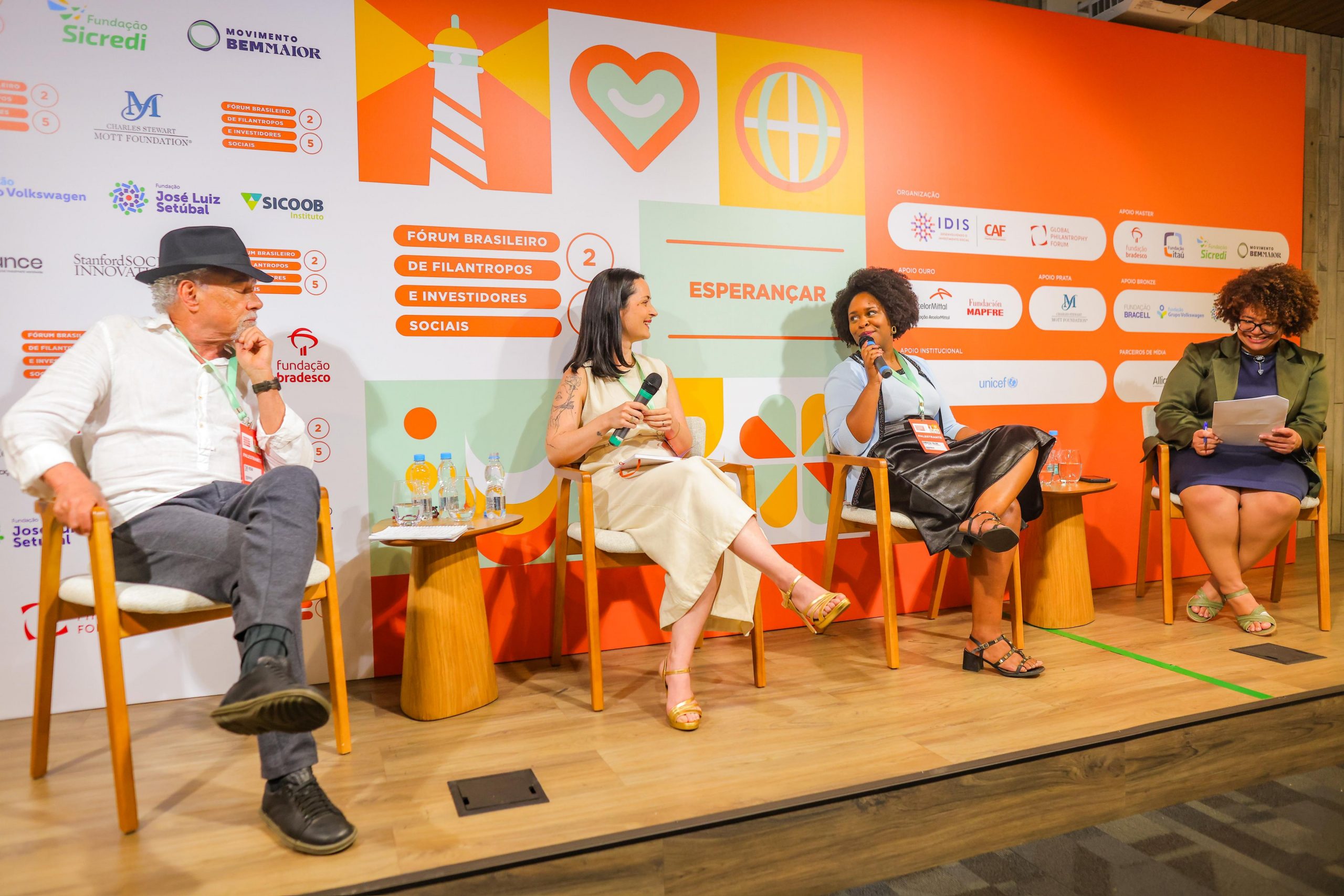
Brazilian Philanthropy Forum 2025 during the panel Companies Sowing Transformation. Photo: Andre Porto

A growing trend in philanthropy continues to move me deeply whenever it is publicly voiced: the shift from a logic of charity to a logic of justice. Philanthropy is maturing as it recognises that donating is not enough — structures must be transformed. Intervention alone is insufficient — we must listen. Helping is not enough — we must walk alongside.

On our panel, together with colleagues from Fundação Bradesco, Fundação Sicredi, and L’Oréal, we discussed what it means to be a company that sows. Sowing requires time, patience, and a long-term vision. At Fundación MAPFRE, we believe that investing in social impact also means investing in our own organizational culture. Projects that promote education, inclusion, and safety are not only beneficial for the community — they are transformative for everyone involved, driven by our Corporate Volunteering Program. Engaged people transform environments, and healthy environments generate exponential impact.

One statement that stayed with me, made by a panelist on climate change, was: ‘Philanthropy must stop being reactive and become preventive. We cannot wait for a disaster to act.’ The climate crisis and the social inequality we face demand that we be more than donors — we must be allies, co-creators, co-responsible agents.

This perspective of generating truly lasting social impact, especially in crisis contexts, reflects our purpose of acting with empathy and responsibility. In the face of major climate disasters, such as the one that struck Rio Grande do Sul, we mobilized efforts to support those most in need — donating more than R$ 1.6 million to affected families. This swift response demonstrates the importance of philanthropy as a driving force for social transformation and community rebuilding in times of adversity.

Looking out over the auditorium filled with diverse leaders — from corporate institutes to grassroots organizations — I realized that an important maturation is taking place in Brazil’s social sector. We are indeed acknowledging that real impact requires collaboration, humility to recognise that no one transforms anything alone, and courage to keep turning hope into action as a daily practice, even when the world outside challenges us constantly.

This month, Fundación MAPFRE is also honoring maestro João Carlos Martins with the Lifetime Achievement Award in Madrid — recognising not only his musical genius but also his tireless dedication to social projects through the Bachiana Foundation. His life journey embodies values that inspire us: courage, resilience, and a deep belief in the transformative power of art as a path toward a more just and humane society.

Finally, I see that Fundación MAPFRE’s support of this powerful gathering reflects much of who we are. After all, we are present where dialogue happens. We stand alongside those who build bridges. We believe that philanthropy cannot be reduced to numbers — it must embody listening and connection. It must inspire and be inspired.

I carry with me stories of transformation, reflections that continue to resonate, and, above all, the certainty that hope is not illusion — it is strategy. When we sow together, the impossible becomes the horizon. And may we all continue to ‘Hope in action’.

Hope in action: Reflections from the Brazil Philanthropy Forum

This article was originally published in Alliance Magazine on November 4, 2025

By Patricia McIlreavy, president and CEO of the Center for Disaster Philanthropy.

Recently, I participated in Esperançar, Hope in Action, at the IDIS – Institute for the Development of Social Investment Brazil Philanthropy Forum.

Over the course of the day, despite the incredibly difficult environment of funding withdrawals and increased climate risks, what resonated for me was the focus on solutions and positivity. Words like hope, love and legacy surfaced again and again.

These weren’t offered as Pollyanna-isms or naive optimism. Instead, they were a collective acknowledgement that the time is now for us to explore new solutions, to move beyond the inertia of what was, and to be invigorated by what can be.

Patricia McIlreavy was one of the speakers at the Forum, on the panel “Hope in Action in Times of Climate Change”. Credits: Andre Porto

During the opening session titled, ‘Hope is Ancestral,’ Daniel Munduruku challenged those of us in the room to ask ourselves: Are we being good ancestors? To look at the now of our legacy and ask ourselves, will what I do today remain?

It was a question that stood in stark contrast to events I attended just a week earlier during the UN General Assembly in New York, where many seemed to be grieving for today, rewriting yesterday and holding a profound sense of gloom for tomorrow. That grief is legitimate. The structures and systems that once supported millions in need have been dismantled without clear transitions, leaving vast trust and skills gaps in their wake.

And yet, in Brazil, a country where communities face uncertainty and a disproportionate vulnerability to the growing frequency of climate change-related hazards, I couldn’t help but see the dichotomy in the approach to philanthropy. The ask of philanthropy wasn’t one of saving or gap-filling. It was an invitation: to collaborate strategically, to incubate community-led initiatives and to experiment with innovative finance.

During the session ‘Companies Sowing Transformation’ on corporate social responsibility, the challenge to the room was to think in terms of systemic transformation. Jargon was notably absent. Instead, speakers urged us to reframe our thinking from ‘How can we help?’ to ‘How can we be part of the change you are pursuing?’

In David Kim’s ‘Humanity: The Origin of Hope” session, he posed the question: “Who are we and what ought we to be?”. It’s an excellent question for all of us to explore and examine. Here are a few ideas to get us started:


See what is already present

Local, national and regional actors are, and have been, ready and willing to lead their own development and disaster recovery efforts. Is it always perfect? Of course not. But neither is the international aid system.

What does work? Collaboration, clarity and shared capital.

What gets in the way? When we muddy collective solutions with ego-driven mandates or existential thinking that centers the donor rather than the community.


Recognise that not all philanthropy is big-dollar philanthropy

The Brazil Giving Research 2024 reported that 50 per-cent of the population donated in response to emergencies last year, often outside their home states. The recent CAF World Giving Report 2025 noted similar trends, demonstrating that generosity is not the exclusive domain of the wealthy. Rather, it is deeply rooted in community, shared purpose and a belief in mutual aid.


Stop getting in our own way

The Brazil report and the latest Edelman Trust Barometer both highlighted a decline in trust in nonprofits. As I wrote in ‘Turning Urgency into Opportunity’, ‘Trust, accountability, and compelling storytelling matter, not just to raise funds in the first weeks, but to earn the public’s confidence in the months and years that follow.’

As philanthropists, we must model trust. We must work towards partnerships that stop conflating having the money with having the solutions.

It’s easy to look to the future with despair. Yet, there are a million reasons to look to it with hope. These reasons exist in the courage of those already leading change, in the generosity of those who give what they can, and in the conviction that together, we can do something today that makes us good ancestors for tomorrow.

In the words of Paulo Freire, a Brazilian philosopher, ‘I am not hopeful because I am naïve, but because I am stubborn.’

May we all hold fast to that stubbornness and continue to seek to be the best ancestors we can be.

Brazilian Philanthropy Forum 2025 reflects on the challenges and responses of philanthropy nowadays

What can we do to put hope into action in philanthropy? How can data, technology and artificial intelligence drive social transformation? What influence does family philanthropy have? And in what ways can philanthropy help reduce inequality?

These and many other questions guided the discussions at the 14th Brazilian Philanthropy Forum, held on October 1st, 2025, and organized by IDIS – Institute for the Development of Social Investment. The event brought together influential leaders from Brazilian and global philanthropy, as well as representatives from civil society and the private sector.

With the theme Hope in Action’, the Forum was organized in partnership with the Global Philanthropy Forum and Charities Aid Foundation.

“It’s easy to feel paralyzed, with the future clouded by uncertainty. But I look around and see you – people who dedicate themselves every day to causes like education, health, climate, human rights, income generation, racial equity, culture, and so many others. You are not just waiting – you are acting,” emphasized Paula Fabiani, CEO of IDIS, in her opening remarks.

Climate urgency and socio-environmental justice

Disaster is the vulnerability to the event, not the event itself. With this reflection, Patricia McIlreavy, President and CEO of the Center for Disaster Philanthropy, opened the first panel, which addressed climate change and socio-environmental justice. She was joined by Alice Amorim, from the COP30 Presidency, Viviana Santiago, from Oxfam Brasil, and moderator Malu Nunes, from the Boticário Group Foundation for Nature Protection.

Her words connected with the broader theme of the session: that crises reveal inequalities already present, and philanthropy’s response must prioritize people. The panel emphasized placing communities at the center of decision-making, fostering multi-stakeholder alliances, and integrating environmental and equity agendas.

The role of corporations and social investors

Discussions also explored how companies can become agents of transformation — going beyond grant-making to embed purpose in their value chains and strategic partnerships. Philanthropy, in this view, becomes not only a moral duty but a strategic investment in both society and business.

“In these moments of uncertainty and difficulty, the role of social investors and corporations has not changed”, said Alejandro Alvarez von Gustedt, Vice President of Rockefeller Philanthropy Advisors in Europe. “The environment may have shifted somewhat, but what we need to do to achieve impact by supporting communities remains essentially the same: the path is engagement and partnership. Above all, within communities, we must listen, collaborate, and build those partnerships. That’s how we can maximize the social return on every dollar or real invested”.

When it comes to the influence of family philanthropy, Carola Matarazzo, Executive Director of Movimento Bem Maior and Chair of the GIFE Governance Council, opened the discussion by revisiting the historical evolution of family giving in Brazil and the lessons learned along the way. She highlighted family governance as a key pillar and reflected on how different generations have contributed to shaping new approaches, often guided by the idea of transforming inheritance into legacy.


Innovation, technology and trust

The Forum also explored how digital tools, monitoring systems, and shared platforms can help philanthropy scale and become more agile, while emphasizing that innovation must remain rooted in listening, equity, and trust.

In the panel “Putting Hope into Action, Not Just Waiting: Monitoring for Bridge Building”, participants reflected on how data, power balance, and trust intersect in evaluation processes. Meanwhile, “Innovation and Technology: From Dystopia to Utopia” showcased practical experiences demonstrating how technology can strengthen public management, drive structural change, and promote a culture of evidence-based learning focused on social transformation.

The closing plenary brought together leaders from diverse sectors and countries, reinforcing the importance of collaboration across perspectives to build a more just and prosperous future.

“We certainly face enormous challenges, but we have seen throughout today that they do not paralyze us,” said Paula Fabiani, CEO of IDIS, in her closing remarks. “As Paulo Freire, who coined the term ‘hope in action’, once said, ‘I am not hopeful out of stubbornness, but out of existential and historical necessity.’ Today we celebrated the dreams – and the persistence – of people who act in pursuit of a more just and sustainable world.”

Watch the full event here:

About IDIS 

We are IDIS – Institute for the Development of Social Investment, a civil society organization founded in 1999 and pioneer in technical support to social investors in Brazil. With the mission to inspire, support and promote strategic philanthropy and its impact, we serve individuals, families, companies, corporate and family run institutes and foundations, as well as with civil society organizations, in actions that transform realities and contribute for the reduction of social inequality in the country. Our actions are based on the tripod of generating knowledge, offering advisory and developing social impact projects that contribute to the strengthening of the ecosystem of strategic philanthropy and of giving culture.