By Guilherme Sylos, Director of Prospecting and Partnerships at IDIS
For a few days in September, New York becomes a major meeting point for leaders from different parts of the world. Held alongside the United Nations General Assembly, Climate Week NYC brings together civil society organizations, companies, investors, foundations, and government representatives for an extensive agenda of discussions and meetings.
Representing IDIS, I participated in several activities throughout the week, with an agenda that included discussions on the realities faced by civil society organizations, philanthropy in Latin America, and the challenges of building more effective partnerships and networks.
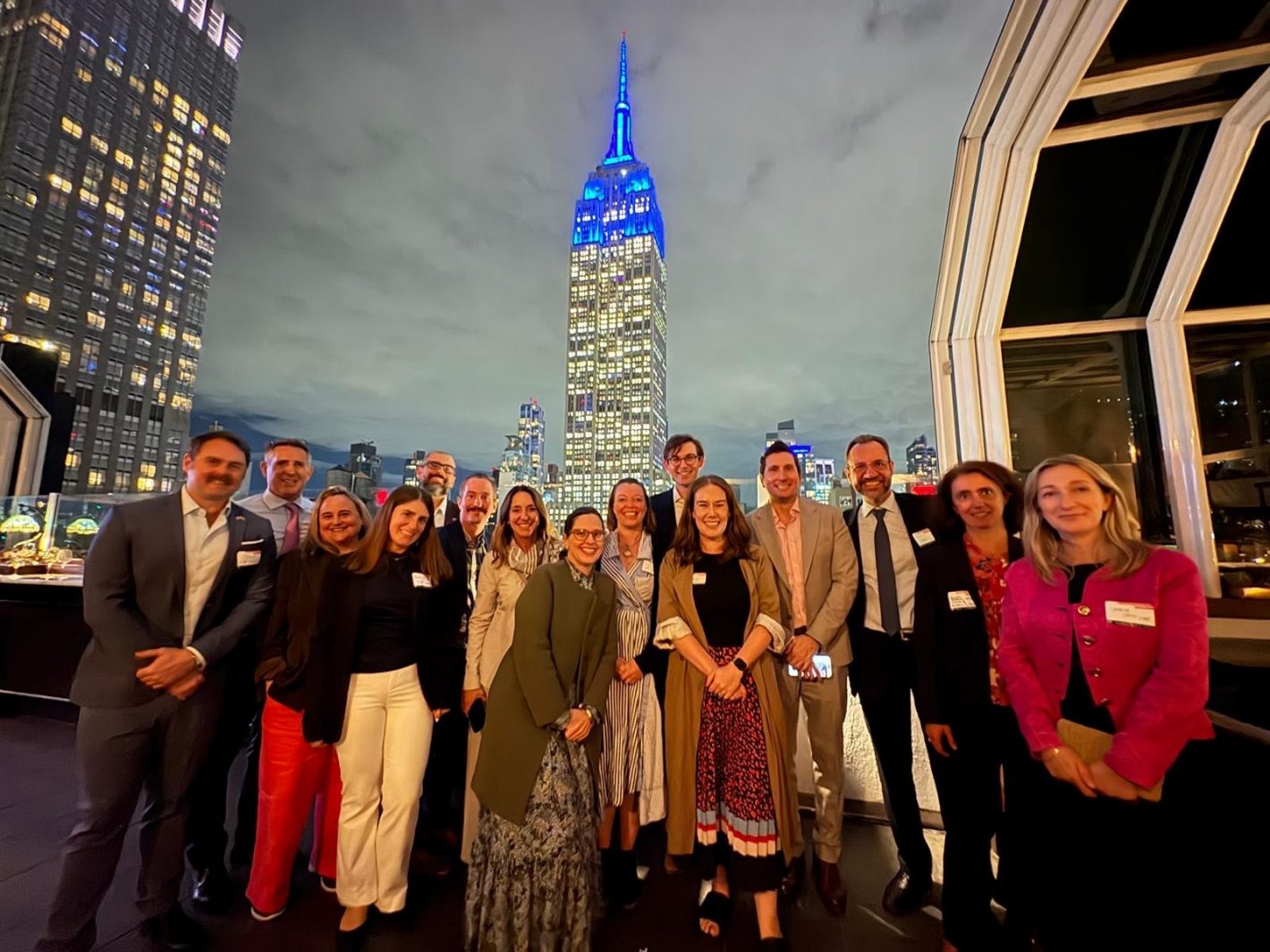
My participation began with CAF – Charities Aid Foundation, a network of which IDIS is a member, at an event marking the launch of the World Giving Report: Charity Insights 2026. The global publication brings together the perspectives of more than 5,000 leaders of social purpose organizations across 33 countries and seeks to understand the challenges facing the sector, its priorities, and the conditions needed to strengthen its resilience.
Among the global findings, 67% of responding organizations reported an increase in demand for their services over the past year. At the same time, fewer than four in ten consider themselves well-positioned for future success, and 92% identify at least one way in which funders could support them beyond providing financial resources.
In Brazil, 195 organizations participated in the survey, and the results reveal strong connections with the international landscape. Here, 66% also reported an increase in demand for their services, while 78% expect demand to continue growing. IDIS published a specific analysis of the Brazilian findings, exploring issues such as the quality and flexibility of funding, impact measurement, and institutional development.
Read IDIS’ analysis of the Brazilian findings from the World Giving Report 2026: Charity Insights.
The meetings organized by CAF provided an opportunity to discuss what these figures mean in different contexts. In one of the sessions, I was able to contribute a perspective on the Brazilian landscape in comparison with the global findings and exchange views with representatives from other countries. What stands out is how many of these challenges transcend borders. Pressure for more resources, growing demand, and the need to strengthen organizations themselves are recurring issues across different contexts, even though each country has its own particularities.
Another discussion that stood out to me during the week focused on Latin America and our ability to build a more integrated agenda.
From the perspective of other regions of the world, Latin America is often perceived as a single entity. Within the region, however, we still tend to operate largely within national borders. Brazil, Mexico, Argentina, Colombia, and other countries in the region share many social, economic, and environmental challenges, as well as similar characteristics in their philanthropic and social investment landscapes. Yet we do not always develop joint responses or create shared spaces for learning.
During the conversation, the question was even raised as to whether the Portuguese language might be a barrier to greater integration between Brazil and its neighbors. The language difference exists, but it does not explain everything. We face very similar challenges, and there is considerable room to expand exchanges, learning, and joint efforts among countries.
More than simply recognizing ourselves as part of Latin America, we need to think about what we can accomplish as a region.
Partnerships and Artificial Intelligence
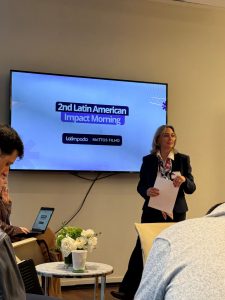 This reflection was also connected to a session organized by Latimpacto at the Mattos Filho office, dedicated to building partnerships and networks. Participants from different countries shared experiences and challenges related to putting collaboration into practice. Several themes resurfaced throughout the conversation: trust, transparency, accountability, and the difficulty of balancing institutional interests with the leadership and agency of the organizations involved.
These are familiar issues for those who work with alliances. However, the fact that they continue to emerge in different spaces and countries shows that there is still work to be done.
The week also included several opportunities to build relationships, including a gathering organized by the Skoll Foundation with partners from different parts of the world.
One final reflection came from a topic that was virtually absent from the sessions I attended: artificial intelligence. After following so many recent discussions about the impacts of AI on organizations, work, and society, I expected it to feature more prominently in these conversations as well.
I came away with two hypotheses. One is that many organizations have not yet effectively integrated these tools, which is why the topic has not gained significant traction in certain discussions. The other is almost the opposite: perhaps artificial intelligence is becoming so embedded in everyday routines that we are beginning to stop treating it as a separate agenda item.
My main takeaway from the week was the importance of the connections built in these spaces. The challenges we face rarely respect national borders. This applies to the climate crisis, the sustainability of civil society organizations, and the development of philanthropy. For Brazil and Latin America, there is an opportunity to turn shared challenges into greater collaboration, shared knowledge, and a stronger capacity for collective action.