When technology meets care: innovation, data, and social investment are redefining public health for a more equitable future

This article was originally published in Alliance Magazine on November 5, 2025

By João Abreu, co-founder and director of ImpulsoGov

In many parts of the world, technology has transformed the way societies deliver services, but not always the way they deliver care. In Brazil, where more than 170 million people depend on the public health system (SUS), representing about 80% of the population, the challenge goes beyond modernizing healthcare. It is about ensuring that innovation drives inclusion, transparency, and prevention.

Across the philanthropic landscape, a growing movement is exploring how data, artificial intelligence, and digital infrastructure can help bridge persistent inequalities in access to health. The focus is shifting from technology as an end in itself to technology as a tool for collective wellbeing. I had the opportunity to discuss this topic at the 2025 Brazilian Philanthropy Forum, during the panel ‘Innovation and Technology: From Dystopia to Utopia,’ moderated by Pedro Rossi, Vice President of The Global Fund for a New Economy, alongside Camila Valverde, Executive Director of the ArcelorMittal Foundation, and Eduardo Saron, President of the Itaú Foundation.

P

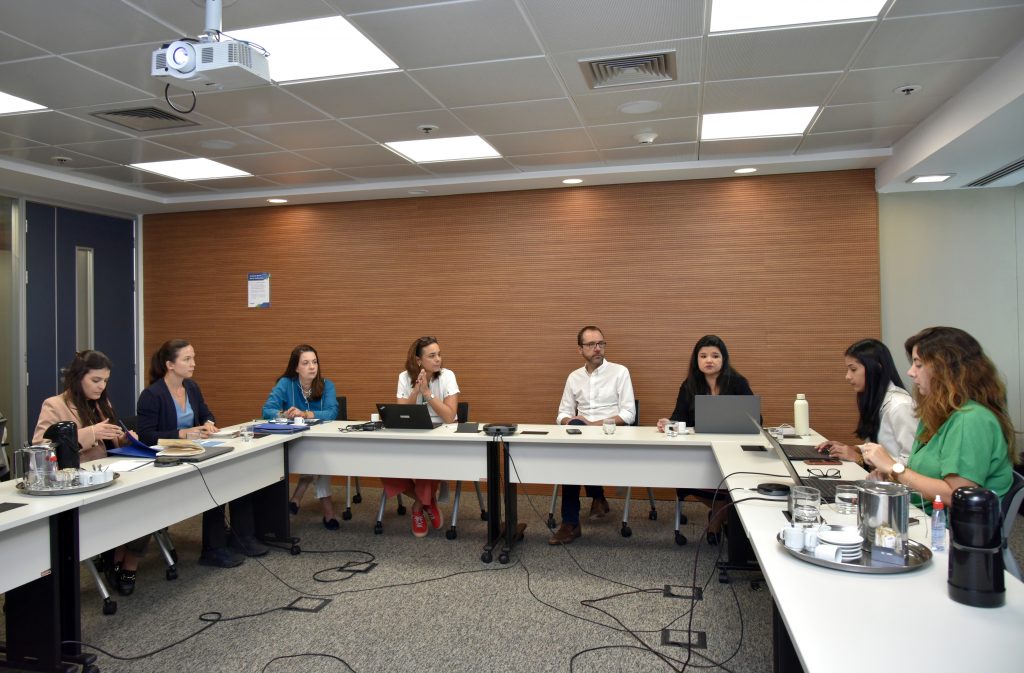
Plenary ‘Monitoring as a Bridge-Building Tool’, during the Brazilian Philanthropy Forum. Photo: Caio Garça


From treatment to prevention

Brazil’s universal health system is one of the world’s most ambitious public health systems, providing free, universal healthcare to a population larger than the UK and Germany combined. It has long been a symbol of public commitment to equality. Yet, the system still faces the challenge of reaching millions of citizens with timely, preventive care. Diseases that are potentially preventable continue to affect vulnerable populations who often lack consistent follow-up or early screening.

This is where philanthropy has begun to play a decisive role, financing innovation that helps the public sector act before crises emerge. By investing in digital tools, open data platforms, and local capacity building, philanthropic organizations are helping transform health management from reactive to preventive. Prevention, however, depends not only on medical capacity, but on information ecosystems that enable health teams to identify risks early and respond efficiently.

The use of digital tools in Brazil’s public health system is demonstrating that innovation, when designed for equity, can reach scale without sacrificing purpose. A notable example is Impulso Previne, a free, digital platform we developed at ImpulsoGov to support preventive health strategies within the SUS. It compiles and analyzes public data on essential indicators — from cancer screening to maternal health — and presents them in a simple, actionable format for local health professionals. By identifying which patients have overdue exams or unmonitored conditions, and linking them directly to responsible teams, the system helps municipalities act faster and more effectively. Also, the platform’s range of functionalities includes automating patient outreach with mobile reminders for check-ups and chronic disease follow-ups.

It has demonstrated measurable positive impacts on public health outcomes. According to an internal evaluation, within one year, thanks to the initiative, 1,540 women completed more than six prenatal consultations, 1,468 women received dental prenatal care, and 69,120 people received ongoing hypertension monitoring.

Impulso Previne is financed by the Together for Health program, part of the Brazilian Development Bank (BNDES) efforts and managed by the IDIS (Institute for the Development of Social Investment)The projects are financed through a matchfunding model with BNDES. Impulso Previne, in particular, is co-financed by Umane and it was previously by Dynamo Institute.


The broader role of philanthropy

For Brazil’s philanthropic sector, innovation in health is not merely a matter of efficiency; it is an ethical choice. Supporting preventive health technologies offers one of the most direct ways to reduce inequality, particularly for people who are disproportionately affected by systemic barriers to care.

This concept was also emphasized during the 2025 Brazilian Philanthropy Forum, organized by IDIS, which fostered reflections and dialogue on how philanthropy can act as a catalyst for meaningful change in times of crisis, reinforcing the urgency of turning hope into action. Participants discussed topics such as climate change and its social impacts, the role of companies in transformation, technological challenges and innovations in the social sector, and the importance of collective resilience and interdependence to design a fairer future.

The panel ‘Monitoring as a Bridge-Building Tool,’ featuring Ana Fontes, Founder of Rede Mulher Empreendedora (RME) and Instituto RME; Jessie Krafft, CEO of CAF America; and Leticia Born, Associate Director for Global and Latin America at Co-Impact, and moderated by Wesley Matheus, Secretary for Monitoring and Evaluation of Public Policies and Economic Affairs at Brazil’s Ministry of Planning and Budget, brought valuable reflections on the importance of conducting impact monitoring while maintaining a balance that enables funding mechanisms to foster autonomy and trust among implementing organizations.

One of the topics discussed was the relevance of unrestricted funding, which is not limited to the delivery of specific project outcomes but can instead support institutional development, research, and innovation. In addition, participants emphasized the importance of collaboration between different organizations and funders working toward shared goals, and the need to view philanthropy not only through a short-term lens but also as a driver of systemic change, grounded in trust and transparency.

In the context of healthcare, the experiences emerging from Brazil show that technology — when combined with collaboration, trust, and a preventive mindset — can truly drive transformation. Philanthropy plays a vital role in ensuring that innovation serves people first, helping build systems that are not only smarter, but fairer and more humane.
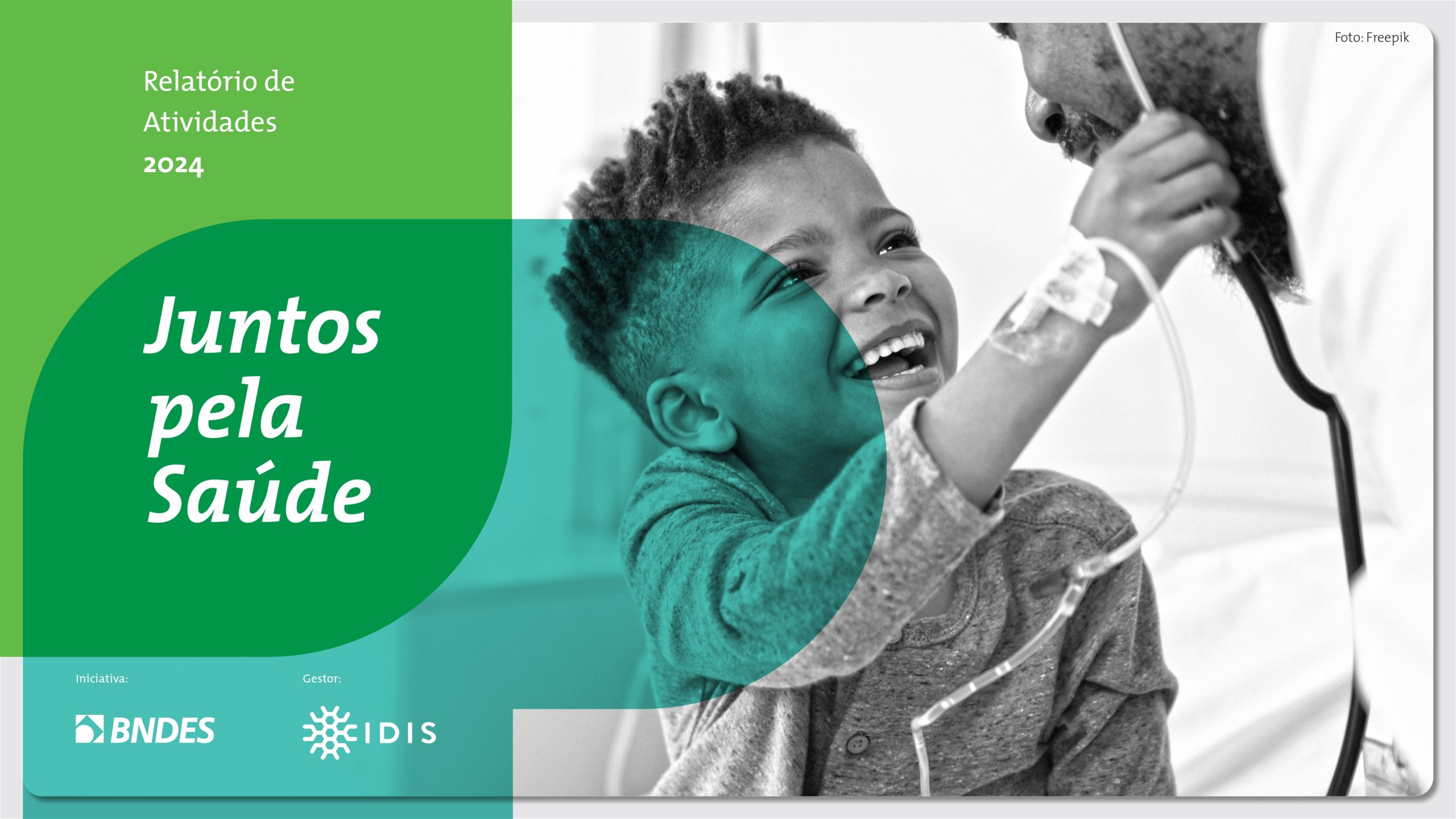
Together for Health Program launches 2024 annual activity report

The document details the work carried out on the second year of the program and the main results achieved so far, as well as the main activities and projects planned for 2025, ensuring transparency towards society and partners.

Launched in 2023, Together for Health (Juntos pela Saúde, in Portuguese) is an initiative of the National Bank for Economic and Social Development (BNDES), managed by IDIS – Institute for the Development of Social Investment, developed in the North and Northeast regions of Brazil.

In partnership with private donors, the Program aims to gather resources to support and strengthen the Brazilian Unified Health System (SUS) in the North and Northeast regions of Brazil, where approximately 75 million people live, and where 9 out of 10 people depend exclusively on SUS (IBGE, 2020). The high demand presents significant challenges, including low availability of doctors, inadequate infrastructure, and limited access to population health data.


Download the 2024 Together for Health Annual Activity Report here (available only in Portuguese)


Main achievements

Together for Health program: expanding resources for the North and Northeast regions of the country

2024 represented the second year of the Together for Health program, whose mission is to strengthen the Brazilian Unified Health System (SUS) and implement structuring measures, including primary, medium, and high complexity care, as well as urgent and emergency health care services, and support for diagnoses of various diseases.

The results achieved in the year demonstrate that we are on the right track, utilizing well-applied resources and having a positive impact in several territories.

Check out the main actions carried out and the program numbers between 2023 and 2024:


– Expansion of actions, with the implementation of 14 projects, two of them having been concluded

– More than 113 million BRL (approximately 20,3 million USD) will be invested in the reinforcement of Brazilian public health until 2026

– 139 municipalities impacted

– 10,461 health care professionals impacted (direct beneficiaries)

– 1,345 health units mobilized (Basic Health Unit (UBS) or Public Center of Psychosocial Attention (CAPS))

– 16,890 professionals trained

– 4,382 technological equipment provided (e.g. 1,865 tablets, 421 blood pressure devices, 412 Wi-Fi routers, 329laptops, 261 oximeters, etc.)

– 4,332,429 SUS users impacted (indirect beneficiaries)


Since the beginning of the program, Together for Health has already invested:

– 31,7 million BRL (approximately 5,7 million USD) in technology solutions and

– 18,3 million BRL (approximately 3,3 million USD) in infrastructure and health equipment.


Launching the public notice

In 2024, a significant milestone for the program was the launch of the public notice called Primary Health Care Enforcement Initiatives (in Portuguese, Iniciativas de Fortalecimento da Atenção Primária à Saúde), promoted in partnership with Umane, which received over 40 project proposals. The public notice aimed to support projects with solutions for Primary Health Care, prioritizing initiatives which integrated new technologies, digital health and innovation.

– These projects will receive through the public notice around 17 million BRL (approximately 3 million USD)

– So far, 39 municipalities have been directly impacted, with a goal of reaching 50 municipalities in the Brazilian states of Alagoas, Bahia, Ceará, Maranhão, Pará, Paraíba, Pernambuco, Rio Grande do Norte, Roraima e Sergipe.


Learn about all the projects developed throughout 2024, via public notice or structured promotion:

Dashboard of Mental Health Indicators

Carried out by ImpulsoGov and supported by RD Saúde, the project had the purpose of expanding access to data and simplified information for mental health managers in Brazilian municipalities. The initiative ended in August 2024.

Impulso Previne – Cycle 1 and Cycle 2

Implemented by ImpulsoGov, in partnership with Dynamo Institute (cycle 1) and Umane (cycle 2), it consists of a digital solution that centralizes data, analysis, and recommendations on the main indicators of Primary Health Care on a single platform. The project has two cycles. The first cycle was completed in June 2024.

Social Protection Health Cycle

The project is carried out by the Health Promotion Center (Cedaps), and supported by Vale Foundation, aiming to strengthen Primary Health Care in SUS, increasing the capacity for diagnosis, planning, operationalization, monitoring and evaluation of services through shared work plans organized by the health needs of local populations.

NoHarm: Intelligence for Patient Safety

Implemented by the Institute of Artificial Intelligence in Health, in partnership with Umane, the project has the objective of improving the safety and management of patients in Primary Health Care through the integration of technologies and the strengthening of operational processes.

epCertify with Hiperdia Care Pathway

The project is carried out by the epHealth Institute, in partnership with Umane, and aims to strengthen the monitoring of chronic diseases, especially hypertension and diabetes.

United for the Elimination of Cervical Cancer in Brazil

This project is implemented by the Brazilian Women Group, in partnership with Umane, and aims to contribute to the elimination of women’s mortality caused by cervical cancer.


In 2025, new projects will be implemented:


AESOP – Alert-Early System of Outbreaks with Pandemic Potential: executed by the Molecular Biology Institute of Paraná (IBMP), in partnership with Umane.

CARDIO: implemented by Beneficência Portuguesa (BP), with the support from the Novartis Foundation.

SUS in the Amazon: carried out by the Sustainable Amazon Foundation (FAS) in two different cycles, the first cycle in partnership with Umane and the second cycle with the support of the Vale Fund.

Tributaries: executed by the Institute for Health Policy Studies (IEPS), in partnership with Umane.

V.E.R – Network Vision: executed by the Altino Ventura Foundation (FAV), in partnership with Umane.

Weaving Threads of Comprehensive Health Care in the Amazon: developed by the Support Center to the School of Public Health of the University of São Paulo (USP) in partnership with Umane.

Together for Health wraps 2024 with an increase in the project portfolio

In 2024, Together for Health, an initiative by the National Bank for Economic and Social Development (BNDES) managed by IDIS, expanded to all states in the North and Northeast regions of Brazil, covering more than 350 cities.

Overall, more than 100 million BRL will be invested to strengthen public health in the North and Northeast regions throughout a four year period. Through a matchfunding strategy, BNDES and other supporters made donations that have allowed the program to support 14 projects committed to providing healthcare services to the population assisted by the Brazilian Unified Health System (SUS). 

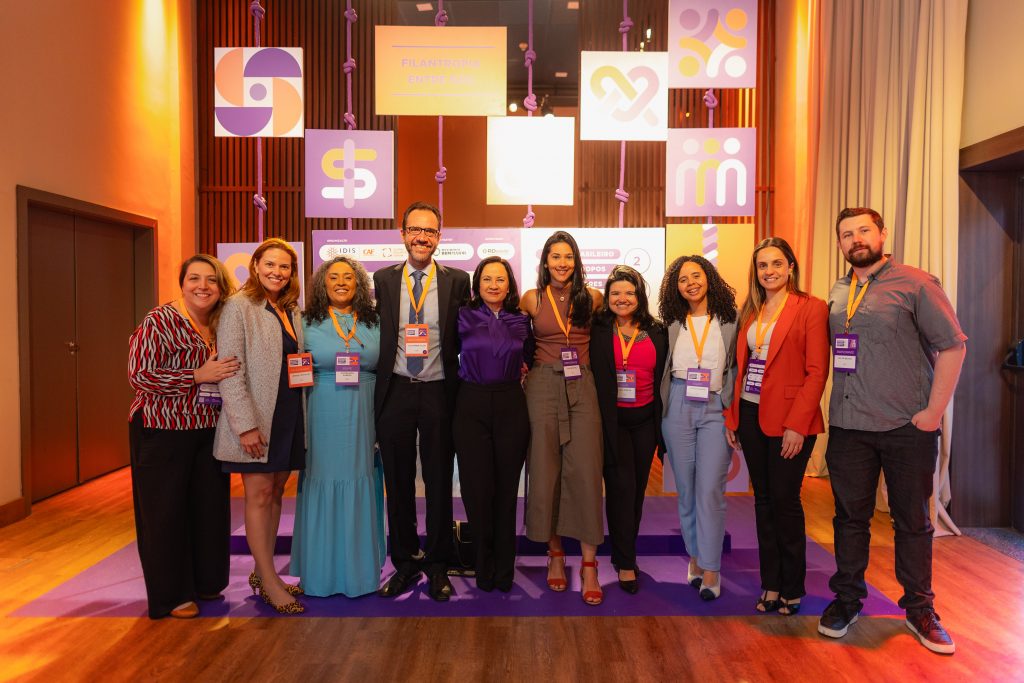
IDIS Together for Health team in September 2024. Credit: André Porto and Caio Graça.

Primary Health Care in the Brazilian Unified Health System (Sistema Único de Saúde – SUS)

Launched in January 2024, the public notice ‘SUS Primary Health Care in the North and Northeast regions’, was an initiative by Together for Health in partnership with Umane with the goal of supporting projects that would enhance Primary Health Care in cities in the North and Northeast regions with less than one doctor for every 1,000 habitants. Altogether, those selected could receive up to 20 million BRL in matchfunding. 

Selection committee for the Primary Health Care notice (June 2024). Credit: Rosana Fraga/BNDES.

Through a thorough selection process, which included Q&A webinars and multiple phases for participants, in July 2024, five projects were selected to receive financial support amongst more than 40 applicants. Therefore, by the end of 2024, some of the selected initiatives, such as ‘United for the Elimination of Cervical Cancer in Brazil’ and ‘NoHarm: Intelligence for Patient Safety’ were already starting their activities. 

“We expanded ‘Together for Health’, an impact program in partnership with BNDES and other private organizations, with the goal of strengthening the Brazilian Unified Health System (SUS) in the North and Northeast regions of the country. This year, we approved ten new projects, five of them selected through the public notice with the support from Umane. Overall, we finished 2024 with 14 projects approved in the Program, with a presence in all of the 16 states of the North and Northeast regions, amounting for a total of more than 110 million BRL invested in those territories until 2026”, said Luiza Saraiva, IDIS manager of Together for Health.


Regional Impact

During the year, the Together for Health team also conducted a series of follow-up and field monitoring visits to the cities participating in the various projects which are a part of the program. 

In March, a meeting in São Luís in the state of Maranhão, brought together partners and representatives from 21 out of the 24 cities participating in the Social Protection Health Cycle project. Already in September, the team made a field visit to Lagarto, Sergipe, to follow-up on the results of the Dashboard of Mental Health Indicators project, which concluded its activities in the previous month.

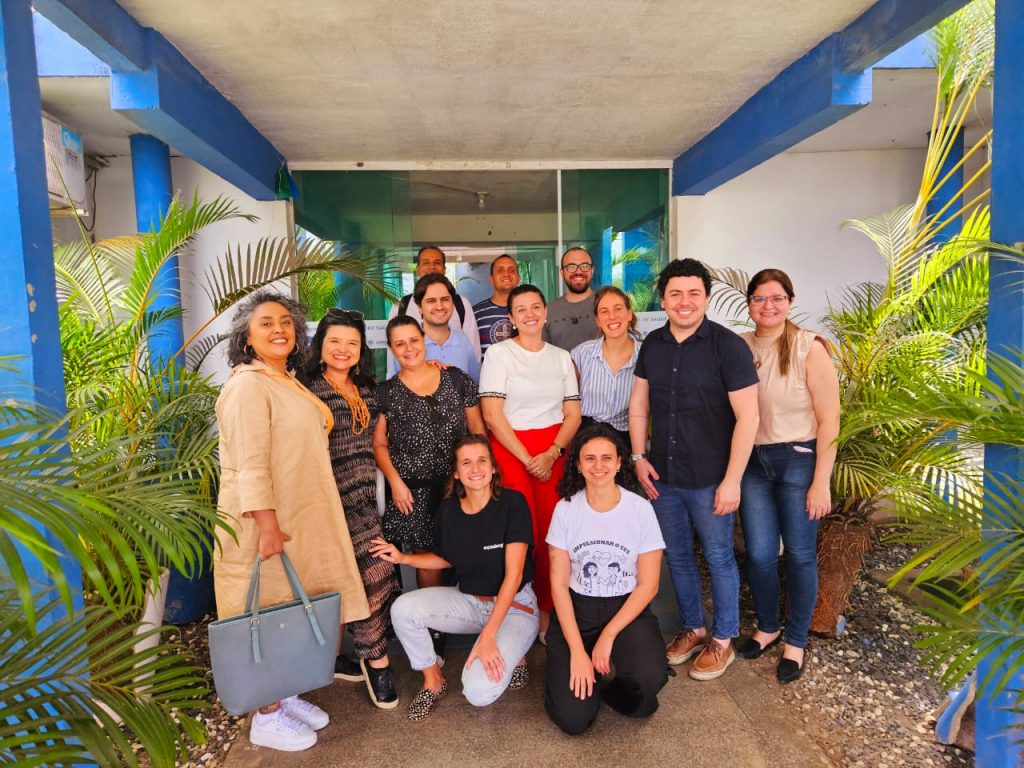
IDIS, BNDES and ImpulsoGov (project executor) teams in Lagarto, Sergipe. Credit: IDIS.

Closing Cycles 

In addition to being a year of expansion and implementation of the program, this was also the moment of closure for two projects of the Together for Health initiative. The Dashboard of Mental Health Indicators, supported by BNDES and RDSaúde, and executed by ImpulsoGov, helped expand access to simplified data and information for mental health managers in the 10 participating cities, in order to better guide the management made by the professionals involved in mental health services. Moreover, the first cycle of Impulso Previne strengthened the healthcare management in 19 cities where it operated through the increase in the use of health indicators, especially the cytopathological indicator, which is essential for the prevention of cervical cancer.

Perspectives for 2025

When one door closes, another one opens. We finish 2024 proud of what has been conquered so far. Throughout the second half of the year, the Program saw the formalization of procedural stages of new projects. With the support from public and philanthropic resources to the selected projects, in 2025 , we will be able to expand our work even more, aiming for a more technological and democratic public health system for the North and Northeast regions of the country. 

“During the first two years of the Together for Health program, we dedicated ourselves to structure processes, gather supporters and executors, and therefore were able to build a diverse project portfolio with ambitious goals aiming for the strengthening of the Brazilian Unified Health System (SUS) in the North and Northeast regions. For 2025, we hope to empower our partner network, promoting rich exchanges, collective learning experiences and integrating solutions that can enhance the results at the front line. Furthermore, we continue closely following the results accomplished on the territories in order to better comprehend the views of our beneficiaries – SUS health care professionals – and to better understand the impacts of our actions”, highlighted Luiza Saraiva.

IDIS participates in the global event CCW2023 with a panel on Matchfunding

Between the 1st and 5th of May 2023, will occur the 4th edition of Catalysing Change Week (CCW). Considering the most significant global event led by civil society organizations and social entrepreneurs, this year’s theme is “Solutions from the Frontlines.”

To inspire attitudes that contribute to the achievement of the 17 Sustainable Development Goals (SDGs) stipulated by the UN, the event – ​​which takes place online – will bring together actors who are at the forefront of socio-environmental change ecosystems. The idea is that they share, throughout the week, their experiences and knowledge with a focus on accelerating collaborative change systems. Participants include representatives from the private sector, governments, civil society organizations, and philanthropists.

The event is organized by Catalyst 2030 and has more than 250 sessions and activities proposed by people worldwide. The objective is to identify local solutions to global issues and expand the debate and knowledge about good practices developed worldwide. To access content and best practices shared at previous events, click here: Embracing Complexity and here: New Allies.


About IDIS participation

IDIS, a founding member of the Brazilian Chapter of Catalyst 2030, will again be at the event. This year, the panel led by the organization “Matchfunding: a strategy to Enhance the Impact of Socio-environmental Projects” will discuss the concept of Matchfunding as a powerful strategy to raise funds and expand the expected social impact.

To illustrate the strategy, the Together for Health Program case, a BNDES Matchfunding initiative managed by the IDIS team, will be presented. The objective of the Program is to support and strengthen the Unified Health System (SUS) in the North and Northeast regions of Brazil, with a focus on improving and expanding primary care services. Over four years (2023-2026), the aim is to raise BRL 200 million for health projects that operate in this part of the country.

Luiza Saraiva, Manager of the Together for Health Program, will open the conversation, which will have the mediation of Guilherme Sylos, Director of Prospecting and Partnerships at IDIS.

Among the confirmed speakers is Carla Reis, representative of the BNDES, who will present the Together for Health Program and reflect on how the MatchFunding model can contribute to expanding the impact of government initiatives and strengthening public policies.

João Abreu, Executive Director of ImpulsoGov, the organization behind the “ImpulsoPrevine” Project, will also participate in the session. His initiative brings together free solutions and services for municipalities to expand the scope and quality of primary care in the SUS. The project is a potential beneficiary of Together for Health and is already ready to receive investments. Among other topics, João will address the challenges of fundraising for Health.

Maria Izabel Toro, Social Investment Manager at Grupo RD, and Andreia Rabetim, Intersectoral Coordination and Volunteering Manager at Vale, are also part of the panel of speakers for the session. From the funders’ perspective, the guests will discuss the reasons and benefits of a private company participating in a match funding style.

The week is an opportunity to engage, advocate and nurture the social entrepreneurship ecosystem. We’ll wait for you!

Registration to attend the session is now open! Register here.


Matchfunding: a strategy to enhance the impact of socio-environmental projects

When: May 4, 2023, from 10 am to 11:15 am
Where: Online event on the Catalyst 2030 website (Registration required to view sessions).

Opening:
Luiza Saraiva – Manager of the Together for Health Program

Speakers:
Carla Reis – Head of the BNDES Industrial Complex and Health Services Department
João Abreu – Executive Director of ImpulsoGov
Maria Izabel Toro – Social Investment Manager at Grupo RD
Andreia – Intersectoral Coordination and Volunteering Manager at Vale

Mediator:
Guilherme Sylos – Prospecting and Partnerships Director at IDIS

Together for Health: a Matchfunding initiative to strengthen the Brazilian Public Health System (SUS)

The Brazilian Unified Health System, known as SUS, is universal, free, and a worldwide reference. Nevertheless, it could benefit even more people and perform better if allocating public and private resources.

Did you know that for 18% of the Brazilian population, especially in the North and Northeast regions, the number of doctors available in public health is less than 1 for every thousand inhabitants? The Brazilian average is 2.15 per thousand.

In addition, the average life expectancy in these regions is 3 years lower than in the rest of the country. At the same time, the infant mortality rate is 3% higher compared to the Central and South regions.

Let’s change this reality together!


What is Together for Health?

Together for Health Program is a donation initiative of the BNDES (National Bank of Social and Economic Development) in the matchfunding style. In other words, it will be co-financed by the private enterprise and social organisations to allocate R$ 200 million* to projects in the health area of the North and Northeast regions over four years.

R$ 1 in donations + R$ 1 BNDES = donation to strengthen public health

With these guidelines, the initiative confirms its alignment with UN Sustainable Development Goals (SDGs) 3 – Health and Wellness, and 10 – Inequality Reduction.


What is the Program’s goal? 

Supporting and strengthening the Brazilian Health System (SUS) in the North and Northeast regions, focusing on improving the efficiency of health service provision, quality, and integration of the system as a whole.


Who will benefit from the Program?

The entities that can receive resources from the program are: non-profit private organizations (Philanthropic Health Units, for example) or public bodies that do not depend on transfers of resources from the Union for their maintenance. The health projects presented must be in line with the premises of Together for Health and will be submitted to the approval of the Validation Committee, formed by members of the BNDES and other supporters of Together for Health.

How will the resources be invested? 


Depending on the supported health unit’s needs, there will be three possibilities for investment:

– Fixed assets: equipment acquisition or execution of recovery, modernization, expansion, and construction works;

– Management: telehealth system, digital systems, regulation systems, and implementation of applied management methodologies;

– Campaigns: cost of temporary health service provision campaigns associated with the start of health infrastructure operation.

Who participates:


– BNDESBanco Nacional de Desenvolvimento Econômico e Social (National Bank of Economic and Social Development): promoter and financer of the initiative.

– IDIS – Instituto para o Desenvolvimento do Investimento Social (Institute for the Development of Social Investment): responsible for resource management, fundraising, and project selection that will benefit from the Program.

– Impulso Gov: author of “Impulso Previne”, a project that brings together solutions and free services for municipalities to expand the reach and quality of SUS primary care and is already eligible to receive investments.

Together for Health supporters

– Vale Foundation

– Banco do Brasil Foundation


Join us!
To learn more about how to get involved, visit our website or contact juntospelasaude@idis.org.br 

* On December 2022, USD 1 is equivalent to R$ 5,20