Daniel Barretti, Monitoring and Evaluation Manager at IDIS, has obtained the Practitioner Level 2 certification in the SROI (Social Return on Investment) methodology, offered by the British organization Social Value International (SVI). SVI is a global reference in the field and an organization of which IDIS is a network member. With this achievement, Barretti becomes the second Brazilian to reach this level of certification, joining Paula Fabiani, CEO of IDIS, who until then was the only person in the country to hold this title.
SROI is an impact evaluation protocol that analyzes the relationship between the resources invested in a project or program and the social value generated for society by that initiative. The certification is granted by an organization that has been training professionals worldwide in applying the methodology for over 15 years.
“It was a challenging and highly enriching process that required dedication and technical depth in measuring social impact. Throughout the journey, I had the opportunity to broaden my perspective on value creation and to learn from different professionals. This achievement also reflects the support and collaboration of many people who were part of this path,” Daniel says.
According to Social Value International, social value means understanding the importance people place on changes in their well-being and using these insights to inform better decision-making. In this sense, the methodology helps strengthen evidence-based decision-making processes within social organizations.
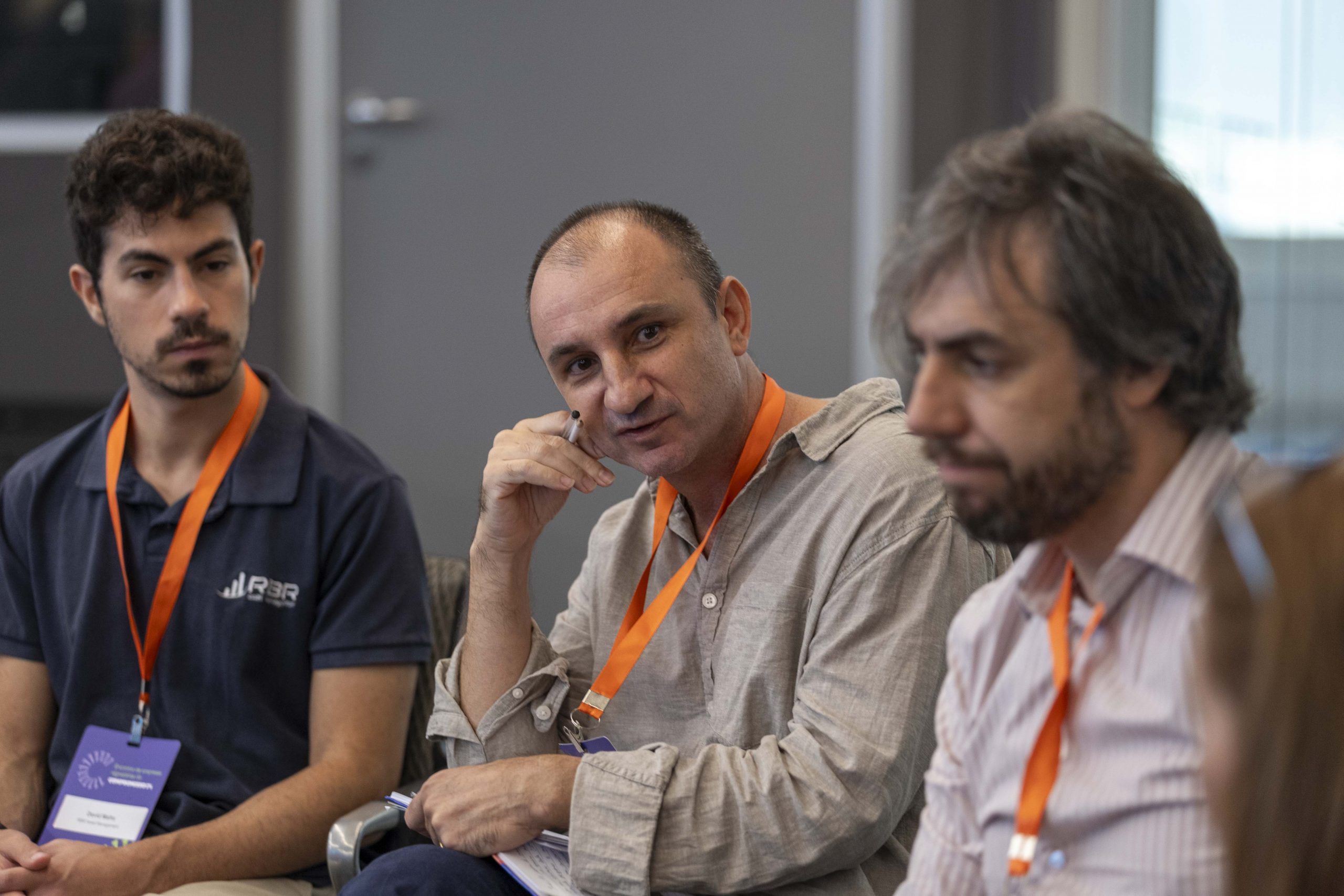
In the center, Daniel Barretti, during discussion about Monitoring and Evaluation
Foto: Andre Porto
IDIS is currently a reference in the application of SROI in Brazil, with projects carried out for organizations such as Amigos do Bem, Instituto Ayrton Senna, Baccarelli Institute, Petrobras, and Vale.
Learn more about the Monitoring and Evaluation projects carried out by IDIS.
Read the full interview with Daniel Barretti published by Social Value International:
1 – Congratulations on achieving your Level 2: Social Value Practitioner certification! What does this milestone mean to you, and how does it feel tobe only the second person in Brazil to reach this level?
Obtaining L2 accreditation from SVI represents another step in a journey of continuous learning. For me, it means that my practice in monitoring and evaluating social projects has been improving. As for the fact that I am only the second Brazilian to hold this accreditation, I think it reflects the pioneering and enduring nature of the accumulated experience of IDIS (the organization I belong to) in the SROI protocol.
2 – As Monitoring and Evaluation Manager at IDIS, how does SROI fit into your day-to-day work, and what drew you to pursuing formal certification at this level?
Our current CEO, Paula Fabiani, was the first Brazilian certified at SVI Level 3. This brought IDIS a seal and significant expertise in applying the protocol in Brazil. Since then, IDIS has been carrying out a series of SROI assessments and is a national reference on the subject. That said, what motivated me to apply for SVI Level 2 was precisely the idea of continuing and updating our knowledge in applying SROI here in Brazil.
3 – You described the certification process as “challenging and highly enriching.” Can you walk us through what it involved; what were the most technically demanding aspects for you?
I believe that addressing the 8 principles of SROI requires careful and rigorous attention to technical and practical details, as well as transparency and clarity in reporting processes and their respective results. Engaging and collecting impact perceptions from indirect beneficiaries is an example of a challenge, as is making beneficiaries understand the difference between the attribution discount and the counterfactual. On the other hand, such difficulties reveal paths and possibilities for action and consequently lead us to improve our evaluations, making them increasingly participatory, accurate, and transparent.
4 – SROI requires a rigorous approach to quantifying social value, from mapping stakeholders to monetising outcomes. What did the certification teach you about applying these principles in the Brazilian social sector specifically?
As I mentioned, involving indirect beneficiaries is a major challenge, as they are largely distant from the intervention and consequently have a low perception of the impact related to it. However, the accreditation process taught me that it is necessary, first, to identify and test possibilities for mobilization and engagement, and second, to collect the information in the best possible way—but not to fail to collect it—and, most importantly, to describe the limitations and risks of each data collection and respective results analysis process. From a monetization perspective, mixing techniques such as using proxies and anchoring proves to be a powerful approach in terms of combining market value with the social perception of value. Even so, the accreditation process revealed to me that the monetization stage can be even more participatory by validating proxies with the beneficiary audience.
5 – IDIS has applied SROI with organisations including Amigos do Bem, Instituto Ayrton Senna, Petrobras, and Vale. How has your hands-on project experience informed your approach to the certification, and vice versa?
I submitted for accreditation an evaluation that we had recently carried out based on our prior experience with SROI. I understand that prior experience helped me in many ways, but it also brought some ingrained habits of understanding and execution that were sometimes misguided. Thus, the accreditation process certainly served to critically reflect on and update our practices in greater alignment with the SVI principles.
6 – You mentioned that this achievement reflects the support of many people along the way. Who were some of the key voices or collaborators, and what did learning alongside others from different professional backgrounds bring to the experience?
Well, today we are a large Monitoring and Evaluation team at IDIS, and we exchange a lot of ideas about our daily work practices. So, I would say that, to some extent, everyone on the team helped me through our meetings, debates, and reflections, even if they weren’t directly about my accreditation process. More directly, three people contributed greatly to this process: Ana Beatriz, who was the analyst most involved with me during the execution of that evaluation before I submitted it for accreditation; Denise Carvalho, Director of Monitoring and Evaluation at IDIS, who not only encouraged me but also helped me with the reflections and revisions I had to make during the accreditation process; and finally, Paula Fabiani, CEO of IDIS, who was the biggest motivator for me to pursue this accreditation process and not give up after a first attempt.
7 – Social value measurement is still maturing as a discipline in Latin America. What do you see as the biggest barriers to wider social value and SROI adoption in Brazil, and what would you say to other practitioners considering certification?
To begin with, I would say that we still have a barrier when it comes to impact evaluations in general. Many organizations that claim to evaluate impact are actually monitoring process or product indicators, such as the number of participants. Impact evaluations, like SROI evaluation, require human, technical, and financial resources that are often not anticipated when planning initiatives. Finally, I think that Brazil’s large territorial size and consequently its great cultural and socioeconomic diversity bring an even greater challenge regarding monetization. In Brazil, for example, we do not have an official proxy bank like the one in the United Kingdom, and I believe such an effort would not be feasible precisely because of the great territorial differences within our country.
I highly recommend that other practitioners go through the certification process, as it enables you to reflect critically on your practices, on the best ways to adapt and conduct them to the Brazilian context, and finally, because I believe it is a rich approach that blends qualitative and quantitative data and allows us a very insightful reading of social initiatives from the perspective of those who actually experience these initiatives in practice.
8 – What’s next for you? Are there areas of social value practice you’re hoping to develop further, and what do you hope this achievement unlocks for IDIS and for the field?
Certainly. Two lessons from my accreditation process that I really want to put into practice are: first, a more qualified and robust process for listening to and engaging indirect beneficiaries; and second, making the evaluation even more participatory by validating partial results, as well as the choice of proxies, for example, also with the beneficiaries, in addition to validation with the organization executing the initiative.